

The “Daimler PAPP PWT 7517 Measurement of nitrosamine emissions from elastomeric parts used in the passenger compartment” standard, developed by the Daimler-Benz automotive company, describes a procedure for measuring nitrosamine emissions from elastomeric parts used in the passenger compartment.
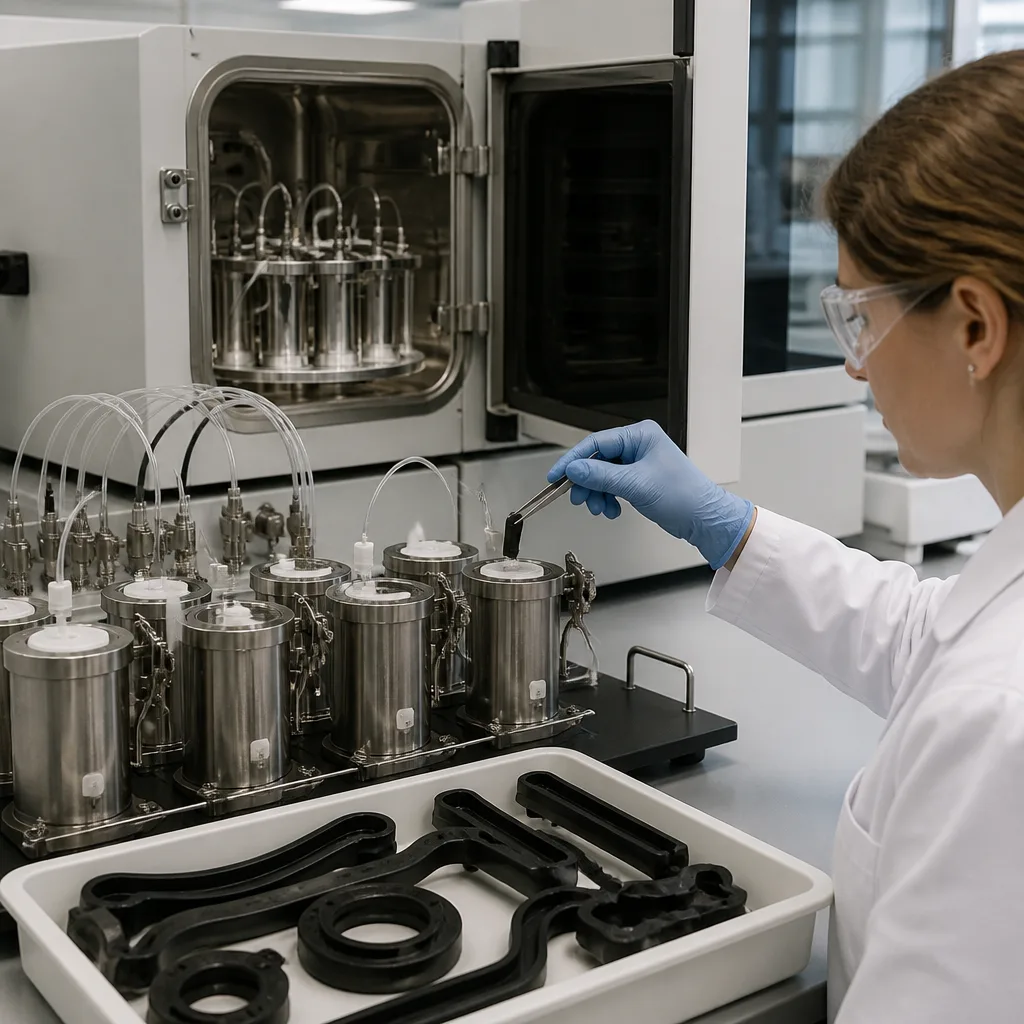
Daimler has developed numerous internal engineering and materials standards for vehicle manufacturing, safety, emissions, and cabin quality. One of these standards is PAPP PWT 7517, a technical specification focusing on determining nitrosamine emissions from elastomer components used in vehicle passenger compartments.
This standard defines a laboratory test method for measuring nitrosamine emissions released by rubber and elastomer-based automotive parts. Nitrosamines are chemical compounds that can form during the manufacture or aging of rubber materials and are considered potentially hazardous to human health.
According to the current technical specification summaries, this standard is specifically designed for the following:
Modern automotive manufacturers place great importance on the following:
The PAPP PWT 7517 standard helps ensure that rubber seals, hoses, gaskets, coatings, and interior soft-touch materials do not release unsafe levels of nitrosamines into the cabin environment. This has become increasingly important as vehicle interiors become more sealed and climate-controlled, potentially concentrating airborne chemical emissions.
In general, this testing method follows these steps:
Accredited testing laboratories for automotive material validation often reference this specification along with other Daimler internal material standards.
The PAPP PWT 7517 standard belongs to a broader ecosystem of Daimler material and durability specifications, which includes:
These standards help suppliers qualify components for use in Mercedes-Benz and Daimler vehicles.
Nitrosamine release from elastomeric parts used in the passenger compartment refers to the release of very small amounts of nitrosamine chemicals from rubber-like materials found in the vehicle cabin. Nitrosamines are a family of chemical compounds that can form under the following conditions:
Some nitrosamines are considered potentially carcinogenic, so industries monitor them closely. Examples include N-nitrosodimethylamine (NDMA), N-nitrosodiethylamine (NDEA), and elastomeric components. Elastomeric means made from elastic, rubber-like polymers. In automobiles, these include:
Generally, it is used in the passenger cabin (driver's area, seats, instrument panel area and rear passenger area). The concern is that these rubber materials can slowly release volatile chemicals into the cabin air over time, especially under the following conditions:
This process often refers to the new car smell, gas emissions, or VOC emissions. Nitrosamines are a specific category of emissions that manufacturers want to minimize.
Essentially, original equipment manufacturers use PAPP PWT 7517 and similar standards for the following purposes:
Tests help reduce long-term exposure risks for drivers and passengers. During testing, elastomer samples are placed in controlled chambers, heated or conditioned, and the emitted gases are collected. The collected chemicals are analyzed using gas chromatography (GC) or mass spectrometry (MS). The measured nitrosamine levels are then compared to permissible thresholds.
In practice, most modern vehicles sold by major manufacturers have very low nitrosamine emissions because:
The PAPP PWT 7517 standard is primarily part of automotive quality assurance and occupational/environmental safety programs.
In conclusion, the Daimler PAPP PWT 7517 standard is a specific automotive materials testing standard aimed at controlling nitrosamine emissions from elastomer parts used in vehicle cabins. This specification reflects the automotive industry's increasing focus on passenger health, material safety, and environmental performance. Despite being highly technical and primarily used by suppliers and testing laboratories, this standard plays a vital role in maintaining indoor air quality standards in modern vehicles.
For many years, our organization, with its competent and experienced team, has been understanding the needs of its clients, providing the advanced testing services they require, and assisting them in the establishment, implementation, and improvement of management systems. Within this framework, we also provide testing services compliant with the Daimler PAPP PWT 7517 standard.
To get an appointment, to get more detailed information or to request an evaluation, you can ask us to fill in our form and reach you.

