

The standard "BMW GS 93052-2 Exterior unpainted plastic surfaces - Thermoplastic elastomers," developed by BMW, a multinational vehicle manufacturer, applies to exterior unpainted thermoplastic plastic surfaces. This standard specifies the material requirements and test conditions for granular and high-gloss thermoplastic elastomers.
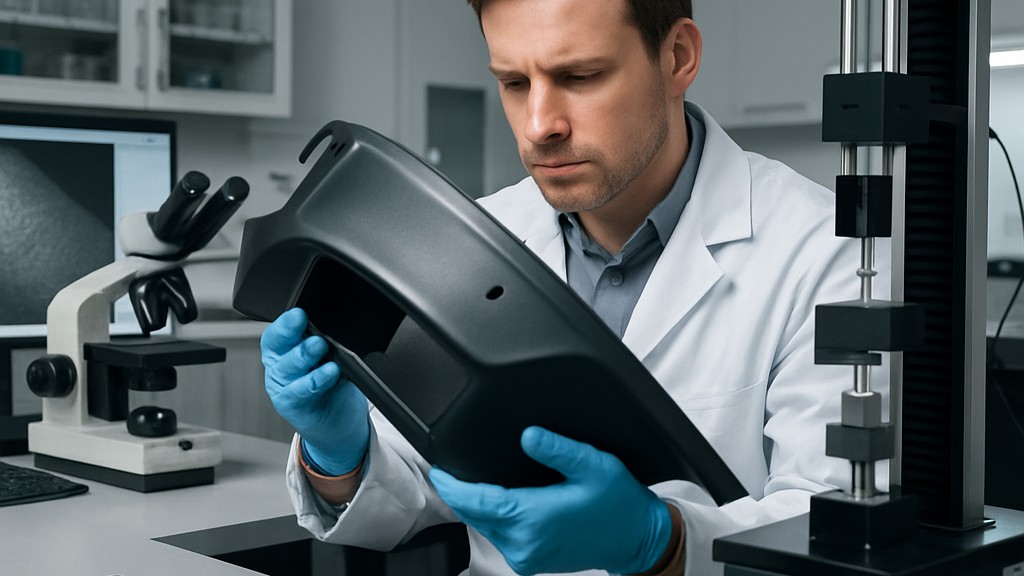
Tests are performed on injection-molded test plates. After production, the test plates are stored in the dark for at least 72 hours in a standard atmosphere according to DIN EN ISO 291. Xenon tests and scratch resistance tests (scratch test, nail test) are performed and evaluated on grained surfaces. Environmental resistance tests and the DynamO test are performed and evaluated on grained surfaces. Tests on grained surfaces are performed on test plates with a fine grain size of 27 or 30 according to VDI 3400.
The weather resistance requirement refers to the minimum requirement for thermoplastic elastomers that applies to all unpainted exterior surfaces.
The ambient and environmental durability requirements represent the minimum requirements for thermoplastic elastomers that apply to all exterior unpainted surfaces.
The scratch resistance requirement is a minimum requirement for thermoplastic elastomers and is divided into classes 1 to 3. The assignment of classes to each component is specified in the table provided in the standard and defined in the relevant tender documents (e.g. requirements specification, quality specification).
To evaluate the scratch resistance of the surfaces, the nail test according to the BMW GS 97034-2 standard and the scratch test according to the BMW GS 97034-9 standard are performed on the relevant materials.
As a rule, tests are performed on injection-molded thermoplastic elastomer (TPE) sample panels with a thickness of 4 mm (fine grain 27 or 30 according to VDI 3400). Other surfaces must be approved in advance by the materials specialist department.
In contrast to the specifications in the BMW GS 97034-2 standard, the following test conditions apply for the nail test:
Unlike the specifications in the BMW GS 97034-9 standard, the following test conditions apply for the scratch test:
Results are evaluated according to the BMW AA-0635 standard, with a score of "free from scratches" across all viewing angles. The test report must include all relevant measurement results, along with the material description, the assigned project and drawing. The production conditions of the test samples must be described. Visual changes/irregularities must also be documented in the test report.
The BMW GS 93052-2 standard is a technical specification. It is part of a series of BMW standards that define material testing and quality requirements used in the automotive industry. It specifically covers test methods for unpainted plastic surfaces for exterior use. This standard includes test procedures to ensure the durability, environmental impact, and performance of thermoplastic elastomer materials (TPEs) when used unpainted on the exterior of BMW vehicles (e.g., bumpers and door panels). It aims to verify the materials' compatibility with external factors such as UV resistance, humidity, temperature changes, and mechanical stress.
This standard is a mandatory reference for automotive suppliers and is used in material development, production and quality control processes.
This test method tests the physical (tensile strength, elongation), chemical (corrosion resistance), and thermal (temperature range typically minus 40 degrees Celsius to plus 80 degrees Celsius) properties of thermoplastic elastomers. The major test categories are:
The BMW GS 93052-2 standard integrates with VDA 6.2 Automotive Quality Management and other original equipment manufacturer approvals. Suppliers are required to have these tests performed by accredited laboratories.
This standard specifically addresses test methods for unpainted plastic surfaces made from thermoplastic elastomers (TPE) used on the exterior of BMW vehicles. This standard includes a series of test methods to ensure that these materials meet BMW's stringent requirements for durability, environmental resistance, and performance.
This standard focuses on evaluating the performance of unpainted TPEs under various environmental, mechanical, and visual conditions. It typically includes the following test categories and methods:
In short, the BMW GS 93052-2 standard is important because it ensures that the unpainted thermoplastic elastomer (TPE) materials used on the exterior of BMW vehicles meet the high quality, safety and durability standards required for automotive applications.
Our organization, with its competent and experienced team, has been understanding the needs of its customers for years, providing them with the advanced testing services they need, and assisting them in the establishment, implementation, and improvement of management systems. In this context, we also provide testing services in accordance with the "BMW GS 93052-2 Exterior Unpainted Plastic Surfaces - Thermoplastic Elastomers" standard.
To get an appointment, to get more detailed information or to request an evaluation, you can ask us to fill in our form and reach you.

