

The “Ford FLTM BQ 007-02 Acid Dissolution Test for Decorative Aluminum Parts” standard, developed by Ford Motor Company (Ford), describes a procedure used to evaluate the quality and durability of anodized aluminum coatings applied to decorative automotive components. This method measures the resistance of an anodic oxide coating to chemical attack by exposing the surface to a controlled chromic-phosphoric acid solution and determining the amount of coating that dissolves during the test.
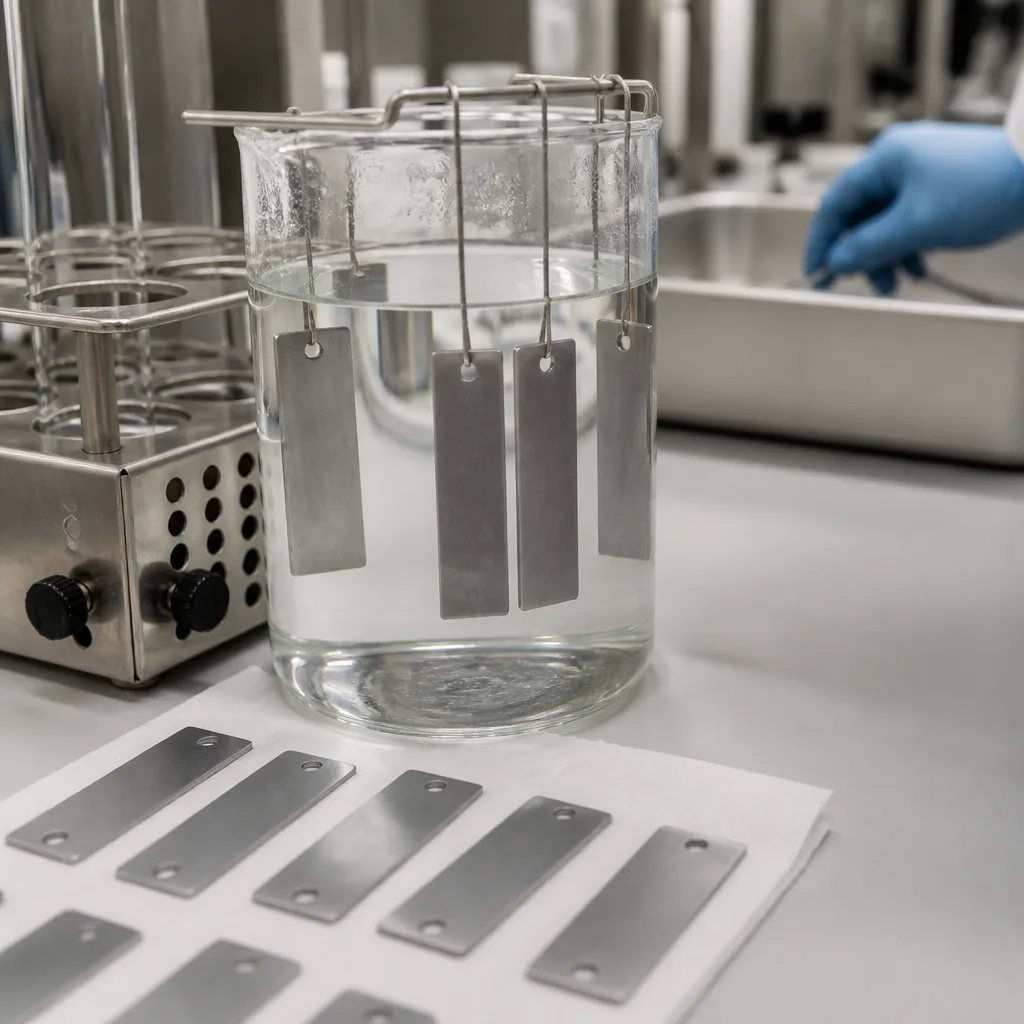
This standard is commonly used in automotive trim components such as decorative anodized aluminum, interior accents, exterior moldings, nameplates, and other aesthetically sensitive parts. The anodized layer provides corrosion resistance, wear protection, and an aesthetic appearance. The Ford FLTM BQ 007-02 standard verifies that this protective layer is properly formed and possesses sufficient durability for long-term vehicle service.
The primary purpose of the Ford FLTM BQ 007-02 standard is to determine the resistance of anode coatings to acid dissolution. During testing,
Lower weight loss generally indicates a higher quality anode coating with better resistance to chemical degradation.
The anodic coating on aluminum consists of aluminum oxide, which is formed by an electrochemical process. The structure, thickness, porosity, and sealing quality of this oxide layer greatly affect its durability. The acid dissolution test evaluates the following:
A well-anodized and properly sealed coating will dissolve more slowly than a poorly manufactured one.
The Ford FLTM BQ 007-02 standard generally applies to the following:
These parts must maintain their appearance and corrosion resistance throughout the vehicle's lifespan.
The Ford FLTM BQ 007-02 standard generally evaluates the following:
The described test method offers several advantages:
The Ford FLTM BQ 007-02 standard is important because it verifies the quality and durability of anodized aluminum coatings used in automotive decorative components. These coatings are critical for both appearance and protection, and inadequate coating quality can lead to premature corrosion, discoloration, and customer dissatisfaction. This standard is considered important for the following reasons:
Small variations in these processes can significantly affect coating performance. This standard provides an objective measurement of coating quality and process consistency across suppliers and production batches.
This standard helps prevent these problems before parts reach production.
Acid dissolution testing is particularly sensitive to seal quality. Higher dissolution rates generally indicate inadequate sealing, allowing manufacturers to detect process problems early.
Acid dissolution resistance is related to the overall robustness of the anodized layer and its ability to withstand these environmental stresses.
Essentially, this standard serves as a critical quality control tool ensuring that decorative anodized aluminum components remain attractive, corrosion-resistant, and durable throughout the vehicle's lifespan.
In conclusion, the Ford FLTM BQ 007-02 standard is a crucial quality control standard for anodized decorative aluminum automotive components. By measuring the dissolution rate of the anodic oxide coating in a controlled acid environment, the method provides a reliable indication of coating quality, sealing effectiveness, and long-term durability. This test helps Ford ensure that its decorative aluminum parts maintain their appearance, corrosion resistance, and customer-perceived quality throughout the vehicle's lifespan.
For many years, our organization, with its competent and experienced staff, has been understanding the needs of its customers, providing the advanced testing services they require, and assisting them in the establishment, implementation, and improvement of management systems. Within this framework, we also provide testing services to businesses in accordance with the Ford FLTM BQ 007-02 standard.
To get an appointment, to get more detailed information or to request an evaluation, you can ask us to fill in our form and reach you.

