

The “VW PV 3330 Elastomer O-rings - Compression set (plastic deformation)” standard, developed by the Volkswagen automotive company, describes a test method for determining the pressure set of elastomer O-rings and rectangular seals after plastic deformation.
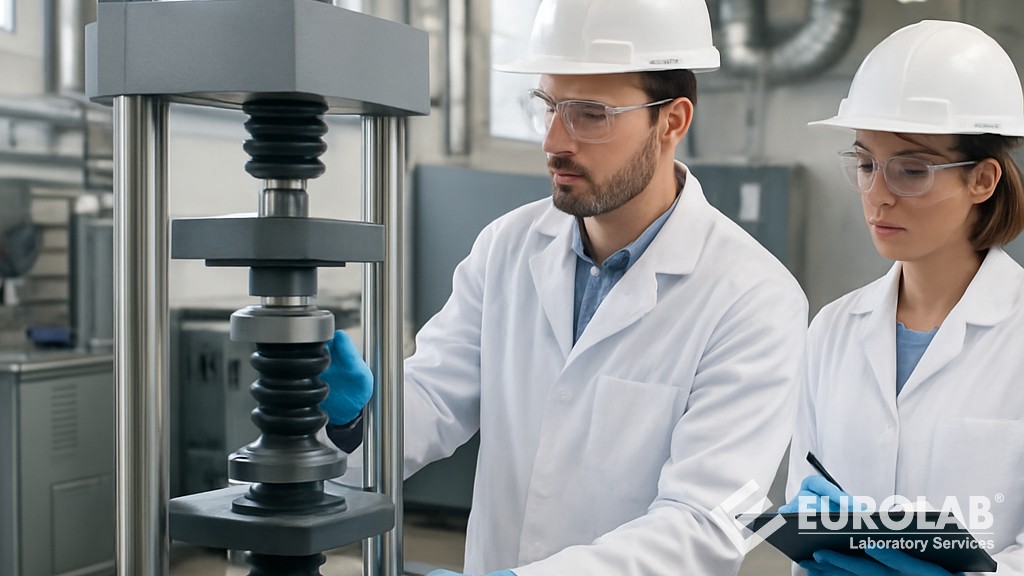
When commencing testing, the measuring device must be calibrated to measure samples with an accuracy of 0,01 mm. Spacers should have an accuracy of plus/minus 0,01 mm. Three spacers should be used when aging a sample in the test fixture. This test fixture allows for measurement of samples shortly after the load is removed. If these test fixtures are not available, fixtures conforming to the DIN ISO 815-1 standard can also be used. This should be noted in the test record accordingly.
The shape of the sample depends on the dimensions of the finished part to be tested. For small outer diameter (up to 30 mm) o-ring seals or rectangular seal washers, testing should be performed on the finished part itself; for larger diameter seal washers, testing should be performed on sections of the device under test with a specific length. For rings with an inner diameter of up to 20 mm, a small section of the ring should be cut to prevent, for example, adhesion effects. The volume of this section should not exceed 10 percent of the total volume of the ring. The sample shape is indicated in the relevant drawing.
At least three samples must be tested. The compressive strength depends on the relevant operating conditions of the device under test. Depending on the ring thickness, the compressive strength should be between 30% and 50%, usually 40%, and this should be specified. The test duration is 24 hours. If longer test durations (e.g., 94 hours) are required, these should be indicated in the drawing. The test temperature depends on the operating temperatures of the ring being tested. The test is performed at the relevant peak temperature of the operating temperatures. The test temperature should be indicated in the drawing.
During testing, the height of the sample is measured before compression. The necessary spacers are placed at three corners of the test apparatus. The measured samples are placed between two pressure plates. The upper plate is pressed down until it sits on the spacers (only one sample section per test apparatus). Applying talcum powder to the samples is permitted for better handling. The samples are then aged in forced air ovens according to DIN 53508 at the specified temperature and for the specified time. After the test period is complete, the loaded samples are acclimatized to room temperature at 23 degrees plus/minus 2 degrees. The post-aging height of the sample is measured 20 seconds after the load is removed. If the test conditions differ from this standard, this must be stated in the test report.
For evaluation purposes, plastic deformation is calculated using compressive deformation after constant deformation, according to the formula given in the standard.
In the high-risk world of automotive manufacturing, where every component must withstand extreme pressures, temperatures, and environmental influences, Volkswagen has long been a pioneer in setting rigorous quality standards. Among these, the VW PV 3330 standard stands out as a critical test protocol for elastomer O-ring seals. This standard focuses on evaluating the compression set or permanent deformation of these vital sealing elements. As electric vehicles and advanced driver assistance systems push the boundaries of engineering, understanding this standard is becoming indispensable for suppliers, engineers, and manufacturers aiming to meet VW's demanding requirements.
O-rings, those humble toroidal rubber seals, are the unsung heroes of automotive design. Found in fuel injectors, brake systems, transmissions, and increasingly in battery packs of electric vehicles, these seals prevent leaks, maintain pressure differences, and ensure the integrity of fluid and gas pathways. In Volkswagen's product range, these seals face relentless challenges: thermal cycling from engine compartments at minus 40 degrees to exhaust temperatures of 150 degrees, chemical exposure from oils and coolants, and mechanical compression under dynamic loads.
An O-ring failure is not only inconvenient, but can also lead to catastrophic problems such as fluid loss, contamination, and even safety hazards. This is where the VW PV 3330 standard comes in, offering a standardized method for measuring how well an O-ring recovers its shape after compression. This is a crucial indicator of long-term reliability. This standard is a Volkswagen-specific test method designed to simulate real-world compression scenarios. Unlike general international standards such as ISO 815, the VW PV 3330 standard is tailored to VW's specific material and performance criteria, guaranteeing consistency across the global supply chain.
The test method involves subjecting o-ring samples to controlled compression at high temperatures for extended periods, followed by precise measurement of the resulting deformation. The main test parameters are as follows:
This test not only identifies material weaknesses but also guides formulation changes, such as adding fillers for improved elasticity or antioxidants for thermal stability. Laboratories approved by the Volkswagen Group carry out these tests as part of supplier qualification programs.
Compliance is not optional for suppliers. VW mandates VW PV 3330 certification for elastomer components, and non-compliance may result in contract termination.
For many years, our organization, with its competent and experienced staff, has been understanding the needs of its customers, providing the advanced testing services they require, and assisting in the establishment, implementation, and improvement of management systems. Within this framework, we also provide testing services to businesses in accordance with the "VW PV 3330 Elastomer O-rings - Compression set (plastic deformation)" standard.
To get an appointment, to get more detailed information or to request an evaluation, you can ask us to fill in our form and reach you.

