

The “Fiat 7-G2091 Phenolic resin-based materials - Free phenol content” standard, developed by Fiat Chrysler Automobiles (FCA) (now Stellantis), an Italian-American automotive company, is part of the internal engineering and materials testing standards used to verify vehicle components, materials, or manufacturing processes. This standard was developed to ensure that suppliers and internal manufacturing facilities meet stringent requirements in terms of durability, safety, quality, and compliance.
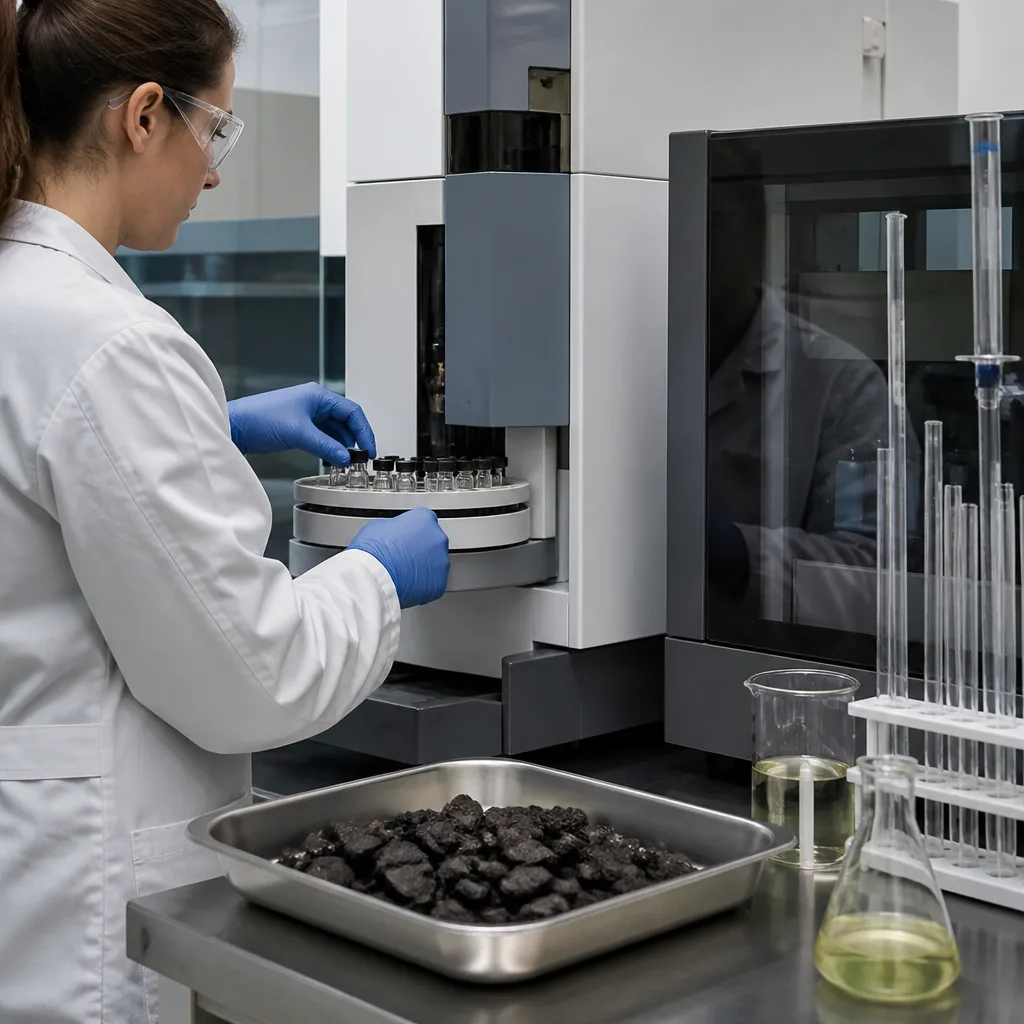
The Fiat 7-G2091 standard is important because automotive components must meet the following criteria:
Without standardized testing procedures, component quality can vary significantly between suppliers.
In short, the Fiat 7-G2091 standard outlines the procedure for determining the free phenol content in phenolic resin-based materials. Phenolic resins are widely used in automotive components such as brake pads, interior trim, electrical insulators, adhesives, and molded parts due to their heat resistance, strength, and durability. However, residual free phenol (unreacted phenol) can pose a problem because it is toxic, volatile, and can affect material performance, emissions, and worker safety.
The Fiat 7-G2091 standard provides a reliable laboratory method for measuring free phenol content, helping manufacturers ensure compliance with safety, environmental, and quality requirements.
This standard applies to phenolic resin-based materials and components used in Fiat vehicles, and its focus is on measuring the free phenol content (typically expressed as a percentage or ppm). Chemical analysis generally involves extraction and quantification techniques (such as titration, chromatography, or colorimetric methods).
This standard is often listed alongside other Fiat material tests. For example,
This standard is used by automotive suppliers and first and second-tier manufacturers that supply parts to Stellantis brands.
Phenolic resin-based materials are widely used in vehicle manufacturing because they provide excellent heat resistance, flame retardancy, dimensional stability, chemical resistance, and mechanical strength. These materials are thermoset polymers composed primarily of phenol and formaldehyde and have been used in automotive engineering for many years.
Phenolic resins are synthetic polymers produced by the reaction of phenol with formaldehyde. They are generally divided into two main categories:
After curing, phenolic materials become hard, heat-resistant, and dimensionally stable.
Phenolic resin-based materials are widely used in automotive manufacturing because they provide an excellent combination of the following properties:
These materials are typically produced from phenol-formaldehyde polymers and are used in many automotive systems, both in thermoset composites and molded components.
The main applications in the automotive industry are as follows:
Phenolic binders can be based on the following:
They also help protect the following:
Features such as low smoke generation, flame resistance, good stiffness-to-weight ratio, and acoustic damping are particularly important for passenger safety.
They are resistant to the following:
Application areas include:
Its uses are as follows:
The Fiat 7-G2091 standard is considered important for the following reasons:
In conclusion, the Fiat 7-G2091 standard is an internal automotive engineering specification used to standardize testing and quality verification in vehicle development and supplier validation processes. Such standards play a critical role in ensuring durability, safety, manufacturing consistency, and long-term vehicle performance.
For many years, our organization, with its competent and experienced staff, has been understanding the needs of its customers, providing the advanced testing services they require, and assisting them in the establishment, implementation, and improvement of management systems. Within this framework, we also provide testing services in accordance with the Fiat 7-G2091 standard.
To get an appointment, to get more detailed information or to request an evaluation, you can ask us to fill in our form and reach you.

