

The “GMW 14102 Water Stain Formation Test Determination” standard, developed by General Motors Worldwide (GMW), includes a test procedure used to evaluate the resistance of automotive materials to water stains and changes in appearance or tactile properties caused by water. This procedure is particularly important for textiles and upholstery materials used in vehicle interiors.
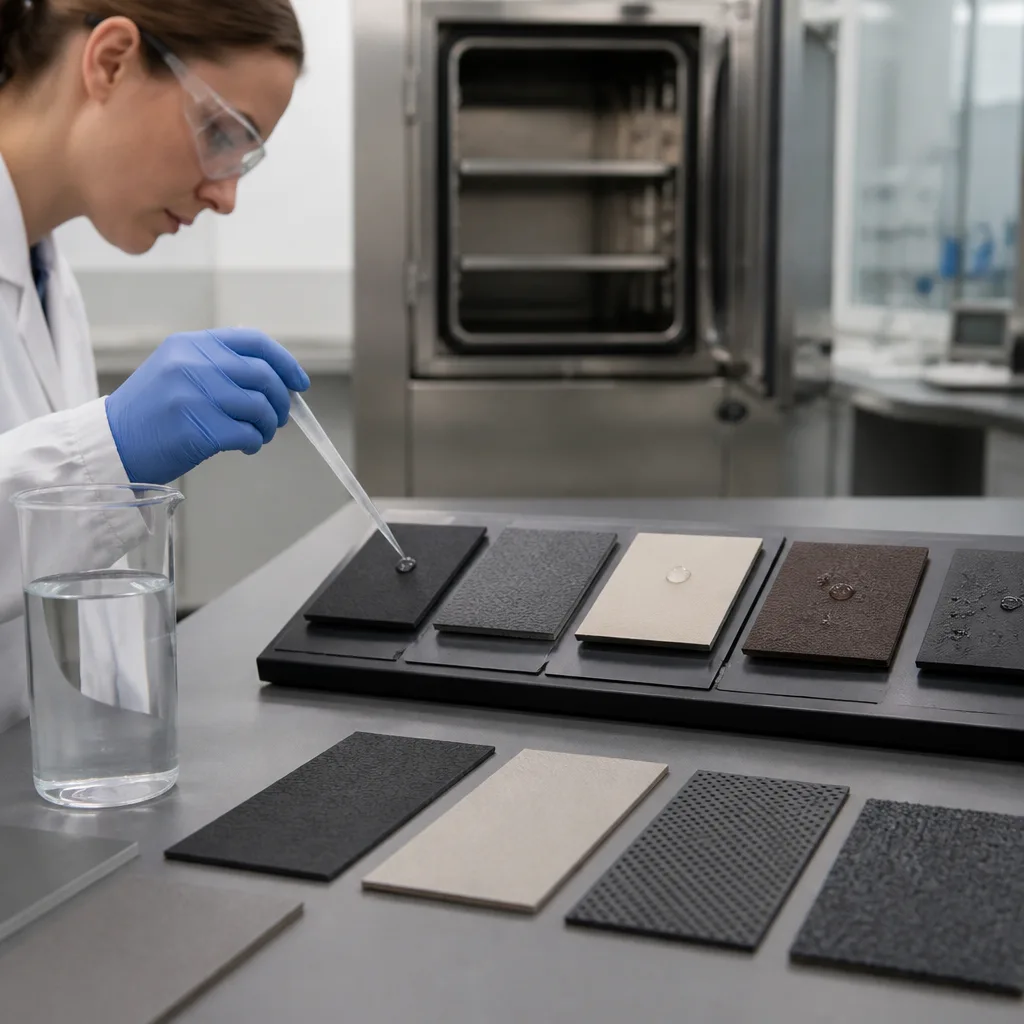
Water can come into contact with vehicle interior materials in many ways. For example, through spilled beverages, wet clothing, cleaning processes, condensation, or accidental exposure. A material that performs well when dry may develop visible stains, rings, discoloration, or an undesirable change in feel after getting wet and then drying. The GMW 14102 standard provides a controlled laboratory method to evaluate this behavior.
The primary purpose of the GMW 14102 standard is to determine whether exposure to water causes unacceptable changes in a material. The procedure evaluates two key characteristics:
Water stains may look like this:
The testing method also assesses whether exposure to water alters the material's texture or feel. This makes the procedure particularly useful for materials where both appearance and tactile quality are important.
The GMW 14102 standard applies primarily to textile materials that may come into contact with water, whether intentional or accidental, during vehicle use, including exposure during cleaning. Test laboratories also define the procedure for materials such as:
For example, the GMW 14102 standard is listed among automotive test procedures for coated textiles, plastic roll products, textiles, and yarns. Therefore, this standard may be applicable to components such as:
The precise applicability for a particular component is usually determined by the relevant General Motors material or component specification.
The basic concept for this test method is simple: a controlled amount of water is applied to a prepared sample of material, and the sample is then evaluated for undesirable changes. The test aims to reproduce the type of localized water exposure that might occur during vehicle use. After the exposure and drying process, the laboratory evaluates the sample for visible effects as follows: water exposure - drying - visual evaluation - tactile evaluation.
The important point is that the assessment is not limited to the appearance immediately after water application. This standard concerns changes that remain or become apparent after the water has evaporated.
For testing, the sample is prepared according to the requirements of the relevant material specification. Generally, a sample of approximately 400 mm x 400 mm is used. However, the size can be increased if necessary to prevent water from being completely absorbed at one edge of the sample.
Sample size and preparation are important because textile materials can transport water through capillary action. If the sample is too small, water can reach the edges and produce results that do not accurately represent the normal behavior of the material.
The procedure uses the specified water quality (Class 3 water according to ISO 3696 standard). Controlling water quality is important because dissolved minerals and contaminants can affect the appearance of the dried water stains. For example, water containing significant amounts of dissolved salts can leave residue after evaporation. Using controlled water helps improve the repeatability of the test and reduce variability between laboratories.
After exposure to water and drying, changes in the sample's appearance are examined. Typical concerns include:
These effects are particularly noticeable with dark-colored, textured, or fairly homogeneous interior materials.
The GMW 14102 standard also addresses changes in hand or touch properties. This is important because water can alter touch properties. For example, after drying, a material might become:
In automotive interiors, tactile quality is important because customers frequently touch seats, armrests, door panels, consoles, and other upholstery components. As a result, a material that doesn't show strong visual staining may still be unacceptable if its tactile properties change significantly.
The typical testing duration is approximately 48 hours total, with one hour allocated for coordination. The exact conditions and acceptance criteria should always be derived from the relevant material specification.
The GMW 14102 standard is important for the following reasons:
In short, the GMW 14102 standard focuses primarily on appearance and tactile performance rather than measuring how much water a material absorbs. This is because appearance and tactile quality directly affect perceived vehicle quality. Therefore, this standard contributes to material selection, supplier qualification, product validation, and quality control.
This standard is particularly important during the development of interior trim materials. Potential applications include:
The test is particularly valuable for light-colored or fairly homogeneous materials, as even a small water spot or discoloration can be visually noticeable.
For many years, our organization, with its competent and experienced staff, has been understanding the needs of its clients, providing the advanced testing services they require, and assisting them in the establishment, implementation, and improvement of management systems. Within this framework, we also provide testing services in accordance with the GMW 14102 standard.
To get an appointment, to get more detailed information or to request an evaluation, you can ask us to fill in our form and reach you.

