

The standard "Volvo STD 429-0001 Odor of upholstery materials in vehicles - Organic substances" developed by the Volvo car company describes a procedure for evaluating odor under the influence of temperature and humidity. This procedure is performed on materials in the interior of vehicles and on components that come into contact with the air flow supplied to the interior of vehicles. The expression 'odor' is used to indicate the susceptibility of a material to emit volatile compounds accompanied by a perceptible odor after a certain temperature and humidity cycle.
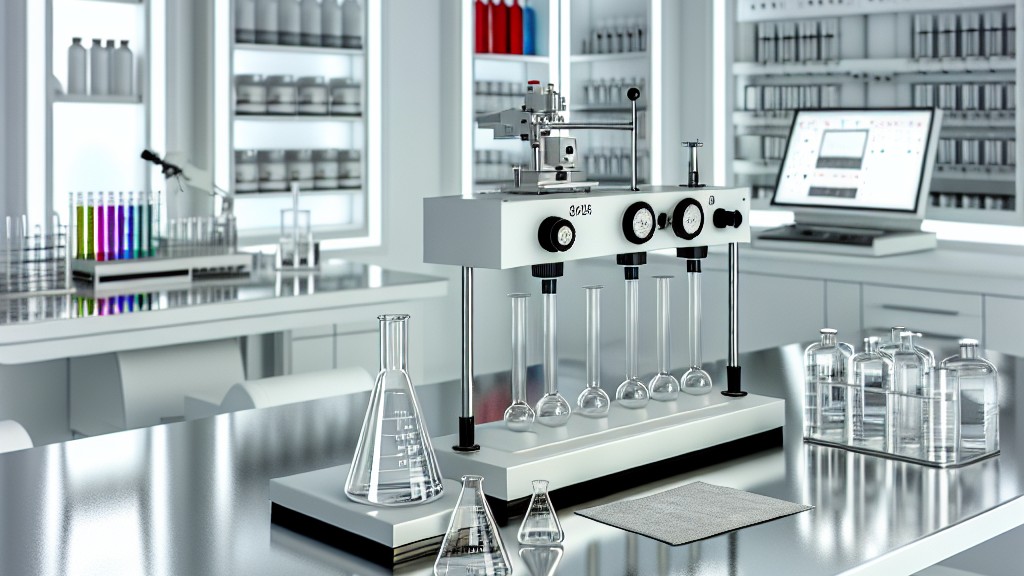
In these tests, a heating chamber with air circulation is used in accordance with the standard “ISO 188 Rubber, vulcanized or thermoplastics - Accelerated ageing and heat resistance tests”. 1-litre or 3-litre glass containers with odour-neutral seals and closures are used as test containers. Also 1-litre or 3-litre glass containers with odour-seal and closures are used as test containers. Normally, a 1-litre container is selected and if higher sensitivity is required, a 3-litre container is used. This higher sensitivity is also achieved by the participation of a larger number of assessors. The test containers should be cleaned before each test.
During the conditioning phase of the test pieces, the components should be tested no earlier than one week after the production date and no later than four weeks after. The storage of the components from the production date to the test date should be the same as the storage of the components released for production (e.g. the same temperature, humidity and storage). The test pieces removed from the components should be produced on the same day the test procedure starts.
The amount of material used in the test is specified in the table provided in the standard and is based on the amount used in the vehicle interior.
If the material thickness of a homogeneous piece of material exceeds 20 mm, the test pieces should be divided so that the maximum thickness is 20 mm. The sandwich material should be tested with all components in place. In the case of small pieces, several such pieces may be used if necessary to obtain the required test quantity.
When testing, the table provided in the standard shows the amount of material that should be in each test vessel. Each material is tested in two conditions, i.e. in test vessels with and without water. Each assessor should have access to his/her own vessel.
Two test vessels containing test pieces are used for the test. One is a 50-liter test vessel containing 1 ml of deionized water (or a 150-liter test vessel containing 3 ml of deionized water). The other is a 1-liter test vessel without water (or a 3-liter test vessel). If water is present in the test vessel, the samples should be positioned in such a way that direct contact with the water is prevented.
In addition to the test vessels containing test pieces, a 1-liter test vessel should be filled with 50 ml of deionized water (called the zero test). The water for the zero test should come from the same source as the other test water.
The test vessels are then tightly capped and placed in the heated heating chamber where they are held for 24 hours plus/minus 1 hour. Unless otherwise specified, a temperature of 40 degrees plus/minus 1 degree should be maintained in the heating chamber.
For non-woven panel coating and material containing adhesives or binders, a temperature of 70 degrees plus/minus 1 degree can be used.
The evaluation must be carried out immediately after the test vessels are removed from the heating chamber. For the validation of the test, only class 1 is required for the test vessel containing water.
In the case of delivery testing, the assessment must be carried out by at least three assessors. If the individual assessments differ by more than two classes, another test must be carried out by at least five assessors. In case of disagreement, the tests are always carried out by at least five assessors.
Each assessor attends a specific training program to train their ability to evaluate odors. To maintain this ability, the assessor receives regular training at least once a month.
The following requirements apply to assessors: they must be non-smokers, have a normal sense of smell, and have no impairment of olfactory capacity during the test.
The odor assessment is made for all possible variants on a degree scale ranging from 1 to 6, where half degrees are also possible.
The degree scale is as follows:
Odor characteristics are specified by rounding the score to the nearest half degree, with reference to the testing procedure used and variants such as the arithmetic mean of the individual degree.
Our organization has a strong staff that closely follows the developments in science and technology in the world and constantly improves itself. Among the numerous tests, measurements, analyses and evaluation studies provided for businesses in various sectors, there are also testing services in accordance with the "Volvo STD 429-0001 Odor of upholstery materials in vehicles - Organic substances" standard.
To get an appointment, to get more detailed information or to request an evaluation, you can ask us to fill in our form and reach you.

