

Developed by the Daimler-Benz automotive company, the “Daimler PBODC 371 Chemical Resistance” standard is an automotive material testing specification focusing on chemical resistance testing for components and surfaces used in vehicles. This standard is widely referenced in validation programs for plastics, coatings, upholstery, and automotive interior and exterior materials.
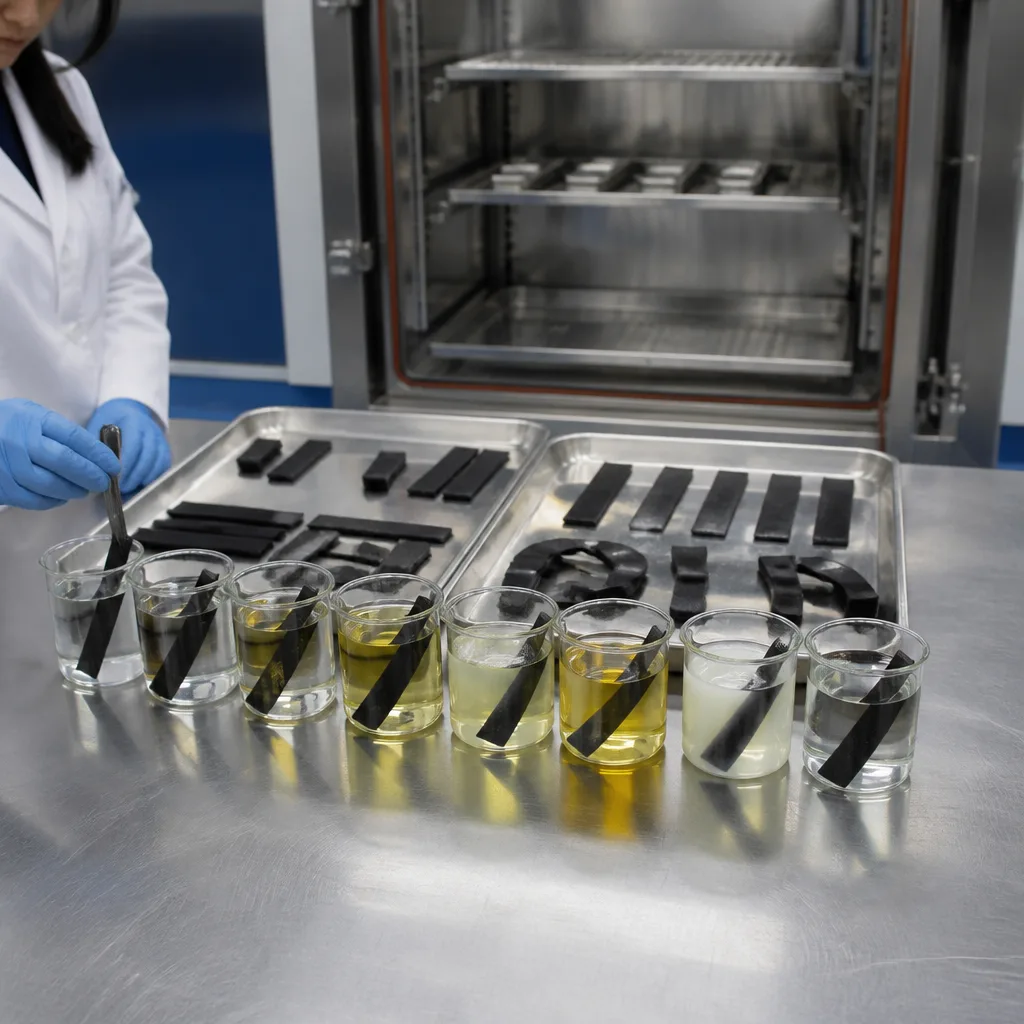
This standard generally evaluates how materials react after being exposed to the following chemicals:
During testing, the material is examined for issues such as the following following exposure:
A material is considered chemically resistant if it retains its appearance and performance.
The described test method generally follows these steps:
This specification is often used in automotive qualification programs, along with other original equipment manufacturer durability standards.
This standard generally includes a procedure for the following:
This standard is primarily used in the following situations:
Chemical resistance is the ability of a material to withstand contact with chemicals without being damaged or significantly altered. Automotive standards like PBODC 371 ensure that a material can withstand exposure to substances it might encounter during vehicle use.
The Daimler PBODC 371 standard is necessary because automotive materials must remain safe, durable, and visually acceptable throughout the life of a vehicle, despite continuous chemical exposure. For manufacturers like the Mercedes-Benz Group, chemical resistance standards help ensure that each approved material performs consistently in real-world conditions.
The main reasons why this standard is considered necessary are as follows:
In this situation, materials can crack, fade, become sticky, lose strength, or separate into layers. This standard helps identify weak materials before production.
Testing reduces warranty claims and customer complaints.
A chemically resistant material helps prevent malfunctions that could affect vehicle safety.
This ensures that all suppliers meet the same performance requirements.
In short, the Daimler PBODC 371 standard exists to ensure that automotive materials can withstand real-world chemical exposure without losing their appearance, function, or safety.
Chemical resistance tests help manufacturers ensure durability, safety, and long service life for interior and exterior parts. The Mercedes-Benz Group uses this standard to verify materials before approving them for vehicle production.
For many years, our organization, with its competent and experienced team, has been understanding the needs of its customers, providing the advanced testing services they require, and assisting them in the establishment, implementation, and improvement of management systems. Within this framework, we also provide testing services compliant with the Daimler PBODC 371 standard.
To get an appointment, to get more detailed information or to request an evaluation, you can ask us to fill in our form and reach you.

