

The “GMW 14445 Sunscreen and Insect Repellent Resistance” standard, developed by General Motors Worldwide (GMW), is an automotive material testing specification used to evaluate the resistance of interior materials and components to sunscreen and insect repellent products. This standard is particularly important for vehicle interior surfaces that may come into contact with these substances during normal passenger use. It is listed for plastics, elastomers, foils, coated textiles, plastic roll products, and components, and is relevant to vehicle interior applications.
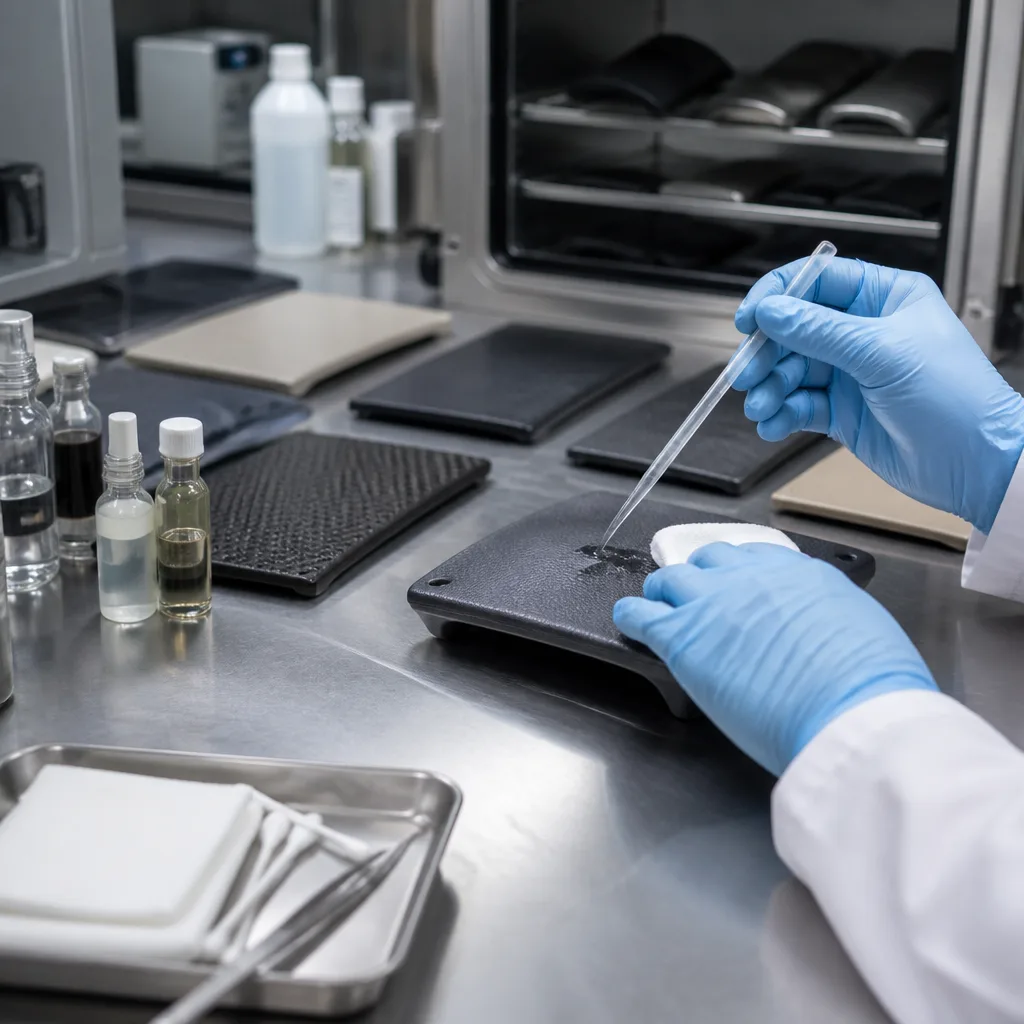
Automotive interiors are exposed to many consumer products. Sunscreens and insect repellents are particularly important because they may contain oils, solvents, alcohols, fragrances, or other chemicals that can interact with polymers and surface coatings. The GMW 14445 standard aims to determine whether exposure to these products causes unacceptable changes to the interior material or finished component. Typical concerns include:
Testing laboratories define the GMW 14445 standard specifically as a sunscreen and insect repellent resistance test for automotive surfaces. This standard is applicable to various categories of automotive interior materials, including:
The basic principle of this testing method is chemical exposure followed by evaluation of the material's resistance. A representative test involves exposing the test surface to specified sunscreen or insect repellent environments under controlled laboratory conditions. The exposure conditions and evaluation criteria are described in this standard. After exposure, the material is examined for signs of degradation. Depending on the material and General Motors' application, the evaluation may include visual or instrumental assessment of properties such as:
Modern automotive interiors are increasingly designed with soft-touch coatings, decorative films, textured plastics, and other advanced surface treatments. These surfaces can be sensitive to chemicals found in personal care products. For example, a passenger might apply sunscreen before getting into the vehicle and then touch the following:
Similarly, insect repellent products can transfer from a person's hands, arms, or clothing to inner surfaces. Repeated exposure can cause gradual visible or functional impairment.
The GMW 14445 standard is important for automotive interior quality because chemical resistance is part of the overall durability of an automotive interior. A material may perform well in mechanical abrasion or environmental aging tests, but still fail when exposed to everyday consumer chemicals. Therefore, this standard helps General Motors and its suppliers determine whether an interior material can maintain its intended appearance and properties during realistic vehicle use.
The GMW 14445 standard contributes to the following:
This standard, along with other automotive chemical resistance procedures, is included in laboratory scopes, demonstrating its role in broader automotive materials qualification programs.
There is an important distinction between the GMW 14445 standard and the “GMW 14296 Perspiration Resistance of Automotive Materials” standard. Both of these standards address chemical exposure to automotive interior materials, but they simulate different sources of contamination. Laboratory listings combine the two standards in ambient resistance testing. This distinction is important because a perspiration-resistant material may not have sufficient resistance to sunscreen or insect repellent chemicals.
The GMW 14445 standard may be relevant at various stages of automotive development:
On the surface of a black plastic interior trim component with a decorative or soft-touch coating, for example after exposure to sunscreen, the following may occur:
Even if the component remains mechanically functional, these changes can lead to a quality issue visible to the customer. The GMW 14445 standard provides a controlled method to determine such sensitivity before the material reaches vehicle production.
Sunscreen and chemical resistance aren't unique to General Motors. Other automotive manufacturers have similar requirements. For example, test laboratories list the following along with the GMW 14445 standard:
This demonstrates that resistance to personal care products is an accepted automotive interior durability requirement by many original equipment manufacturers.
In summary, the GMW 14445 standard is an automotive chemical resistance standard focusing on sunscreen and insect repellent exposure. It is applicable to a wide range of interior materials, including plastics, elastomers, foils, coated textiles, plastic roll products, and components. The main objective of this standard is to ensure that interior surfaces remain visually acceptable and functionally durable after contact with commonly encountered personal care chemicals.
Therefore, for General Motors suppliers, this standard is a vital part of the interior material development and qualification process. It helps identify surface systems that may change color, soften, stain, become sticky, lose texture, or otherwise deteriorate in real-world vehicle use.
In short, the GMW 14445 standard helps ensure that an automotive interior can withstand daily exposure to sunscreen and insect repellent products without unacceptable degradation.
For many years, our organization, with its competent and experienced staff, has been understanding the needs of its clients, providing the advanced testing services they require, and assisting them in the establishment, implementation, and improvement of management systems. Within this framework, we also provide testing services in accordance with the GMW 14445 standard.
To get an appointment, to get more detailed information or to request an evaluation, you can ask us to fill in our form and reach you.

