

The “GMW 14108 Resistance of Materials to Crack by Bending at Cold Temperatures” standard, developed by General Motors Worldwide (GMW), is a test procedure used to evaluate the resistance of automotive materials to cracking when bent at low temperatures. This standard is particularly important for flexible automotive trim materials, including plastic roll materials and other materials that may be subject to bending or deformation during vehicle use.
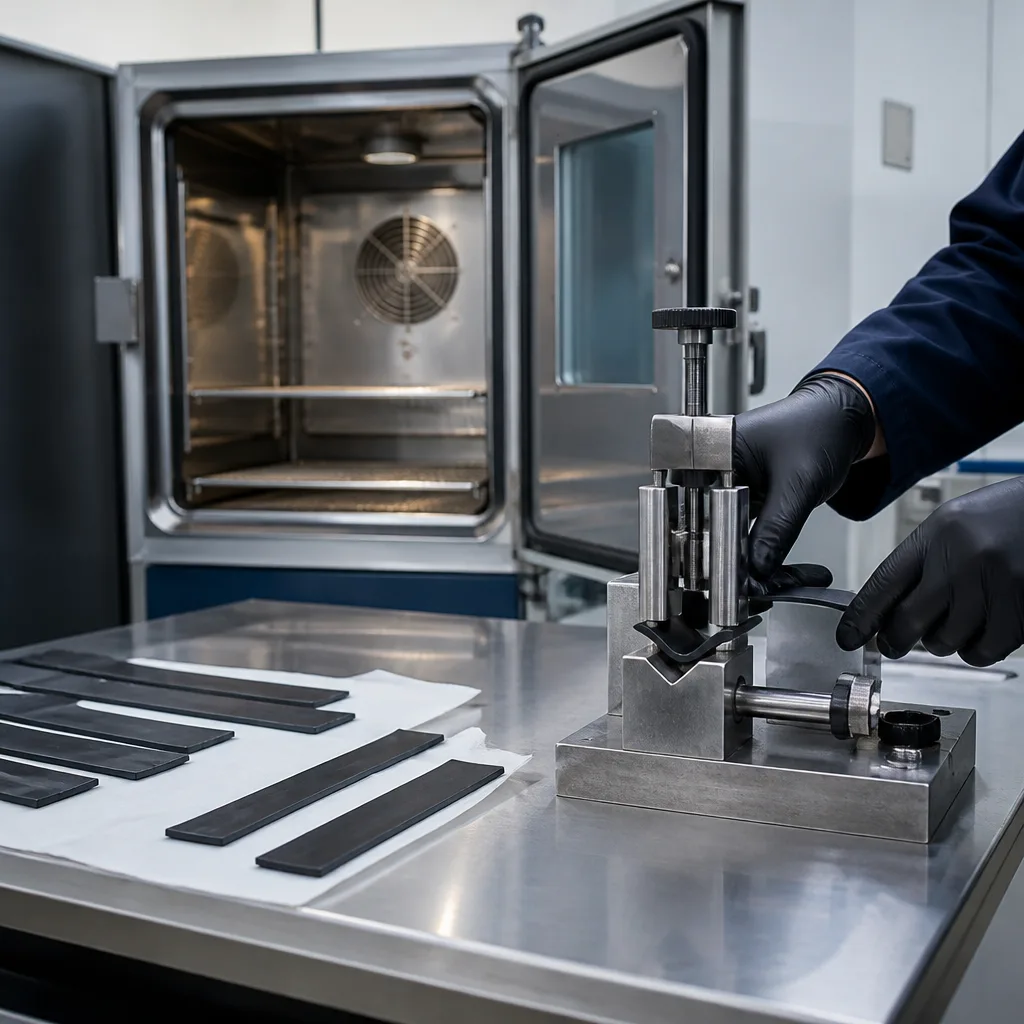
The described test method addresses a significant durability issue: materials that remain flexible at normal temperatures can become significantly harder and more brittle in cold environments. If such a material is bent, folded, assembled, or otherwise deformed, cracks may form on its surface or in its structure. The GMW 14108 standard provides a controlled method for evaluating this behavior.
The primary purpose of the GMW 14108 standard is to determine whether a material can withstand bending at cold temperatures without cracking. This is important because automotive materials can be exposed to low temperatures in the following situations:
A material that passes a flexibility test at room temperature can still fail when exposed to sufficiently low temperatures. Therefore, the GMW 14108 standard provides a way to identify this potential failure mode before the material is integrated into a vehicle.
The GMW 14108 standard is primarily associated with automotive upholstery and flexible materials, such as plastic roll materials. Depending on the applicable General Motors material specification or component requirement, the method is applicable to materials used in the following areas:
Testing laboratories list the GMW 14108 standard as a low-temperature flexural/cold crack test for automotive plastics, polymers, and interior trim materials.
The basic concept of the test is quite simple:
The critical feature is that the bending occurs under cold conditions. This allows the test to reproduce the combination of low temperature + mechanical deformation, rather than simply evaluating temperature resistance.
The exact dimensions of the sample, conditioning temperature, exposure time, bending procedure, inspection requirements, and acceptance criteria should be derived from the relevant General Motors engineering specification.
Many polymers exhibit a decrease in flexibility as temperature drops. At sufficiently low temperatures, molecular mobility decreases, and the material can behave much more brittlely. For an automotive component, this can create a number of problems:
The GMW 14108 standard is particularly valuable in the material selection and validation phases of automotive development. A supplier can compare various formulations, grades, or structures to identify a material that provides sufficient cold flexibility. Testing can also help evaluate the effects of:
In this way, the procedure is useful not only as a final quality control test, but also as a tool for material development and troubleshooting.
The GMW 14108 standard belongs to a broader family of automotive tests related to low-temperature flexibility and cracking. For example, the “GMW 3154 Mandrel bending test” evaluates the cold resistance of sealants and adhesives. This standard specifically refers to the GMW 14108 standard for carpets and other flexible materials requiring cold-temperature bending assessment. This distinction is important: the appropriate test method depends on the material type, the intended application, and the deformation mechanism.
The GMW 14108 standard is important because it combines laboratory material performance with realistic automotive durability concerns. A material may appear satisfactory under normal laboratory conditions, but fail when subjected to a combination of cold temperatures and mechanical deformation.
For General Motors suppliers, demonstrating adequate resistance to cold cracking can contribute to the following:
This method is also recognized as cold cracking/low-temperature flexibility testing by accredited automotive laboratories, validating its practical application in automotive material evaluation.
In conclusion, the GMW 14108 standard is an important test procedure for evaluating the low-temperature resistance of flexible automotive materials. Its primary purpose is to determine whether a material can withstand bending in cold conditions without cracking.
This test is particularly useful for automotive interior and trim suppliers because cold weather cracking can affect appearance, functionality, assembly performance, and long-term durability. By identifying materials that become extremely brittle at low temperatures, the GMW 14108 standard helps manufacturers select materials that can maintain reliable performance in the vehicle's expected operating environment.
For many years, our organization, with its competent and experienced staff, has been understanding the needs of its clients, providing the advanced testing services they require, and assisting them in the establishment, implementation, and improvement of management systems. Within this framework, we also provide testing services in accordance with the GMW 14108 standard.
To get an appointment, to get more detailed information or to request an evaluation, you can ask us to fill in our form and reach you.

