

Developed by General Motors Worldwide (GMW), the “GMW 16317 Bloom Tests for Elastomeric Parts” standard is a test standard used to evaluate the tendency of elastomeric materials and parts to bloom on their surfaces.
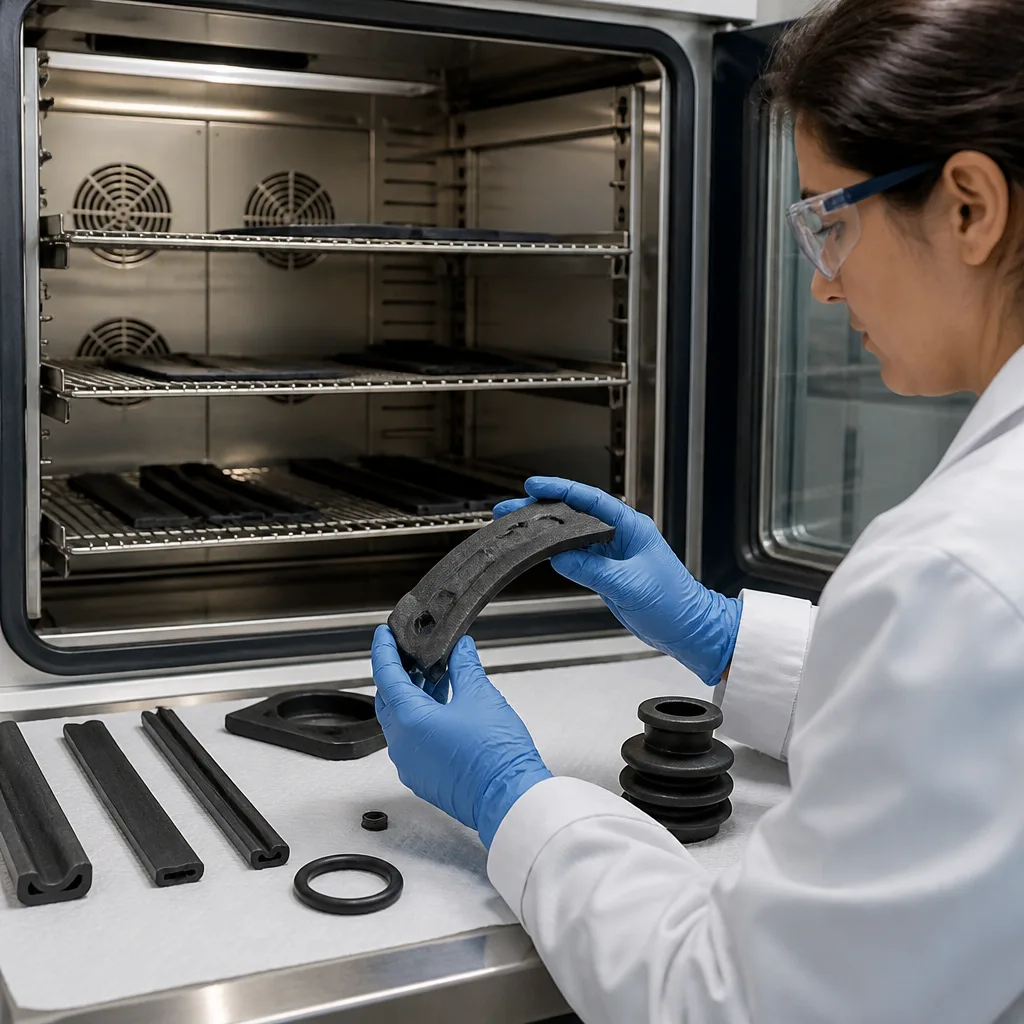
Bloom is a visible surface phenomenon in which certain components within a rubber or elastomer migrate toward the surface, forming a film, deposit, discoloration, or crystalline-looking layer. While the underlying elastomer may remain functional, excessive bloom can affect cleanliness, adhesion, friction, and the performance of mating components. Therefore, the GMW 16317 standard provides methods to determine how susceptible elastomeric parts or materials are to this phenomenon.
Elastomer formulations contain a variety of components, including:
Under certain environmental or aging conditions, some of these substances can penetrate the rubber matrix and accumulate on the surface. This process is known as blooming. Blooming should not be confused with ordinary contamination. It originates from the elastomer formulation itself and is affected by factors such as temperature, time, formulation, component compatibility, and environmental exposure.
The primary purpose of the GMW 16317 standard is to determine the blooming tendency of elastomeric parts/materials. The results can be used for:
This is especially true for automotive rubber components where surface appearance and interaction with adjacent materials are important.
The GMW 16317 standard is designed for elastomeric parts and materials. Previous versions have specifically defined applications such as airtight extrusion profiles, molded sections, and cooling hoses for particular test methods.
Typical automotive elastomer applications may include:
Precise applicability and requirements should always be determined from the relevant revision and the engineering specification of the component.
The GMW 16317 standard includes various approaches for evaluating elastomer bloom:
Detailed temperatures, durations, sample sizes, equipment settings, and acceptance criteria should be taken directly from the GMW 16317 standard, rather than from secondary sources.
A flowering assessment essentially follows these steps:
The test methods described primarily concern surface deposits resulting from the migration of components from the elastomer. Possible observations may include:
The formation of white or gray deposits on the surface does not necessarily mean that an elastomer has mechanically failed. Its significance depends on the application and applicable acceptance requirements.
GMW 16317 is important because elastomeric components are frequently exposed to temperature changes, humidity, chemicals, and prolonged aging in vehicles. An elastomer that appears satisfactory immediately after manufacturing may develop white or gray deposits during storage or use. This can lead to a variety of problems:
For General Motors suppliers, surface deposit testing can be part of a broader material validation program. The goal is not simply to determine if the rubber surface has changed, but to ascertain whether the material retains the required properties throughout its intended lifecycle. This makes bloom testing particularly valuable in the following situations:
In conclusion, the GMW 16317 standard is a standard developed to evaluate the tendency of elastomeric materials and components to develop undesirable surface deposits through the migration of formulation components. This standard offers various test methods, including environmental conditioning approaches, to assess efflorescence behavior.
The methods described are considered valuable for automotive manufacturers and suppliers because excessive glare can affect surface condition, assembly processes, material compatibility, and potentially component performance. Proper implementation of this standard helps engineers identify unsuitable elastomer formulations and improve the long-term quality and reliability of rubber components.
For many years, our organization, with its competent and experienced staff, has been understanding the needs of its clients, providing the advanced testing services they require, and assisting them in the establishment, implementation, and improvement of management systems. Within this framework, we also provide testing services in accordance with the GMW 16317 standard.
To get an appointment, to get more detailed information or to request an evaluation, you can ask us to fill in our form and reach you.

