Mercedes-Benz MBN 10306 Electrical and Electronic Components in Motor Vehicles - Environmental Requirements and Testing
The standard "Mercedes-Benz MBN 10306 Electrical and electronic components in motor vehicles - Environmental requirements and tests," published by the Mercedes-Benz Group, describes the requirements, test conditions, and test methods for electrical, electronic, and mechatronic components and systems used in motor vehicles. Any additional or different requirements, test conditions, and tests are included in the relevant component requirement standards.
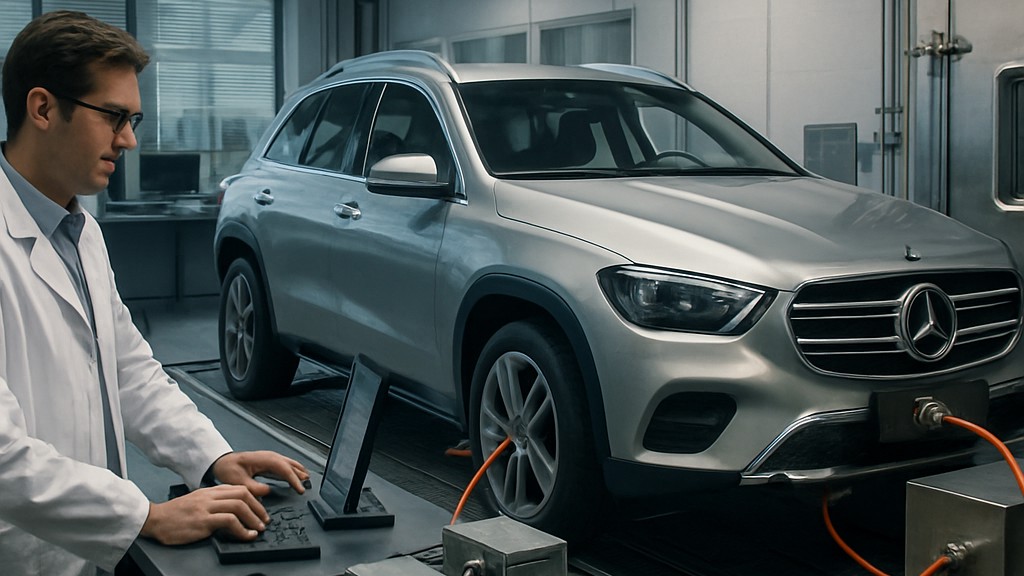
The tests presented are not intended for component qualification or manufacturing process qualification. This standard defines the minimum test scope required for approval by the Mercedes Group and provides evidence of the component's essential automotive suitability. This minimum test scope does not exempt the supplier from the obligation to develop and validate the component according to its application profile so that it reliably withstands field loads without failure.
At its core, the Mercedes-Benz MBN 10306 standard mandates a series of environmental simulations and performance assessments designed to mimic real-world stresses. For example, components may be subjected to thermal cycles—rapid transitions between scorching heat and freezing cold—to test material integrity. Vibration tests mimic the noise of highways and off-road adventures, while salt spray exposure simulates coastal corrosion. Electronic components undergo additional electromagnetic compatibility (EMC) inspections to ensure they don't interfere with other systems or become susceptible to external noise.
Suppliers aiming to deliver parts to Mercedes-Benz must demonstrate compliance through rigorous testing, which is typically carried out in accredited laboratories.
The test methods defined in this standard are specific procedures designed to verify the durability, performance, and reliability of mechanical and electronic components used in Mercedes-Benz vehicles. These methods simulate real-world conditions and stresses to ensure that components meet the company's stringent quality and safety standards. Based on industry practices and the objectives of the standard, the key test methods included in the MBN 10306 standard are:
- Environmental tests: These tests evaluate a component's ability to withstand extreme climatic conditions:
- Temperature cycling: Components are subjected to rapid temperature changes from minus 40 to plus 120 degrees Celsius to evaluate thermal expansion, material fatigue, and solder joint integrity. This mimics seasonal extremes or engine compartment conditions.
- Humidity testing: Parts are tested in high-humidity environments (for example, 85 degrees Celsius and 85 percent relative humidity) to test for corrosion, insulation degradation, or moisture intrusion, which is critical for electronic devices in coastal areas.
- Salt spray testing: Components are sprayed with a salt solution (e.g., 5 percent sodium chloride) for extended periods, such as 96 hours, to simulate corrosive environments such as exposure to road salt and ensure resistance to rust or deterioration.
- Thermal shock testing: Rapid transitions between hot and cold chambers (e.g., from 125 degrees to minus 40 degrees in seconds) stress materials, detecting cracking or delamination.
- Mechanical stress tests: These methods evaluate the resistance of a component to physical forces:
- Vibration testing: Components are subjected to random or sinusoidal vibrations (e.g., 10–2000 Hz, acceleration up to 20 g) to simulate road conditions, engine vibrations, or off-road use. This ensures that mounts, connectors, and internal parts remain intact.
- Shock testing: Sudden impacts (e.g. 50g for 11ms) are applied to simulate collisions or pothole impacts, and structural integrity is verified.
- Drop test: For portable or detachable parts, components are dropped from specified heights (e.g. 1 m) onto hard surfaces to test body durability.
- Mechanical load testing: Applies compressive or tensile forces to evaluate strength, such as torque tests for fasteners or bending tests for brackets.
- Electromagnetic compatibility (EMC) tests: These tests, critical for electronic components, ensure functionality in electromagnetic environments:
- Radiation emissions: Measures electromagnetic radiation from components, ensuring it does not interfere with other vehicle systems, in accordance with standards such as CISPR 25.
- Radiation immunity: Exposes components to external electromagnetic fields to ensure trouble-free operation in accordance with the ISO 11452 standard.
- Electrostatic discharge (ESD): Maintains the functionality of electronic components by applying high-voltage discharges (e.g., 8 kV contact, 15 kV air) to simulate static shocks.
- Functional and performance tests: These verify that components meet operational requirements:
- Durability testing: Simulates long-term use by putting components through thousands of operational cycles (e.g., button presses, engine starts) to detect wear or failure.
- Electrical load testing: Tests electronics under varying voltage and current conditions (e.g. 9-16V for 12V systems) to ensure stability during battery surges.
- Signal integrity testing: Verifies data accuracy and latency under stress for sensors and communication modules, which is critical for systems such as the controller area network path or radar.
- Chemical resistance tests: Components are exposed to automotive fluids (e.g., oil, coolant, brake fluid) or cleaning agents to ensure they resist chemical degradation or swelling, particularly for plastics and seals.
- Aging and life cycle testing:
- Accelerated life testing: Predicts lifespan and failure modes by subjecting components to long-term stress (e.g., continuous operation at high temperatures).
- UV exposure testing: For exterior parts, years of sunlight exposure are simulated using xenon arc lamps to check for fading, cracking, or material degradation.
Ultimately, the Mercedes-Benz MBN 10306 standard reminds us that in a world rapidly moving towards electric vehicles, innovation is not born alone but is shaped by relentless verification.
Our organization, with its competent and experienced team, has been understanding the needs of its customers for years, providing them with the advanced testing services they need, and assisting them in the establishment, implementation, and improvement of management systems. In this context, we also provide testing services in accordance with the "Mercedes-Benz MBN 10306 Motor Vehicle Electrical and Electronic Components - Environmental Requirements and Testing" standard.



