

The “GMW 15793 Window Seals and Trims – Ice Scraper Damage Test” standard, developed by General Motors Worldwide (GMW), is designed to evaluate the resistance of automotive window seals, gaskets, and moldings to damage from ice scraping. This standard is particularly important for vehicle components that operate in cold weather conditions and where drivers may use ice scrapers to remove ice or frost from windows. Repeated or improper scraping can damage sealing surfaces, create visible defects, or reduce the functional performance of the component.
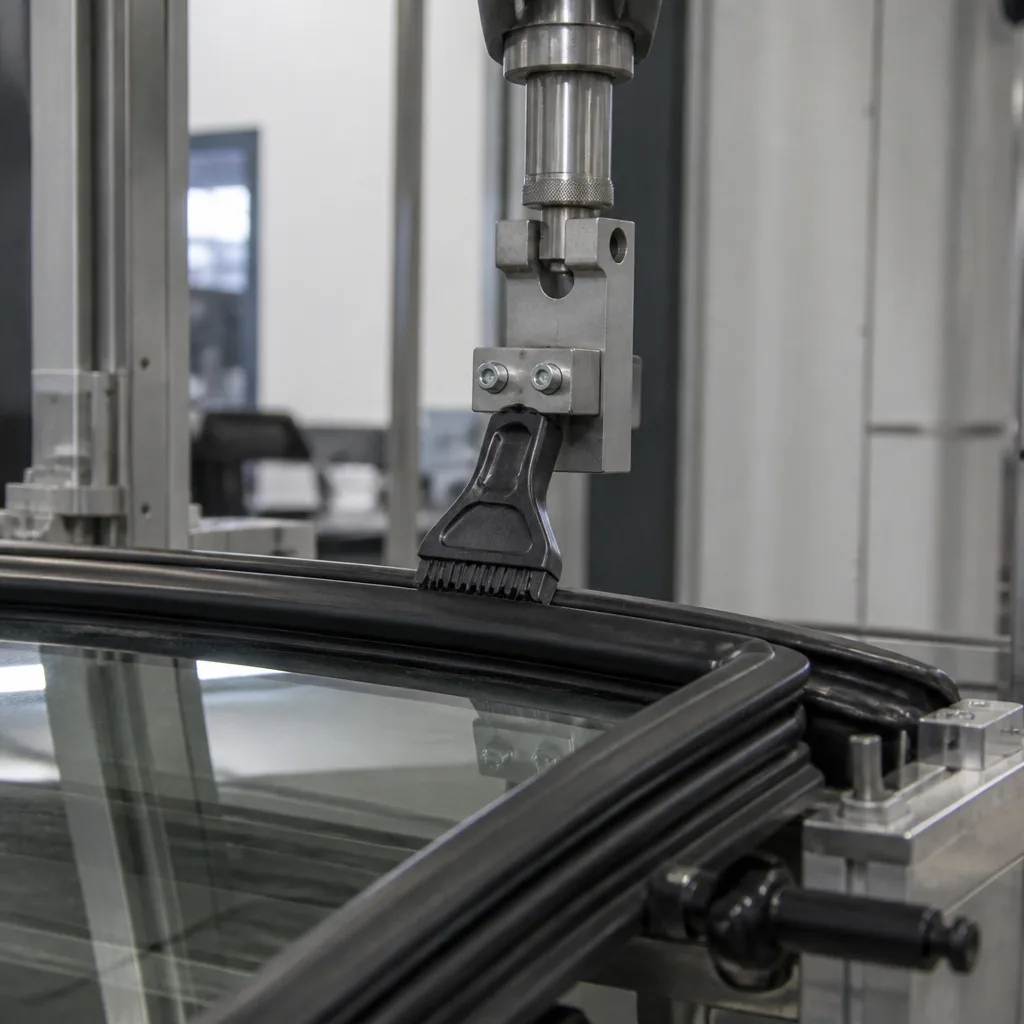
The primary purpose of the GMW 15793 standard is to determine whether a glass seal or mold can withstand contact with an ice scraper without unacceptable damage. This test helps to evaluate the following:
This provides a controlled laboratory method for evaluating the durability of a component, rather than relying solely on field experience.
The GMW 15793 standard specifically addresses window seals and trim. These components may include rubber, elastomeric, thermoplastic, or other materials used around vehicle windows. Typical applications may include:
This test is particularly important for components located where the ice scraper might come into contact during normal winter maintenance.
The basic principle in the tests is to subject the test component to the damaging impact of an ice scraper under controlled conditions. An ice scraper is placed in contact with the relevant surface and moved across the test area according to the described procedure. The controlled application allows for the comparison of different materials and designs under consistent conditions. After the test, the component is examined for signs of damage.
Depending on the requirements of the applicable vehicle program, the assessment may include the following observations:
The specific equipment, sample preparation, test conditions, cycle/stroke count, and acceptance criteria are detailed in the GMW 15793 standard.
Window seals and moldings serve both functional and aesthetic roles. Therefore, damage caused by an ice scraper can have consequences beyond simple cosmetic deterioration. A damaged weather seal strip can potentially affect:
Tests conducted according to the GMW 15793 standard allow manufacturers and suppliers to identify critical materials or designs before vehicle production begins.
In general, the testing process follows these steps:
Since GMW 15793 is a controlled automotive original equipment manufacturer (OEM) test standard, actual test parameters should not be inferred from general descriptions.
The GMW 15793 standard is an example of application-specific durability testing. Instead of evaluating a material under a general abrasion or scratch test, it reproduces a specific real-world vehicle usage condition: scraping ice off a window. This is important because conventional abrasion tests may not be able to reproduce the intense mechanical action produced by a hard ice scraper.
Consequently, a material may perform well in a general abrasion test but still be vulnerable to localized scratch damage.
This standard is also described by testing laboratories as an ice scraper damage test for window seals and moldings.
The GMW 15793 standard is found to be useful in various stages of automotive development for the following reasons:
In conclusion, the GMW 15793 standard includes a test method used to evaluate the resistance of automotive window seals and trims to damage from ice scraper contact. The importance of this standard stems from its reproduction of a realistic winter usage condition that could cause scratching, cutting, gouging, tearing, or other deterioration of window seals and trim components. By subjecting components to a controlled ice scraper test, automotive manufacturers and suppliers can identify unsuitable materials or designs and improve the durability, appearance, and functional reliability of vehicle window systems.
For many years, our organization, with its competent and experienced staff, has been understanding the needs of its clients, providing the advanced testing services they require, and assisting them in the establishment, implementation, and improvement of management systems. Within this framework, we also provide testing services in accordance with the GMW 15793 standard.
To get an appointment, to get more detailed information or to request an evaluation, you can ask us to fill in our form and reach you.

