

The “GMW 16449 Electrical Component Fluid Compatibility” standard, published by General Motors (GM), describes a procedure that specifies how electrical and electronic components in vehicles should withstand exposure to various automotive fluids.
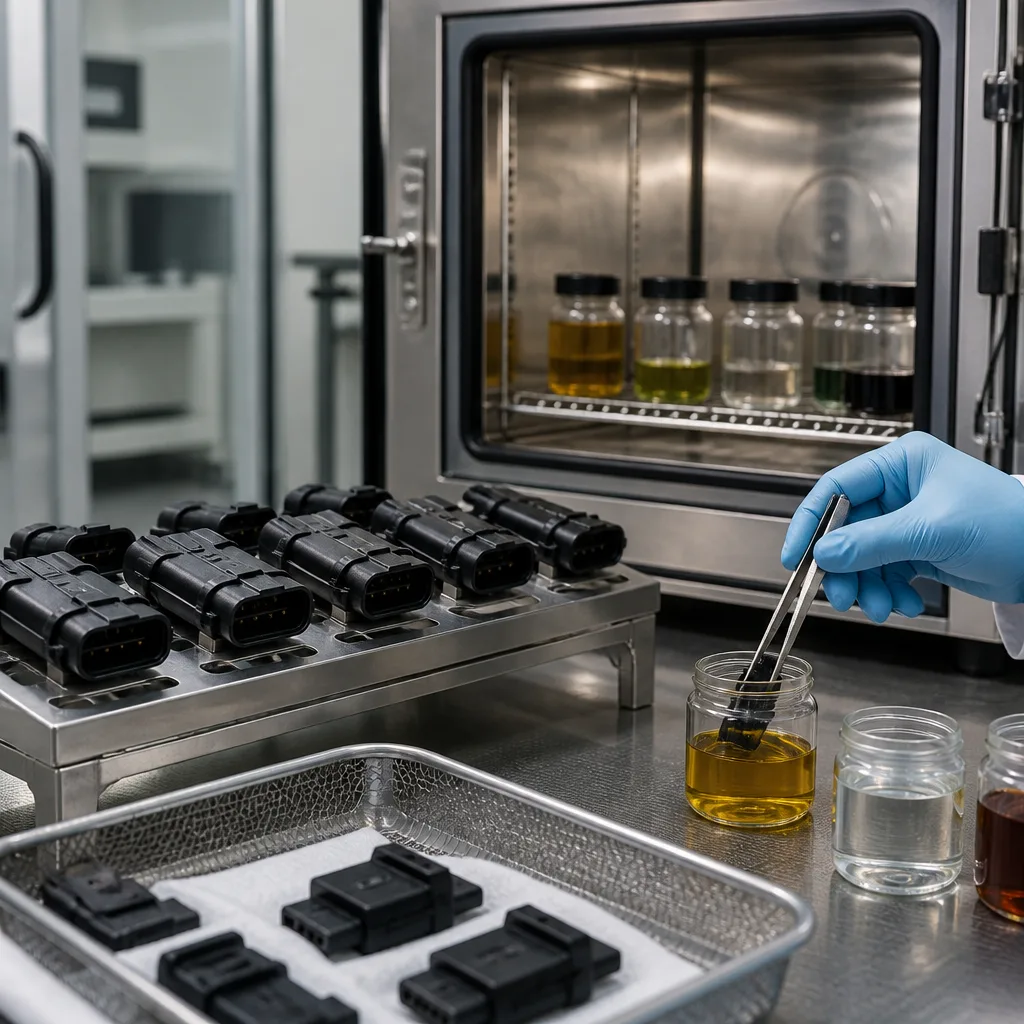
This standard ensures that vehicle operating fluids, chemicals, and oils do not degrade the materials, identities (e.g., labels or markings), or functionality of electrical and electronic components. Electrical and electronic parts in automobiles are exposed to many fluids (such as engine oils, coolants, brake fluids, and cleaners), and this specification provides a standardized way to verify their resistance.
This standard is applicable to all electrical components in GM vehicles. Method A, as described, applies specifically to the visible parts of the components (e.g., interior or exterior surfaces seen by passengers).
Test fluids, procedures, exposure conditions, and pass/fail criteria can be customized according to the component's location, structure, international protection rating, and expected fluid exposure. Tests are typically performed using parts intended for manufacturing under realistic stresses.
The GMW 16449 standard includes two main methods:
These tests typically evaluate changes in appearance, functionality, material integrity, and markings after environmental conditioning following immersion, wiping, or spraying.
Common fluids tested include aggressive automotive fluids, selected primarily based on the likelihood and severity of exposure. For example,
Electrical and electronic components are exposed to a variety of different fluids. Exposure to these fluids can affect the functionality of these electrical or electronic devices. Fluid compatibility tests are performed to ensure that vehicle operating fluids, chemicals, and oils will not impair the materials, identification, or function of electrical or electronic components. Other fluids not listed may also come into contact with electrical or electronic components, but these are considered more aggressive. The specified list of fluids has been selected based on the likelihood and severity of exposure.
In short, the GMW 16449 standard describes a laboratory method used to measure volatile substances released from vehicle interior upholstery materials when exposed to high temperatures. These substances can condense on cooler surfaces such as windshields, instrument panels, or screen covers, forming a foggy film.
Modern vehicles incorporate many polymeric and textile materials, such as the following.
When heated by sunlight or cabin conditions, these materials can release volatile organic compounds (VOCs) and semi-volatile compounds. The GMW 16449 standard assesses the likelihood of these emissions causing visible condensation. This standard helps manufacturers by:
The testing method typically follows these steps:
GMW 16449 standard is commonly used in the following areas:
Suppliers are typically required to submit test reports demonstrating compliance before receiving material approval under GM programs.
The GMW 16449 standard is necessary because interior vehicle materials are constantly exposed to heat, sunlight, and aging, which can cause volatile substances to be released into the cabin. If these emissions are not controlled, various quality, safety, and customer satisfaction issues can arise. The main reasons why this standard is considered important are as follows:
For many years, our organization, with its competent and experienced staff, has been understanding the needs of its clients, providing the advanced testing services they require, and assisting them in the establishment, implementation, and improvement of management systems. Within this framework, we also provide testing services in accordance with the GMW 16449 standard.
To get an appointment, to get more detailed information or to request an evaluation, you can ask us to fill in our form and reach you.

