

Developed by BMW, a multinational automotive manufacturer, the “BMW GS 93010-2 Elastomers - Test procedure and tolerances for material properties” standard applies to materials and components made from non-foaming cross-linked elastomers, in conjunction with the GS 93010-1 and GS 93010-3 standards. This standard defines material requirements and test conditions relating to material and function.
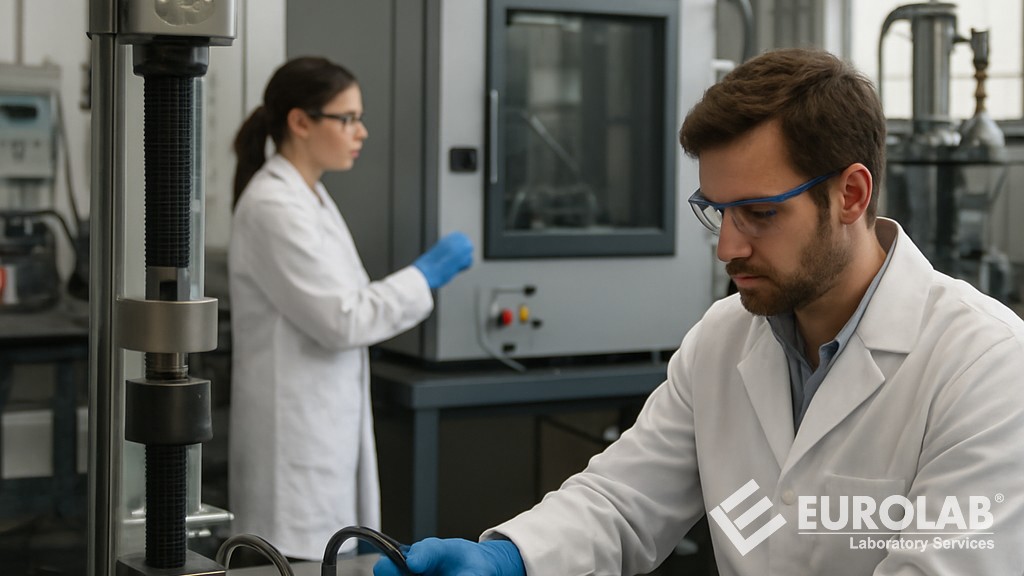
This standard defines test procedures and tolerances for material properties. The specified tolerances relate to material characteristic values and identification values.
Chemical and physical values should preferably be determined on test samples taken from the finished part. If these values are determined using sheet material, this should be stated in the test report. When comparing components/test sheets, deviations may occur due to different manufacturing methods. Test samples should be stored at normal laboratory temperature, protected from heat radiation and exposure to light. After heat aging, hygroscopic test samples should be conditioned for at least 24 hours at a temperature of 23 degrees and 0 percent relative humidity.
Unless otherwise specified, tests should be performed at normal laboratory temperature according to DIN ISO 23529 standard. For countries with temperate climates, this is 23 degrees plus/minus 2 degrees, and for countries with tropical or subtropical climates, it is 27 degrees plus/minus 2 degrees. When normal laboratory temperature is used for tropical or subtropical climates, a corresponding note should be included in the test report.
The BMW GS 93010-2 standard is a key standard for elastomer testing in automotive applications. This standard specifically addresses elastomers, which are rubber-like materials commonly used in vehicle components such as gaskets, O-rings, seals, hoses, vibration dampers, and other non-foaming, cross-linked elastomer parts.
The GS 93010-2 standard defines standardized test procedures and tolerances for the material properties of elastomers. This standard ensures that these materials meet the demanding performance, durability, and reliability requirements required in real-world conditions (extreme temperatures, ambient exposure, mechanical stress, aging, etc.) in BMW vehicles.
This standard applies to:
This standard does not define specific compound formulas or application approvals; these are generally addressed in related standards such as GS 93010-3.
This standard includes detailed methods for determining identity values and physical/mechanical properties. Common aspects of these methods include:
Test conditions, evaluation criteria, and allowable tolerances are precisely defined to ensure repeatability and accuracy between laboratories and suppliers.
For BMW suppliers, compliance with the GS 93010-2 standard is generally mandatory:
Many independent testing laboratories offer accredited testing services according to this standard. Manufacturers of elastomer compounds refer to this standard when certifying their materials.
The BMW GS 93010-2 standard is necessary because elastomers (rubber-like materials) in modern vehicles face extremely demanding conditions that general international standards often do not cover with the precision, seriousness, or combination of standards required by top-tier original equipment manufacturers like BMW. The main reasons why this standard is considered important are:
Standard industry tests may accept wider tolerances or milder conditions that are insufficient to guarantee zero leakage performance, no hardening/cracking, or no swelling/shrinkage in these genuine BMW-specific scenarios.
In conclusion, the BMW GS 93010-2 standard is the fundamental test specification for ensuring elastomer quality and consistency in BMW vehicles. It helps guarantee that rubber components, from engine bays and transmissions to chassis and interior applications, perform reliably throughout the vehicle's lifespan, even under demanding environmental and mechanical loads.
For many years, our organization, with its competent and experienced staff, has been understanding the needs of its clients, providing the advanced testing services they require, and assisting them in the establishment, implementation, and improvement of management systems. Within this framework, we also provide testing services in accordance with the BMW GS 93010-2 standard.
To get an appointment, to get more detailed information or to request an evaluation, you can ask us to fill in our form and reach you.

