VW 75174 Motor Vehicle Fasteners - Tests
The “VW 75174 Motor Vehicle Connectors - Tests” standard, developed by the Volkswagen automotive company, describes the requirements, test methods, and test conditions for connectors used in motor vehicles. Connectors are used to separate and connect cables in motor vehicles. They are used to electrically and mechanically connect components or modules to each other, creating functional units or separating them.
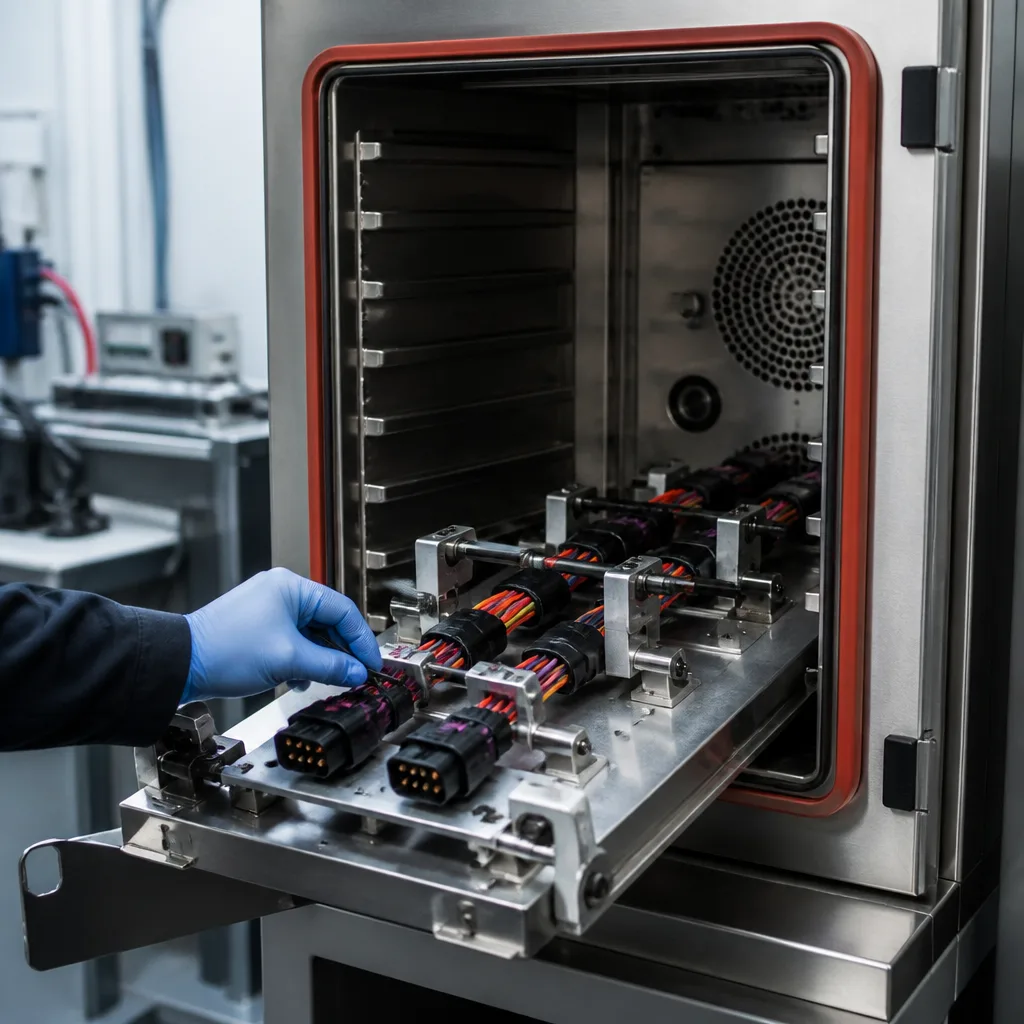
The VW 75174 standard is a widely used automotive connector test specification that defines the electrical, mechanical, and environmental verification requirements for motor vehicle connectors and terminal systems. This standard is closely related to the German automotive industry standard family known as LV 214.
The VW 75174 standard specifies how automotive connectors should be tested to ensure reliability in harsh vehicle environments. Typical validation areas include:
- Mechanical durability
- Contact retention and attachment force
- Vibration resistance
- Thermal cycle
- Corrosion resistance
- Electrical performance
- Leakproof integrity
- Compression quality
- Misuse and matching tests
The aim is to guarantee connector reliability throughout the lifespan of a vehicle. This standard evolved from the German original equipment manufacturers' collaboration standard LV 214, developed by major automotive manufacturers including Audi, BMW, Daimler, Porsche, and Volkswagen. VW equivalents of the LV 214 standard are:
- VW 75174
- Volkswagen 75174-1
- Volkswagen 75174-2
- Volkswagen 75174-3
The main sections of the VW 75174 standard are as follows:
- Dimensional and material verification: Tests verify the following:
- Connector geometry
- Material composition
- Surface coatings
- Body compatibility
- Mechanical tests include:
- Terminal holding force
- Contact link
- Binding locking systems
- Matching/separation force
- Fall tests
Examples of referenced product features include:
- Terminal attachment force limits
- Holding force requirements
- Locking and polarization controls
Environmental tests: This standard evaluates connector performance under the following conditions:
- High/low temperature exposure
- Gender
- Thermal shock
- Salt spray
- Chemical exposure
- Vibration and mechanical shock
Electrical tests: These include:
- Contact resistance
- Insulation resistance
- Tensile strength
- Current carrying capacity
- Dropping behavior
The VW 75174 standard divides many requirements into test group categories. For example,
- PG1 Dimensions
- PG3 Materials Analysis
- PG4 Contact link
- PG7 Body functional reliability
- PG8 Terminal mounting/holding
- PG10 Tensile strength
The VW 75174 standard is commonly used by:
- Automotive connector manufacturers
- Cable harness suppliers
- Tier-1 automotive suppliers
- Electric vehicle component developers
- Automotive testing laboratories
The VW 75174 standard is becoming increasingly important, especially for electric vehicles:
- High-density automotive electronics
- Advanced driver assistance systems (ADAS)
- Electric vehicle battery connectors
- High vibration environments
- High-temperature under-hood applications
Modern automotive connectors must withstand severe thermal and vibrational stress while maintaining low electrical resistance.
In conclusion, the VW 75174 standard is one of the key connector qualification standards in the automotive industry. It defines rigorous verification methods to ensure connector reliability under demanding automotive conditions, particularly for modern electronic and electric vehicle systems. This standard forms the basis of many original equipment manufacturer and supplier qualification programs in the European automotive industry.
The VW 75174 standard consists of the following sub-sections:
- The “VW 75174-1 Motor vehicle connectors - Single-wire sealing systems” standard focuses specifically on single-wire sealing systems used in automotive electrical connectors. This standard is consistent with the German automotive cooperation specification LV 214-1. The main purpose of this standard is to define the following for connectors that use individual wire seals to prevent the ingress of moisture, dust, and contaminants:
- Design requirements
- Test procedures
- Qualification criteria
- Environmental and mechanical performance limits
This standard applies to:
- Leakproof automotive connectors
- Individual cable washers/seals
- Terminal gap sealing systems
- Connector systems used in harsh environments.
Typical applications include:
- Engine compartments
- Transmission systems
- Outdoor lighting
- Chassis electronics
- EV battery systems
- Sensor connections
These locations expose the connectors to water spray, salt, oil, fuel, mud, thermal cycling, and vibration.
The VW 75174-1 standard ensures that sealed connectors maintain the following throughout the vehicle's lifespan:
- Electrical continuity
- Mechanical integrity
- Environmental protection
- Long-lasting durability
Environmental verification is a key part of the VW 75174-1 standard. Typical tests include:
- Thermal cycling: Expansion/contraction resistance
- Salt spray: Corrosion resistance
- Moisture exposure: Moisture resistance
- Immersion in water: Seal effectiveness
- Dust exposure: Contaminant protection
- Chemical resistance: Oil/fuel resistance
Mechanical tests confirm the following:
- Terminal holding
- Connector locking
- Cable strain relief
- Gasket displacement resistance
- Vibration resistance
This standard also defines the following limits for electrical requirements:
- Contact resistance
- Insulation resistance
- voltage drop
- Current carrying capacity
The “VW 75174-2 Motor vehicle connectors - Terminal systems” standard describes test methods for verifying resistance stability for component qualification. It should be used especially for solderless compression connections of contact elements and electrical vehicle cables. This standard is the part of the Volkswagen connector qualification standard family that focuses on electrical terminal systems used in automotive connectors. It is closely aligned with the German industry standard LV 214-2. This standard defines the following for automotive terminals and contact systems used in vehicle electrical architectures:
- Design requirements
- Verification procedures
- Mechanical and electrical performance criteria
- Environmental durability requirements
The aim of this standard is to ensure that automotive terminals provide the following throughout the vehicle's lifecycle:
- Stable electrical contact
- Low contact resistance
- Long-term mechanical adhesion
- Corrosion resistance
- Reliability under vibration and temperature stress.
The VW 75174-2 standard applies to the following:
- Compression terminals
- Female socket contacts
- Male blade contacts
- Spring contact systems
- High current terminals
- Signal terminals
- Connector contact interfaces
Applications include:
- Motor control systems
- Body electronics
- Information and entertainment systems
- Sensors
- Lighting systems
- ADAS modules
- Electric vehicle power electronics
- Relationship with LV 214-2
In automotive wiring systems, compression quality is crucial. Tests include:
- Tensile force
- Compression height verification
- Microsectional analysis
- Electrical resistance measurement
- Compression deformation analysis
This standard defines limits and methods for electrical performance, including:
- Contact resistance
- voltage drop
- Current carrying capacity
- Temperature increase under load
- Insulation resistance
Mechanical tests evaluate the following:
- Attachment force
- Extractive force
- Terminal holding
- Locking system integrity
- Repeated mating cycles
Automotive terminals are exposed to harsh environments. Typical environmental tests include:
- Thermal cycle: Expansion fatigue
- Vibration: Friction/corrosion resistance
- Salt spray: Corrosion assessment
- Moisture exposure: Moisture resistance
- Mixed flowing gas: Contact corrosion behavior
- High-temperature aging: Long-term material stability.
The main focus of the VW 75174-2 standard is to maintain low and stable contact resistance. The standard follows these principles:
- Initial resistance
- Post-aging resistance
- Resistance after vibration
- Post-thermal cycling resistance
The VW 75174-2 standard has become increasingly important for electric vehicles, hybrid vehicles, high-current charging systems, and battery management systems. Electric vehicle applications place additional stress on terminals.
- The “VW 75174-3 Motor vehicle connectors - Multi-core sealing systems” standard is a supply specification and should only be used in conjunction with the LV214 standard. This standard is the part of the automotive connector qualification standard family that focuses on multi-core sealing systems for automotive connectors and cable assemblies. It closely overlaps with the German automotive industry standard LV 214-3.
This standard defines verification requirements for the following:
- Multi-wire sealing concepts
- Cable exit sealing systems
- Connector rear washers
- Multi-core cable interfaces
- Environmental protection of grouped wire entrances
The primary objective is to verify that multi-core leak-proof connection systems maintain the following characteristics throughout the vehicle's lifespan:
- Environmental sealing
- Electrical reliability
- Mechanical integrity
- Cable strain relief
- Resistance to thermal and vibration stress.
Unlike the VW 75174-1 standard, which focuses on individual wire seals, the VW 75174-3 standard addresses sealing systems where multiple wires pass through a common sealing interface. This standard applies to:
- Rear connector washers
- Multi-strand cable outlets
- Bulk cable sealing systems
- Molded cable outlets
- Cable harness-connector sealing interfaces
Typical automotive applications include:
- Motor control units
- Transmission cable harnesses
- Chassis modules
- Battery systems
- ADAS sensor modules
- Outdoor lighting units
- High-density electronic modules
Typical environmental tests include:
- Thermal cycling: Expansion/contraction stress
- Water immersion: Leak resistance.
- High-pressure spraying: Wash resistance.
- Salt spray: Corrosion resistance
- Moisture exposure: Moisture tolerance
- Chemical exposure: Oil/fuel resistance
Mechanical tests evaluate the following:
- Cable strain relief
- Well seal retention
- Cable bending resistance
- Reliability of the connector locking mechanism.
- Vibration resistance
After environmental and mechanical tests, the connection system must meet the following requirements in terms of electrical reliability:
- Contact resistance limits
- Insulation resistance requirements
- Voltage withstand capacity
- Signal stability criteria
For many years, our organization, with its competent and experienced staff, has been understanding the needs of its customers, providing the advanced testing services they require, and assisting them in the establishment, implementation, and improvement of management systems. Within this framework, we also provide testing services in accordance with the VW 75174 standard.



