

Developed jointly by the Society of Automotive Engineers (SAE) and the United States Automotive Research Council (USCAR), the SAE USCAR 5 standard outlines conditions that increase the risk of hydrogen embrittlement of steel and provides the mitigation procedures needed to minimize the risk of hydrogen embrittlement. The standard is designed to control these processes.
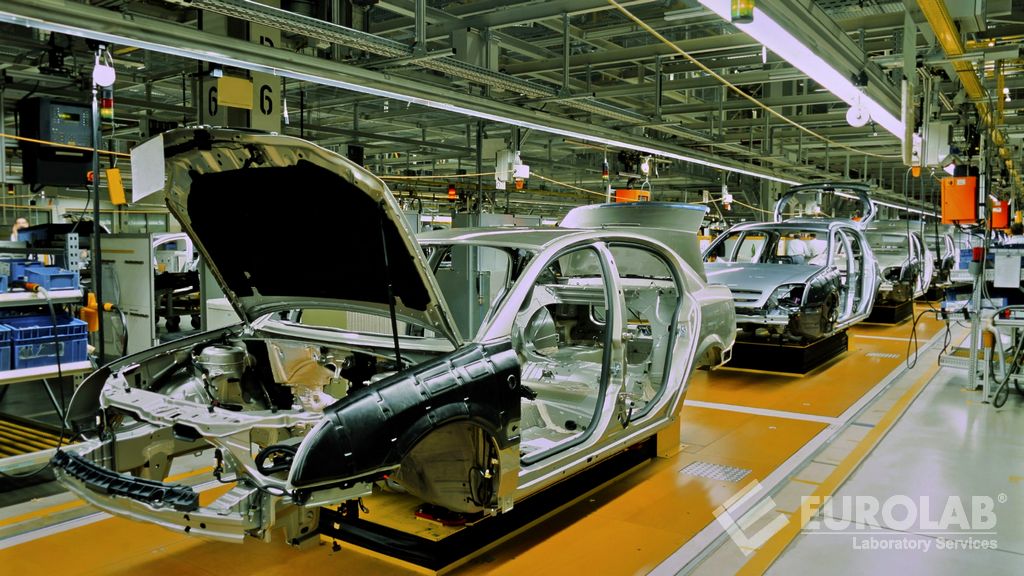
Hydrogen embrittlement of steel, which causes brittle fractures under stress, occurs as a result of hydrogen absorption during cleaning, phosphate coating and coating processes. The susceptibility to hydrogen embrittlement increases with stress and material strength.
Hardness readings in this standard are on the Vickers scale. For conversion to other scales, the SAE J417 standard was used (SAE J417 hardness tests and hardness number conversions standard).
Hydrogen embrittlement (brittleness) occurs as a result of the penetration and diffusion of hydrogen into the material. The degree of brittleness is affected by both the amount of hydrogen absorbed and the microstructure of the material. Microstructures that provide high strength, usually followed by the level of hardness, or have certain distributions of grain boundary particles, cause increased susceptibility to embrittlement.
This becomes important when it generally leads to cracking. This happens when enough stress is applied to a fragile object with hydrogen. Such stress states arise both from the presence of residual stresses, from related manufacturing processes such as forming and welding, and from applied service stresses. The intensity of hydrogen embrittlement is a function of temperature. Many metals are immune to hydrogen embrittlement above about 150 degrees Celsius.
Hydrogen can enter metals that are normally only in the form of atoms or hydrogen ions. Therefore, gaseous hydrogen is not absorbed by metals at ambient temperatures, as it is in molecular form in which pairs of atoms are tightly bound together. But as the temperature rises, the molecules tend to dissociate into separate atoms, allowing absorption.
Higher absorption rates are experienced in the molten material. Hydrogen ions are also produced by reactions associated with processes such as corrosion, electroplating, and cathodic protection. As a result, there are many ways for hydrogen to enter metallic components.
Cracking associated with hydrogen embrittlement has taken on various names depending on the situations in which it occurs. A few commonly used expressions are: cold cracking and delayed cracking, hydrogen-induced cracking or hydrogen pressure-induced cracking, hydrogen-induced stress cracking, environment-supported cracking, and stress corrosion cracking.
Among the numerous test, measurement, analysis and evaluation studies it provides for businesses in various sectors, our organization also provides testing services for the prevention of hydrogen embrittlement of steel within the scope of SAE USCAR 5 standard, with its trained and expert staff and advanced technological equipment.
To get an appointment, to get more detailed information or to request an evaluation, you can ask us to fill in our form and reach you.

