

The “FCA PF.90223 Instrument Panel Module Assembly” standard, developed by Fiat Chrysler Automobiles (FCA) (now Stellantis), an Italian-American automotive company, describes the requirements for instrument panel module assembly (often referred to as an instrument panel or IP module system).
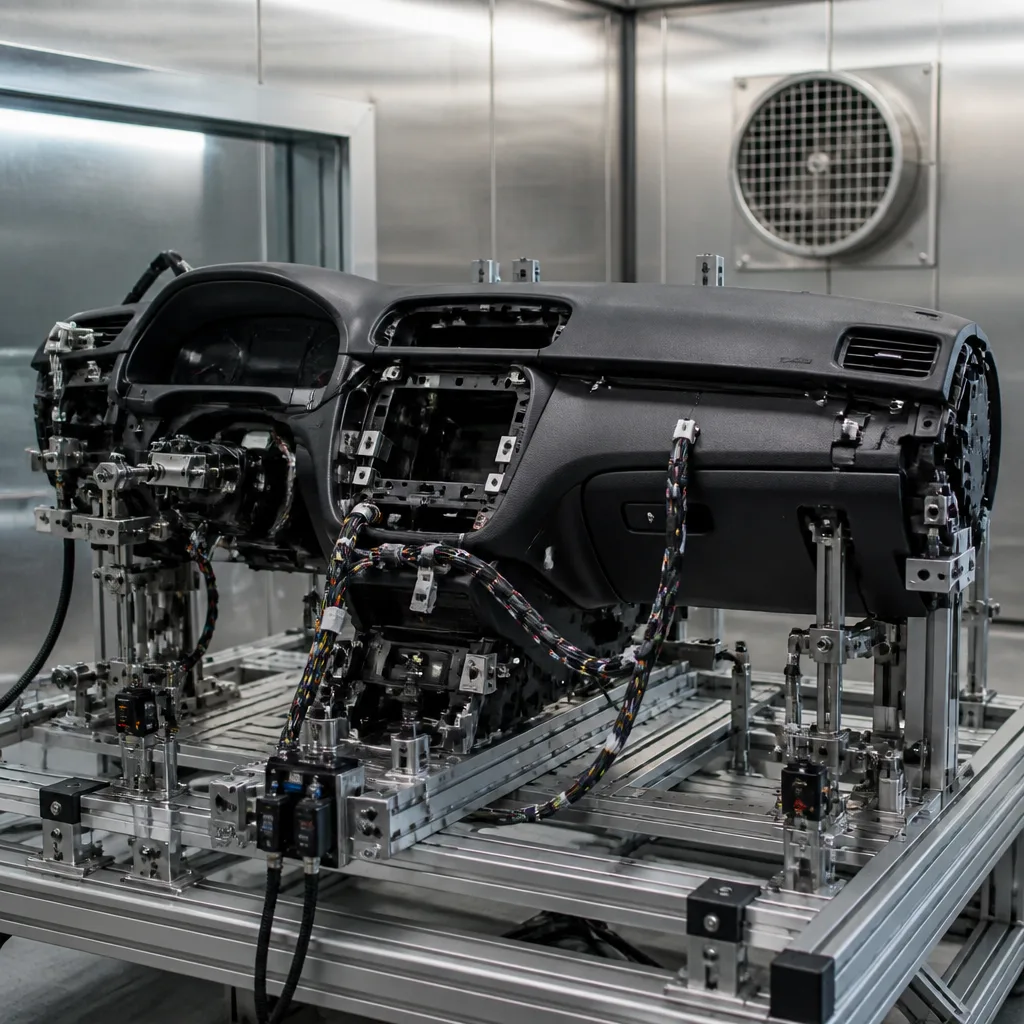
This standard specifies performance, durability, environmental resistance, and functional requirements for complete instrument panel module assemblies in vehicles. It ensures that the assembly (including construction, coatings, foams, connections, and integrated components) meets quality, safety, and longevity criteria in real-world automotive conditions.
Typically, the key considerations within the scope of this standard are as follows:
Engineering drawings and specific part requirements take precedence over general standards.
The FCA PF.90223 standard ensures that the instrument panel module is based on the following:
This is critical for passenger safety, long-term aesthetics, and vehicle reliability. Accredited laboratories regularly test components to this standard as part of the manufacturing part approval process or supplier qualification.
Test laboratories refer to specific sections for targeted assessments of the following types:
The FCA PF.90223 standard and similar FCA standards belong to a family of performance-oriented specifications for internal modules. Following the merger of FCA-PSA with Stellantis, some standards have been updated or harmonized, but the FCA PF.90223 standard continues to be used as a reference in test scopes and supplier documentation.
In short, the FCA PF.90223 standard is an internal engineering and performance specification. This standard is primarily related to instrument panel module assembly used in automotive interiors. It defines the technical requirements for the design, manufacture, and verification of complete instrument panel (IP) module assemblies. The instrument panel is one of the most complex interior modules in a vehicle and integrates the following:
This standard ensures that these integrated components work together reliably as a module before vehicle assembly. The main requirements covered are:
The FCA PF.90223 standard is primarily used by the following sectors:
This standard helps suppliers offer a pre-validated module that reduces assembly line problems and improves vehicle quality consistency.
The FCA PF.90223 standard is necessary because the instrument panel module is not merely a decorative instrument panel, but a highly integrated safety and functional system within the vehicle. A single instrument panel assembly includes structural components, electronics, air ducts, upholstery materials, storage compartments, and typically the passenger airbag. Without a specific standard, manufacturers face significant quality and safety risks. This standard is considered important for the following reasons:
In conclusion, the FCA PF.90223 standard is an original equipment manufacturer-specific automotive engineering standard focused on verifying the performance, safety, and quality of instrument panel module assemblies. It is critical to ensuring that instrument panel modules meet size, functional, environmental, and safety expectations before being integrated into FCA/Stellantis vehicles.
For many years, our organization, with its competent and experienced staff, has been understanding the needs of its clients, providing the advanced testing services they require, and assisting them in the establishment, implementation, and improvement of management systems. Within this framework, we also provide testing services compliant with the FCA PF.90223 standard.
To get an appointment, to get more detailed information or to request an evaluation, you can ask us to fill in our form and reach you.

