

The “GMW 14892 Adhesion Requirements for Bonded Interior Parts” standard, developed by General Motors Worldwide (GMW), is an engineering specification used to evaluate the adhesion performance of materials and components bonded together for automotive interior applications. This specification defines requirements aimed at ensuring that adhesive bonds remain durable during environmental and mechanical conditions within a vehicle.
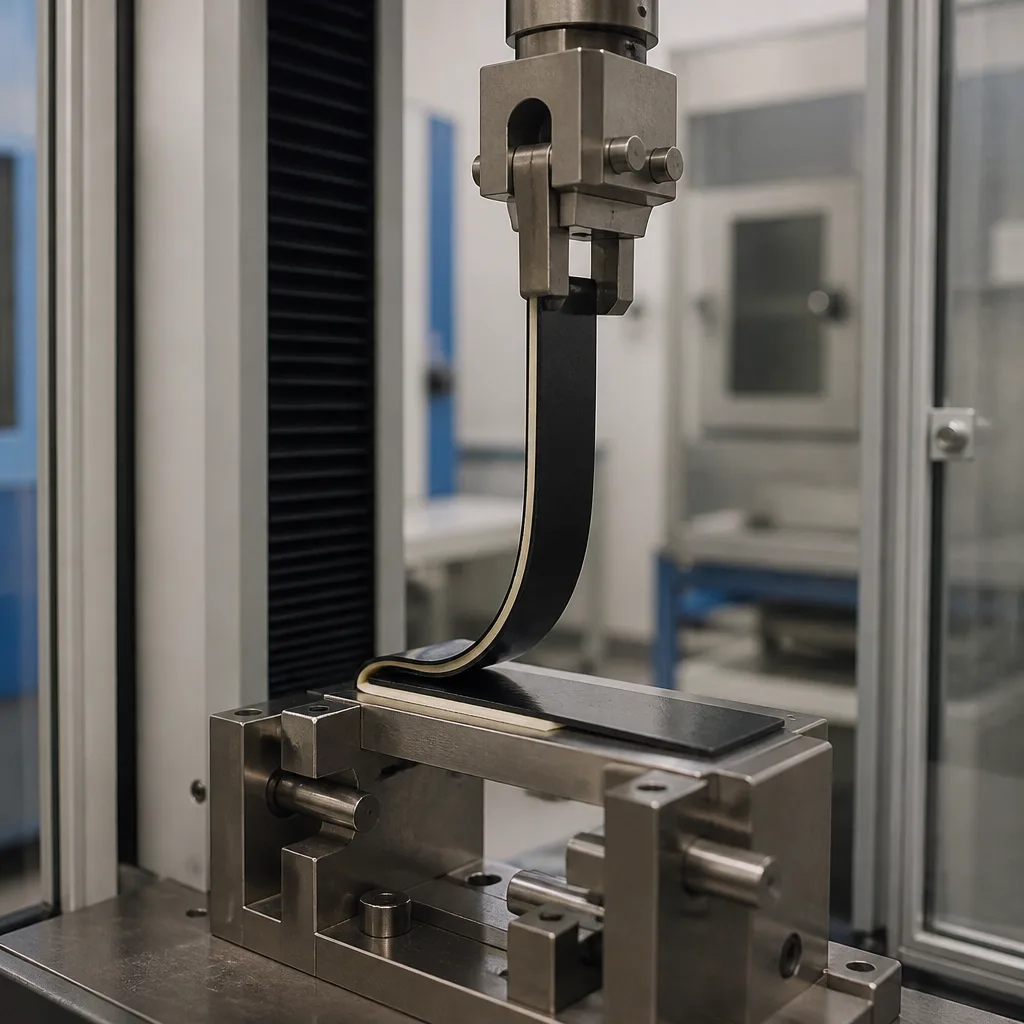
This specification is particularly important for interior components manufactured using adhesive bonding where loss of adhesion can lead to peeling, lifting, delamination, edge separation, or component failure.
The primary purpose of the GMW 14892 standard is to verify that an adhesive system provides an adequate and durable bond between interior substrates. Automotive interiors are exposed to temperature variations, humidity, heat, mechanical loads, and other environmental influences. An adhesive that performs well at room temperature may lose its strength after heat aging, exposure to humidity, or environmental cycling. Therefore, this standard evaluates adhesion under different conditions, rather than relying solely on initial adhesion measurements. This standard also works in conjunction with the GMW 14444 standard, which contains applicable requirements for bonded interior parts.
The GMW 14892 standard defines various adhesive technologies used for bonded interior applications. These include:
These adhesive systems can be used to bond or laminate materials such as plastics, textiles, foams, films, decorative surfaces, and other interior substrates.
The GMW 14892 standard includes adhesion assessments designed to determine both initial and environmentally aged performance. The test methods defined under this standard are as follows:
One of the key features of the GMW 14892 standard is the evaluation of adhesive performance after environmental exposure. Examples reported in the technical documentation are as follows:
These conditioning steps help determine whether the adhesive will maintain its performance throughout its expected service environment.
Adhesive strength alone is not a factor to consider. The failure pattern is also important. Typical failure observations can distinguish the following:
Generally, peel strength is reported along with the observed failure mode. This information is valuable because a high numerical adhesion value doesn't always tell the whole story. It could also indicate a cohesion or substrate failure where the adhesive bond is stronger than the bonded material.
The GMW 14892 standard is important because adhesive failure in automotive interiors can affect both appearance and functional performance. A failed adhesive bond can cause:
By requiring the evaluation of adhesion before and after environmental conditioning, this specification provides a more realistic assessment of long-term adhesive performance.
GMW 14892 standard should not be evaluated entirely independently of GMW 14444 standard. The published scope of GMW 14892 standard clearly states that glued interior parts must also meet the relevant requirements of GMW 14444 standard. Therefore, when developing or validating a glued interior component, engineers must determine which requirements from both specifications apply to the specific material, adhesive, substrate, and component structure.
The GMW 14892 standard may apply to numerous bonded interior applications, including decorative and laminated components, flooring, coated surfaces, and other interior parts where adhesive bonding is used. For suppliers, compliance with the specification can help demonstrate that the chosen adhesive, substrate combination, and manufacturing process are capable of creating a durable bond.
In conclusion, the GMW 14892 standard is an important specification for evaluating the durability of automotive interior materials and components bonded with adhesives. This specification considers performance after environmental exposure and mechanical loading, rather than simply evaluating adhesion under initial conditions.
The main evaluation approaches include 180-degree peel adhesion, dynamic overlap shear, static shear/dead load testing, environmental conditioning, and failure mode assessment. These tests help ensure that bonded interior parts maintain their structural and cosmetic integrity throughout the vehicle's service life.
This standard has been revised several times.
For many years, our organization, with its competent and experienced staff, has been understanding the needs of its clients, providing the advanced testing services they require, and assisting them in the establishment, implementation, and improvement of management systems. Within this framework, we also provide testing services in accordance with the GMW 14892 standard.
To get an appointment, to get more detailed information or to request an evaluation, you can ask us to fill in our form and reach you.

