

Developed by BMW, a multinational automotive manufacturer headquartered in Germany, the “ BMW TL 7 065 938.6 Intermediate knitted fabrics ” standard defines the delivery conditions and quality of intermediate knitted fabrics for interior upholstery. The required specifications apply to planar starting materials as delivered, and partly to finished parts. The aim of this standard is to guarantee consistent quality of the intermediate knitted fabrics to be processed.
Samples and first shipments must meet the following requirements and can only be accompanied by a test report. All changes in the formula, production procedure and technical nature must be reported to the specialized department that issued the release and require a new written release.
The type designation is related to the release status. Each change requires an additional designation. In order for a complete assessment to be made and the release to be published, the processing, component and functional testing described in the relevant quality/technical specifications must be carried out. For example, properties such as contamination/cleaning properties and surface wear resistance fall into this category.
The supplier must ensure that the required characteristics and values are maintained through continuous testing of the product prior to delivery.
In series production, undeclared tests are mandatory at the exit, on first samples and during regular quality controls. Unless otherwise stated, all tests are carried out on all laminated (semi-finished) flat top material.
The requirements according to the BMW Group standard GS 93026-1 must be met for non-colour dependent bonding materials. For deviations from GS 93026-1, the material may only be processed in full area composite.
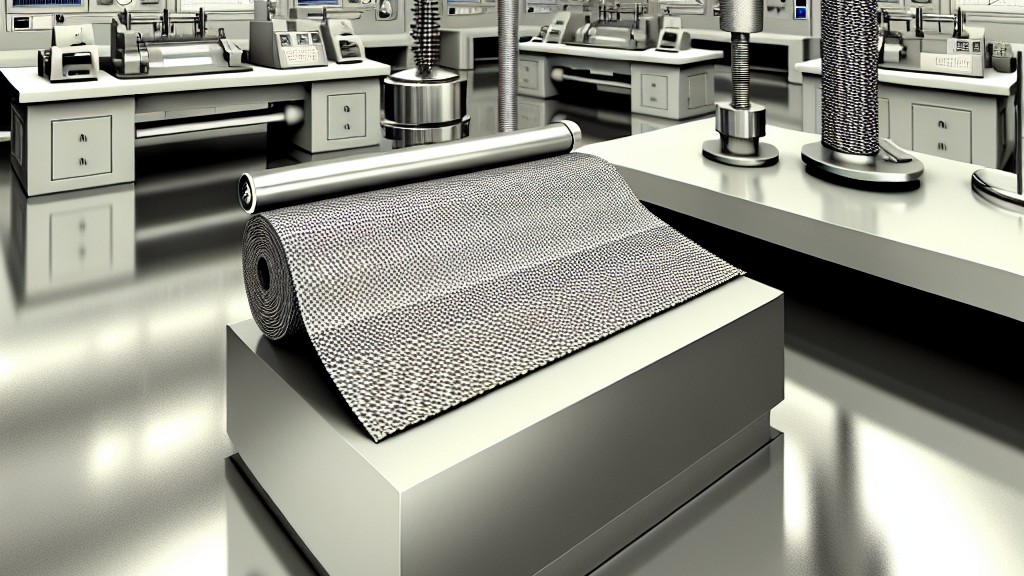
Spacer fabrics are a type of three-dimensionally manufactured textile structures in which two outer fabric layers are connected by a layer of pile yarns. Due to these layers of spacer yarns, a certain distance can be created between the outer layers, generally ranging from 1,5 to 10 mm.
The design of the structure affects the functionality of the three-dimensional structure in terms of thermoregulation, breathability, pressure stability and pressure elasticity. Both outer layers can be constructed differently. The types of materials and the surface properties of the layers affect the elastic and comfort properties of the entire structure and the level of moisture transport and air circulation between the layers. Due to the last two functionalities, heat congestion and maceration of the skin can be prevented.
Intermediate fabrics are breathable fabrics with high air permeability, which is very important for odor removal. Intermediate fabrics are also soft and have good elasticity, which can play a good cushioning effect on the body.
The interfacing knit fabric manufacturing technique allows product developers to adjust the absorbency and water vapor permeability of the fabric. These structural changes can be easily and cost-effectively adjusted by controlling the interfacing distance, determining the number of elastic threads to be used, and selecting the appropriate type of interfacing threads and process.
In the automotive sector, spacer fabrics are considered environmentally friendly textile materials that can be recycled, emissions can be controlled and resources are conserved compared to polyurethane foam. In addition to recycling possibilities, the versatility and properties of spacer fabrics offer seating comfort, softness and aesthetic appeal.
The unique conditions common to the automotive industry place high and sometimes contradictory demands on spacers and technical textiles. For example, one of the challenges is to prevent wrinkles and gaps in vehicle seats. At the same time, comfortable tactile qualities and a soft touch are demanded. In leather seats, another frequent requirement is the stabilization of the soft leather. Furthermore, even air distribution in all directions must be ensured, even under load. Another example of a safety-critical component is the airbag. In the event of a collision, a flexible textile with a predetermined breaking point must create space for the airbag within seconds without hindering its deployment. Spacer knitted fabrics are seen as an important solution to overcome all these challenges.
Using three-dimensional intermediate knitted fabrics, finished products are produced according to demand by processing with processes such as sewing, lamination, coating, cutting, joining, converting and packaging.
Our organization has a strong staff that closely follows the developments in the world in the field of science and technology and constantly improves itself. Among the numerous test, measurement, analysis and evaluation studies provided for businesses in various sectors, there are also test services in accordance with the "BMW TL 7 065 938.6 Intermediate knitted fabrics" standard.
To get an appointment, to get more detailed information or to request an evaluation, you can ask us to fill in our form and reach you.

