

The “Daimler PAPP PWT 3668 Determination of Static Shear Strength in Bonded Components” standard, developed by the Daimler-Benz automotive company, describes a test method for evaluating the static shear strength (shear force resistance) of adhesive-bonded parts in vehicles. This method helps ensure that bonded connections in interior and exterior components, upholstery, panels, and structural elements can withstand shear loads without failure under expected service conditions.
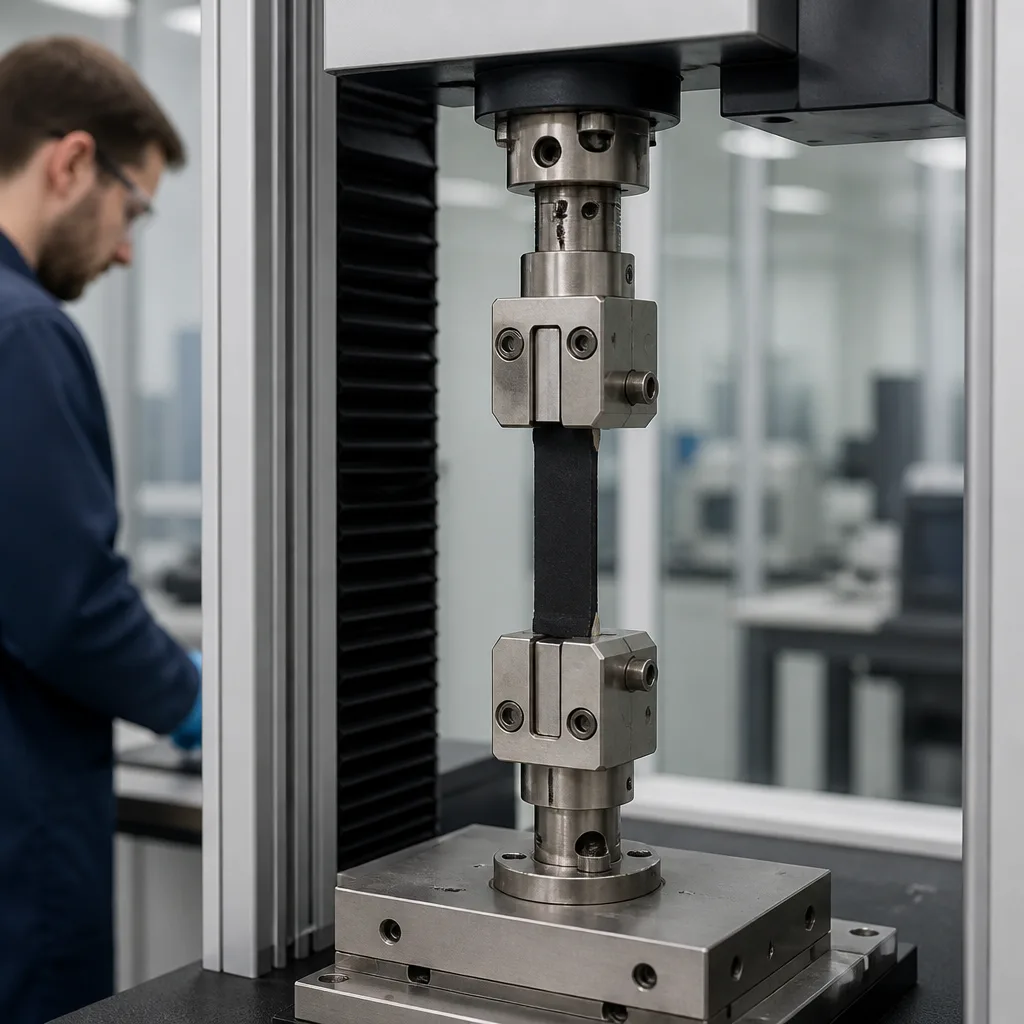
The described test method is a type of mechanical, static shear load test to failure or a specified limit. This method is primarily used for bonded automotive components (e.g., materials bonded to substrates such as plastics, composites, metals, fabrics, or leather). The measured value is the maximum shear force the bond can withstand before fracturing. It is usually reported in Newtons or as shear stress in N/ mm² .
The Daimler PAPP PWT 3668 standard is critical for quality assurance, material approval, and supplier qualification in Daimler/Mercedes-Benz vehicles. It is part of a broader set of standards covering parts durability, environmental resistance, and mechanical performance.
This specification is listed alongside other Daimler standards in advanced testing laboratories. Commonly relevant tests include abrasion, color fastness, weather resistance, and other adhesion or mechanical evaluations.
Adhesive bonding is widely used in modern vehicles for weight reduction, design flexibility, and vibration damping. PAPP PWT 3668 and similar standards ensure that these bonds are reliable in terms of safety, longevity, and performance, especially in interior trim, instrument panels, door panels, exterior emblems, or lightweight structural elements.
In the automotive industry, adhesive bonding has become a critical manufacturing method for joining lightweight materials, plastics, composites, and metal components. To ensure that bonded parts can withstand mechanical stress during vehicle operation, manufacturers have developed internal testing standards.
One of these standards, Daimler PAPP PWT 3668, is a specification focused on determining the static shear strength of bonded parts. This standard is widely referenced in automotive material testing laboratories and supplier qualification systems.
The Daimler PAPP PWT 3668 standard aims to determine how strongly two bonded parts remain connected when a continuous shear force is applied. Such tests are crucial because bonded joints in vehicles are subjected to continuous stresses due to the following reasons:
This standard is described in various automotive test catalogs under headings such as:
The primary purpose of this standard is to verify that adhesive-bonded assemblies meet Daimler's durability and safety requirements before being used in manufacturing. This testing method helps engineers assess the following:
Tests generally follow these steps:
Automotive manufacturers are increasingly relying on adhesive bonding instead of traditional welded or mechanical fasteners because adhesives,
Therefore, PAPP PWT 3668 and similar standards play a major role in verifying the following:
The rise of electric vehicles has further increased the importance of adhesive testing because electric vehicle platforms often utilize advanced lightweight materials and battery housings that require high reliability.
The PAPP PWT 3668 standard is often listed alongside other Daimler bonding and material standards, including:
Together, these standards form part of Daimler’s broader automotive materials validation framework.
Test laboratories and automotive suppliers worldwide refer to the Daimler PAPP PWT 3668 standard when certifying materials for Mercedes-Benz applications.
This specification is particularly important for the following:
In conclusion, the Daimler PAPP PWT 3668 standard is a key automotive engineering standard focused on measuring the static shear strength of bonded assemblies. As vehicles increasingly rely on adhesive bonding for lightweight construction and structural integrity, reliable shear testing is vital for safety, durability, and manufacturing quality. This standard serves as a crucial benchmark for evaluating adhesive-bonded automotive components under static shear loading conditions.
For many years, our organization, with its competent and experienced team, has been understanding the needs of its clients, providing the advanced testing services they require, and assisting them in the establishment, implementation, and improvement of management systems. Within this framework, we also provide testing services compliant with the Daimler PAPP PWT 3668 standard.
To get an appointment, to get more detailed information or to request an evaluation, you can ask us to fill in our form and reach you.

