

In the Hyundai MS 300-08 standard developed by Hyundai Motor Company, the requirements for determining the flammability resistance of materials used in the interior of motor vehicles are explained and test methods are defined.
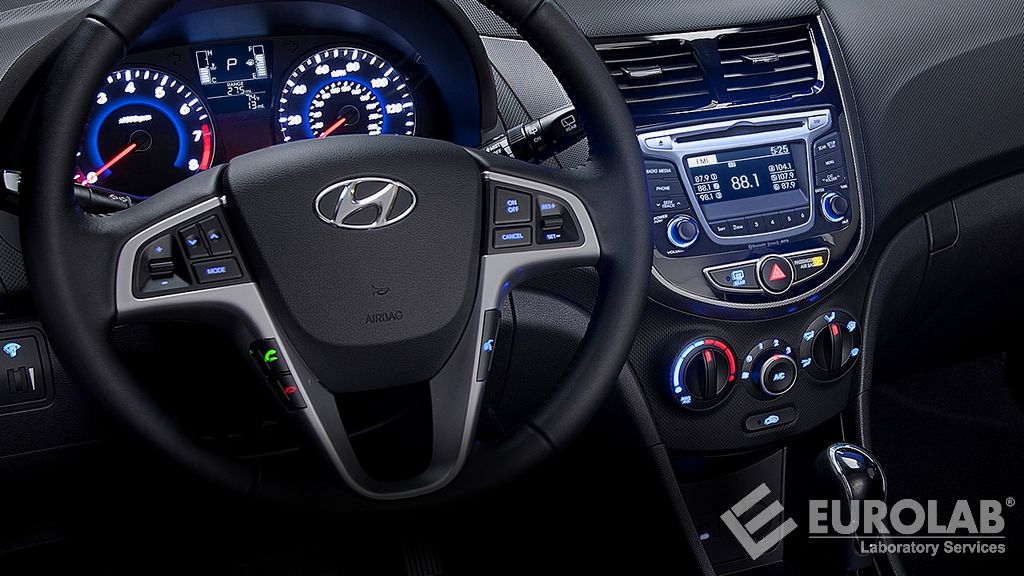
The risk of uncontrolled fire for all vehicles should be eliminated as much as possible. A breakdown can result in high costs and worse, injury to people and irreparable damage to brand and company reputation. Especially in vehicles, the flammability and smoke properties of interior materials are important. The flame resistance properties exhibited by different materials vary according to the fire retardant treatments applied, the thickness, weight and composition characteristics of the materials, and deterioration due to use and cleaning. Combustion properties of materials are tested in terms of burning rate, burning length and self-extinguishing time by using various test methods in advanced laboratories. In addition, flame spread index and smoke factor are obtained by using radiant panel test apparatus.
The ability to withstand fire is one of the important properties of materials. Materials used in vehicles and exposed to fire are divided into four classes. These are, in order of importance to the requirements: non-combustible materials, fire-retardant materials, flame-retardant materials and flaming-resistant materials. The distinction between these classifications often depends on the intended use of the material.
Non-combustible and refractory materials are generally limited to metals, fiberglass or asbestos. These materials are tested for flame penetration through the material rather than flame spread.
Motor vehicles contain a number of components that can burn when exposed to a sufficiently large ignition source. These include seating, headlining and carpeting. Various test methods have been developed by the engine industry to evaluate combustion behavior. The materials used in the passenger compartment need to have some degree of fire resistance so that in the event of a fire occupants have time to escape from the vehicle.
Like all similar standards, this standard was developed to help reduce deaths and injuries from fire caused by vehicle fires, particularly discarded cigarettes and matches.
Our organization also provides flammability resistance testing services of interior materials within the scope of Hyundai MS 300-08 standard, with its trained and expert staff and advanced technological equipment, among the numerous test, measurement, analysis and evaluation studies it provides for businesses in various sectors.
To get an appointment, to get more detailed information or to request an evaluation, you can ask us to fill in our form and reach you.

