

Ford FLTM BN 114-01 Automotive Textile Material Thickness Measurement

Ford FLTM BN 114-01 Automotive Textile Material Thickness Measurement

The “Ford FLTM BN 114-01 Automotive Textile Thickness Measurement” standard, developed by Ford Motor Company (Ford), describes a test method used to determine the thickness of automotive textile and upholstery materials. This standard provides a controlled procedure for measuring the thickness of fabrics, carpets, nonwovens, laminated textiles, and other soft upholstery materials used in vehicle interiors. Accurate thickness measurement is crucial for compliance with material specifications, component fit, appearance, comfort, and manufacturing consistency.
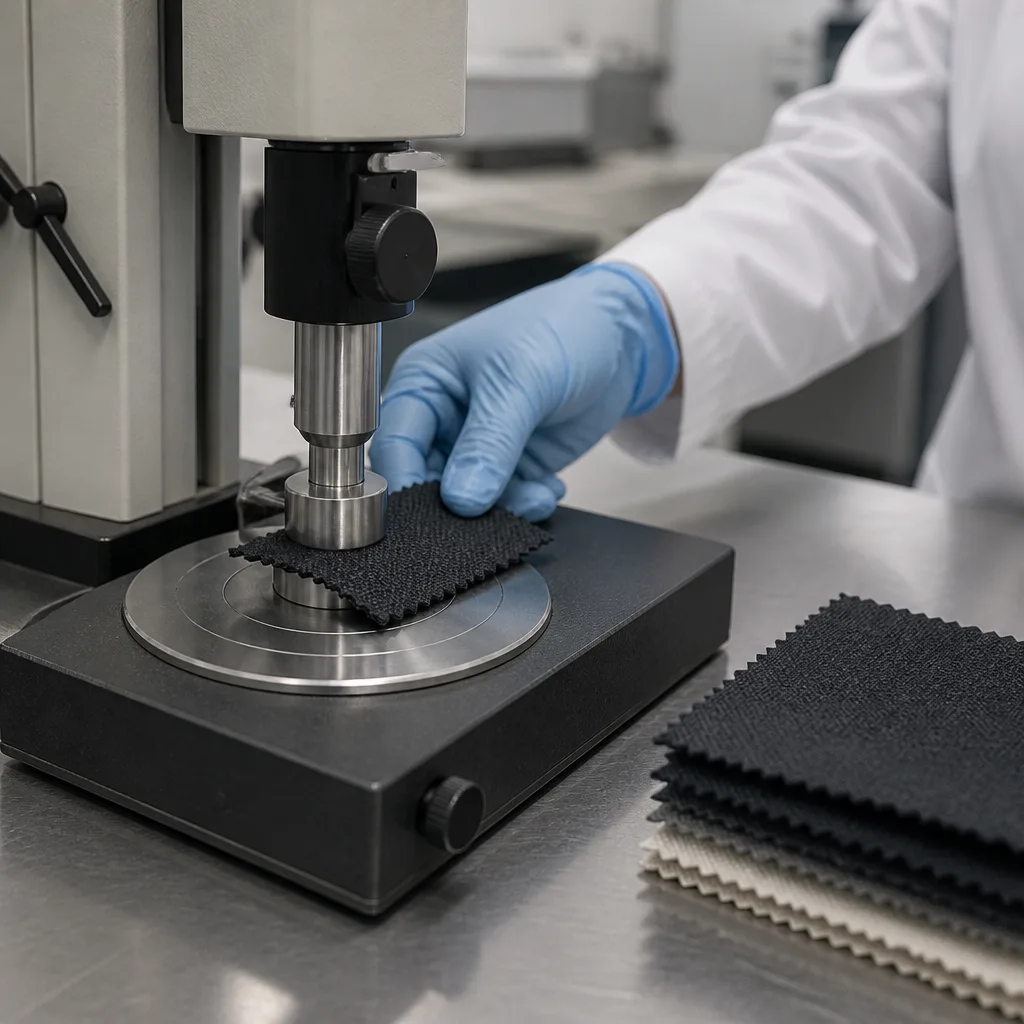
Ford FLTM BN 114-01 Automotive Textile Material Thickness Measurement

Automotive textile materials must meet precise dimensional requirements to ensure the following:

  • Correct fit in assemblies.
  • Consistent look and feel.
  • Correct laminate structure
  • Reliable sewing and cutting processes.
  • Compliance with engineering specifications.

Even small differences in thickness can affect seat comfort, stitching quality, assembly tolerances, and the overall appearance of interior trim components.

The primary purpose of this standard is to ensure that textile materials used in vehicles meet specified dimensional requirements. Thickness is a critical property as it affects:

  • Appearance and perceived quality
  • Fit and assembly performance
  • Comfort and cushioning features
  • Acoustic and thermal insulation
  • Weight and packaging space requirements
  • Durability and wear resistance

Consistent thickness measurements help suppliers and manufacturers maintain uniform material performance across production batches.

This method typically includes:

  • Conditioning of the textile sample under controlled environmental conditions.
  • The sample should be placed on a flat measuring surface.
  • Applying a specific amount of pressure using a standardized presser foot.
  • Measuring the distance between the presser foot and the base surface.
  • Recording thickness values ​​at multiple points and calculating the average result.

The applied pressure is carefully controlled because textile materials can compress significantly under load.

The Ford FLTM BN 114-01 standard commonly applies to the following materials:

  • Upholstery fabrics
  • Ceiling flooring materials
  • Carpet systems
  • Door trim textiles
  • Nonwoven insulation materials
  • Laminated fabric structures
  • Synthetic leather-backed textiles

Several factors can affect the measured thickness:

  • Material compression properties
  • Applied measuring pressure
  • Sample conditioning
  • Temperature and humidity
  • Surface texture and pile height
  • Lamination structure

Therefore, this standard specifies consistent test conditions.

The benefits of using the Ford FLTM BN 114-01 standard are as follows:

  • Standardized thickness assessment
  • Improved product consistency
  • Improved production repeatability.
  • Improved in-vehicle quality.
  • Comparison from reliable supplier to supplier.
  • Reducing the risk of assembly and fitment problems.

Essentially, this test method is designed to minimize measurement variation resulting from:

  • Material compressibility
  • Surface texture
  • Operator technique
  • Device differences

Thickness measurements obtained from the Ford FLTM BN 114-01 standard are commonly used in the following areas:

  • Material approval programs
  • Supplier quality control
  • Product development
  • Laminate design verification
  • Production process control
  • Compliance with engineering specifications.

The results generally serve as baseline data for other performance tests such as abrasion, seam strength, compression, and durability.

Ford FLTM BN 114-01 is important because it provides a standardized method for measuring the thickness of automotive textile materials. While thickness may seem like a simple characteristic, it has a significant impact on vehicle quality, production efficiency, comfort, and performance. The main reasons why this standard is considered important are as follows:

  • Ensures correct fit and assembly: Automotive interior components are designed with precise dimensional tolerances. If textile materials are thicker or thinner than specified:
    • The seat covers may not fit properly.
    • Installing door trim panels can be challenging.
    • The ceiling panels may not be properly aligned.
    • Voids and surface irregularities may occur.

By controlling material thickness, manufacturers can achieve consistent assembly quality.

  • It preserves the interior appearance: Customers expect vehicle interiors to have a uniform, premium look. Differences in thickness can lead to:
    • Wrinkles and wrinkles
    • Irregular surfaces
    • Bad stitching appearance
    • Inconsistent flooring fit

This standard helps interior materials maintain consistent visual quality.

  • It supports comfort requirements: Many textile materials directly contribute to passenger comfort. Thickness affects:
    • The feel of the seat cushion
    • Soft touch features
    • Surface comfort
    • Perceived quality

Accurate thickness measurements help engineers achieve the desired level of comfort throughout the vehicle.

  • It affects acoustic performance: Textile materials generally provide sound absorption and noise reduction. Changes in thickness can affect:
    • Cabin noise levels
    • Sound absorption efficiency
    • Vibration damping characteristics

Consistent thickness helps maintain vehicle acoustic performance objectives.

  • It helps control material weight: Vehicle manufacturers are constantly seeking to reduce weight in order to improve:
    • Fuel efficiency
    • Electric vehicle range
    • Overall vehicle performance

Thickness measurements help engineers monitor material mass and optimize lightweight designs.

  • Improves supplier quality control: Ford sources materials from multiple suppliers worldwide. This standard ensures the following:
    • A common testing procedure
    • Comparable results between laboratories.
    • Consistent quality verification.
    • Objective acceptance criteria

This reduces variability throughout the supply chain.

  • Verifies material properties: Many Ford engineering specifications include thickness requirements. This standard allows engineers to verify that materials:
    • Meeting design specifications
    • Compliance with supplier requirements
    • Maintaining consistency across production batches
    • Maintaining quality throughout product development.
  • It prevents post-production problems: Small thickness differences can lead to major production problems such as:
    • Poor adhesion performance.
    • Incorrect lamination dimensions.
    • Interference during assembly
    • Increased scrap and reprocessing

Early thickness verification helps identify problems before materials even enter production.

In conclusion, the Ford FLTM BN 114-01 standard is designed for measuring the thickness of automotive textile materials. By establishing a consistent method for evaluating the thickness of interior upholstery textiles and related materials, it helps ensure dimensional consistency, manufacturing compatibility, comfort, and overall vehicle quality.

For many years, our organization, with its competent and experienced staff, has been understanding the needs of its customers, providing the advanced testing services they require, and assisting them in the establishment, implementation, and improvement of management systems. Within this framework, we also provide testing services to businesses in accordance with the Ford FLTM BN 114-01 standard.

WhatsApp

