

Developed by General Motors Europe (GME), the “GME 60253 Resistance of Elastomers to Fuels” standard is a materials testing standard designed to evaluate how elastomeric materials behave after prolonged exposure to automotive fuels. This standard measures the physical and mechanical changes that occur when rubber components come into contact with gasoline, diesel, ethanol blends, or other specified fuels.
This standard was later replaced by “ISO 1817 “Rubber, vulcanized or thermoplastic – Determination of the effect of liquids” for future global vehicle programs.
Elastomeric materials are widely used in modern vehicles for applications involving direct or indirect fuel contact. These include:
Exposure to fuel can significantly alter rubber properties in the following ways:
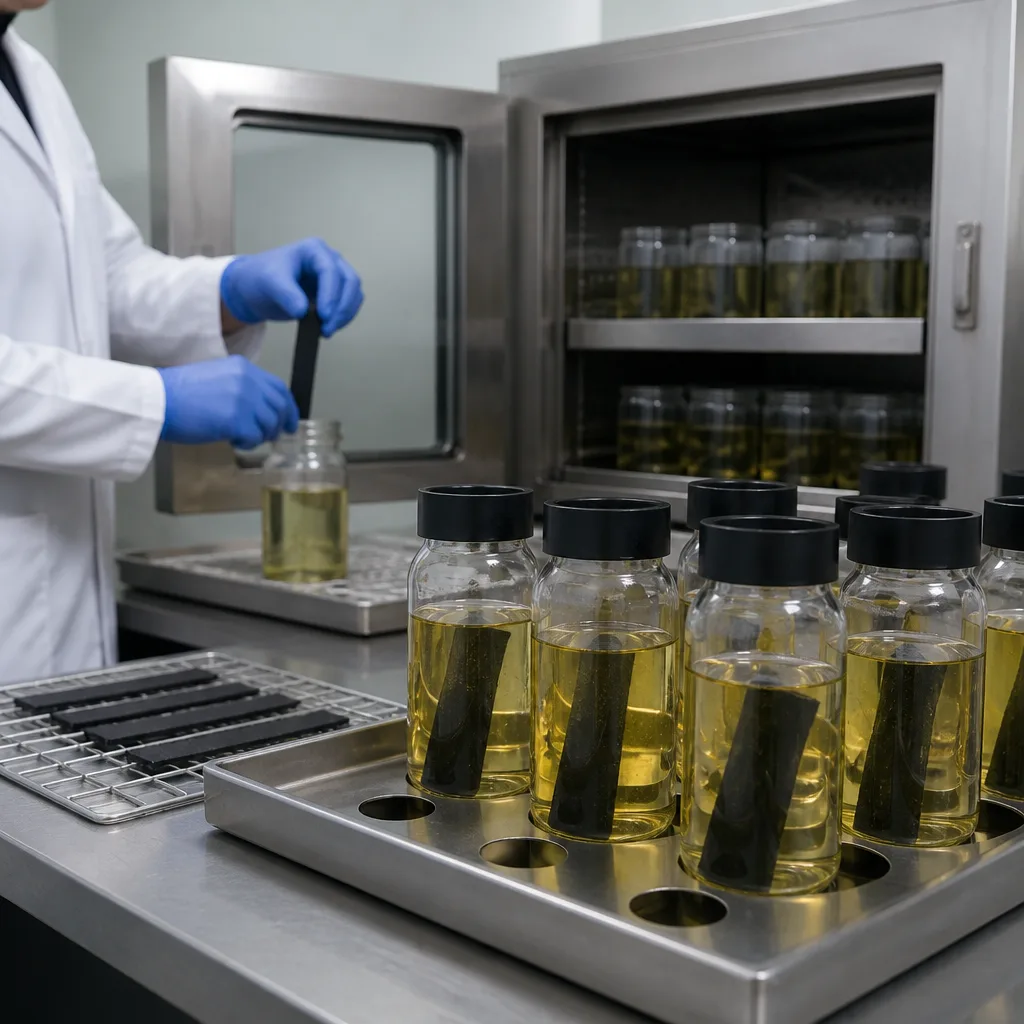
The GME 60253 standard provides a standardized laboratory procedure to determine whether an elastomer can maintain acceptable performance after exposure to specific fuels. This standard determines the effects of fuels on elastomeric materials by comparing selected material properties before and after immersion in a specific test fuel. The evaluation aims to simulate the service conditions encountered by automotive rubber components throughout their service life.
The described test method is based on the principle of exposing rubber samples to a controlled fuel environment for a specific period of time and temperature. The material is measured under the following conditions:
Changes in physical and mechanical properties indicate the material's resistance to fuel attack.
The GME 60253 standard acknowledges three fundamental mechanisms by which fuels affect elastomers:
This usually leads to the following:
Following exposure, the GME 60253 standard compares the following characteristics.
Large volume changes can prevent seals from functioning correctly.
Changes in stiffness indicate whether the elastomer is doing the following:
The exact requirements depend on the specific vehicle component being qualified.
Although material properties define specific conditions, testing generally follows these steps:
The measured differences determine the elastomer's fuel resistance.
Modern specifications increasingly include fuels containing renewable components, as these can cause greater bloating than conventional gasoline.
Acceptance limits vary depending on the application. Typical requirements might specify the maximum permitted modifications as follows:
Fuel system gaskets generally require stricter limits than components that are only occasionally exposed to fuel.
The GME 60253 standard applies to numerous vehicle components, including:
Fuel-resistant elastomers help to provide the following:
Low fuel resistance can lead to:
The latest version of the GME 60253 standard states that it is not intended for new vehicle designs and will be replaced by the ISO 1817 standard for future global projects. The ISO 1817 standard provides a globally harmonized procedure for evaluating the effects of liquids on vulcanized and thermoplastic rubber and ensures the following:
The advantages provided by the GME 60253 standard are as follows:
In conclusion, the GME 60253 standard is a crucial standard used to evaluate the resistance of elastomeric materials to automotive fuels. By comparing key properties such as volume, stiffness, and other mechanical characteristics before and after controlled fuel exposure, this standard enables engineers to select rubber materials that can reliably perform in challenging fuel system environments.
While this standard remains valid for some older GM programs, it has been replaced by the ISO 1817 standard for new global designs, reflecting the automotive industry's shift towards internationally harmonized material qualification methods.
For many years, our organization, with its competent and experienced staff, has been understanding the needs of its clients, providing the advanced testing services they require, and assisting them in the establishment, implementation, and improvement of management systems. Within this framework, we also provide testing services compliant with the GME 60253 standard.
To get an appointment, to get more detailed information or to request an evaluation, you can ask us to fill in our form and reach you.

