

The “Ford FLTM BO 101-05 Fuel Resistance Determination of Plastic Parts” standard, developed by Ford Motor Company (Ford), describes a test method for evaluating the fuel resistance of plastic automotive components, particularly colored or painted exterior plastic parts such as bumpers, dashboards, moldings, and trim. This method assesses how these materials withstand accidental exposure to automotive fuels under high-temperature conditions.
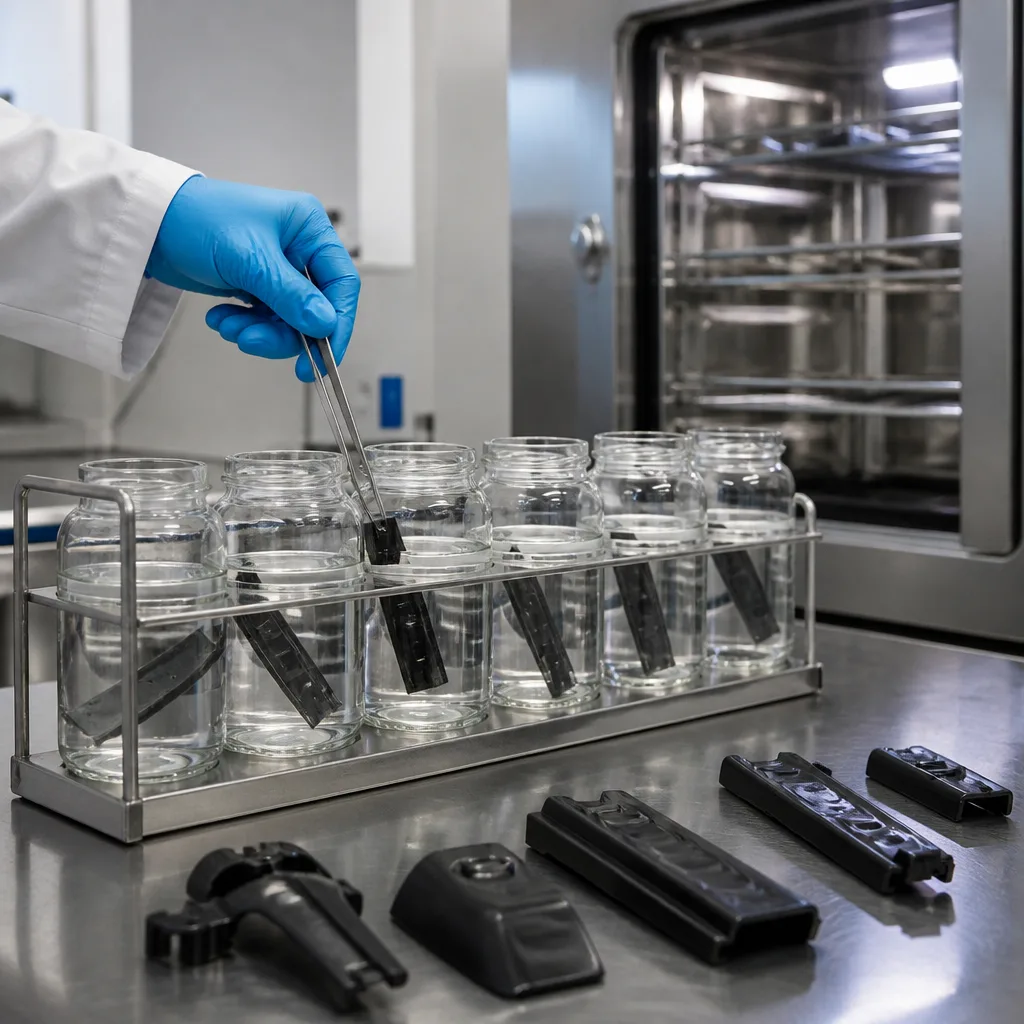
Modern vehicles contain numerous plastic components that must maintain their appearance and structural integrity throughout their service life. Fuel spills during refueling, exposure to fuel vapors, or accidental contact with gasoline can cause discoloration, swelling, softening, cracking, or coating damage if the materials are not sufficiently durable. This standard provides a standardized procedure to verify that plastic parts meet durability requirements prior to manufacturing approval.
The primary purpose of the Ford FLTM BO 101-05 standard is to define the following:
This standard is specifically designed for the following:
The procedure specifically focused on evaluating performance under high ambient temperature conditions, which can accelerate fuel-related degradation mechanisms.
This method essentially follows these steps:
The evaluation criteria are as follows:
The results are then compared against Ford's acceptance criteria to determine eligibility.
The Ford FLTM BO 101-05 standard is applicable to the following materials:
These materials are widely used in modern vehicle exterior applications where fuel contact is possible.
Fuel resistance is a critical performance requirement because gasoline contains solvents that can attack many polymer and coating systems. Insufficient resistance can lead to:
The Ford FLTM BO 101-05 standard helps ensure that vehicle components remain attractive and functional throughout their lifespan by qualifying materials.
This standard is generally used in the following situations:
It serves as a benchmark for evaluating new plastic formulations and paint systems designed for automotive exterior applications.
The Ford FLTM BO 101-05 standard is important because it ensures that plastic parts used in vehicles can withstand accidental contact with gasoline and other automotive fuels without unacceptable damage. This standard is considered necessary for the following reasons:
Fuel spills during refueling can damage these surfaces. This standard verifies that the materials retain their color, gloss, surface texture, and overall appearance characteristics for the life of the vehicle.
This standard identifies materials vulnerable to these failures before they even reach the production stage.
The testing method simulates these conditions and helps ensure long-term durability in actual customer use.
By requiring materials to pass these tests, Ford minimizes the risk of field failures and associated costs.
This allows Ford to select materials that provide the best combination of durability and appearance.
In conclusion, the Ford FLTM BO 101-05 standard is a crucial material validation standard that measures the resistance of plastic automotive components to damage from fuel exposure. By evaluating painted and colored plastic parts under high-temperature conditions, this standard helps ensure long-term durability, appearance preservation, and customer satisfaction. This standard plays a vital role in Ford's material qualification process and supports the development of fuel-resistant exterior vehicle components.
For many years, our organization, with its competent and experienced staff, has been understanding the needs of its customers, providing the advanced testing services they require, and assisting them in the establishment, implementation, and improvement of management systems. Within this framework, we also provide testing services to businesses in accordance with the Ford FLTM BO 101-05 standard.
To get an appointment, to get more detailed information or to request an evaluation, you can ask us to fill in our form and reach you.

