

The “GMW 14334 Chemical Resistance to Liquids” standard, developed by General Motors Worldwide (GMW), includes a test procedure used to evaluate how automotive interior trim materials and components react to exposure to various liquids. This procedure is particularly important for automotive interior trim materials that may come into contact with cleaning products, sweat, and other substances during vehicle use.
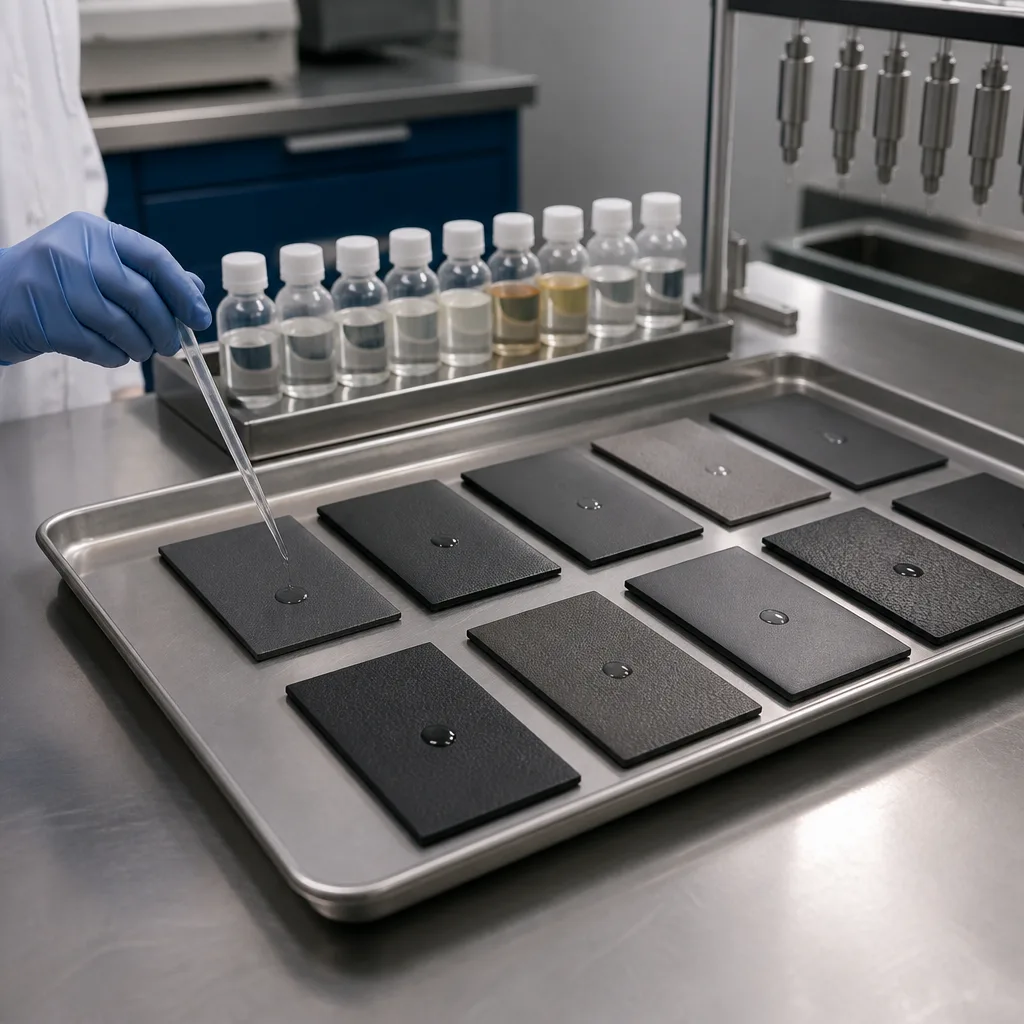
The primary purpose of the GMW 14334 standard is to determine whether exposure to specified liquids causes unacceptable changes to automotive interior upholstery materials or components. The described procedure evaluates the effects of liquids such as cleaning agents and sweat on automotive interior upholstery. This is important because interior components are regularly exposed to:
A material may initially have excellent appearance and mechanical properties, but it can degrade upon repeated exposure to these substances. The GMW 14334 standard applies specifically to automotive interior trim components with surfaces such as:
This procedure is not limited to these materials; other material types may be evaluated where required by the relevant engineering specification. Typical applications include:
A key feature of the GMW 14334 standard is the use of specified test fluids that represent the substances automotive components may encounter. This standard includes fluid codes and a fluid table to identify applicable fluids. Examples include cleaning agents and sweat solutions. Artificial sweat is particularly important because human contact is a significant source of chemical exposure for vehicle interiors.
Commercial test solution suppliers specify that the GMW 14334 standard defines acidic and two-component alkaline artificial sweating solutions, indicating their use in chemical resistance testing of automotive upholstery materials.
In principle, the tests involve preparing a representative sample of the automotive material or component. The specified test fluid is applied to the relevant surface. The sample is exposed under the conditions defined in the GMW 14334 standard. After exposure, the material is examined for degradation. The results are compared with the applicable acceptance requirements. The exact exposure conditions and evaluation requirements depend on the specific material, fluid, and engineering requirements. Therefore, the test provides a controlled way to determine whether a material can withstand chemical exposure without unacceptable degradation.
Chemical exposure can cause various types of degradation. Depending on the material and applicable requirements, the assessment may include the following changes:
The goal is not limited to determining whether the material has been chemically attacked. The aim is also to determine whether the resulting modification is acceptable for the intended automotive application.
Sweating is particularly important in car interiors because passengers repeatedly touch or come into contact with interior surfaces. Frequently touched areas include:
Human sweat can be chemically aggressive to some coatings, pigments, adhesives, and polymers. Repeated exposure can eventually lead to visible discoloration, surface degradation, or loss of functional performance. As a result, the GMW 14334 standard helps manufacturers select materials that maintain their appearance and performance throughout the expected vehicle lifespan.
Vehicle interiors are regularly cleaned by vehicle owners, dealers, and professional detailers. Cleaning chemicals may contain substances that can attack coatings, plastics, adhesives, or decorative surfaces. A material that performs well under normal environmental exposure may still degrade after repeated contact with a cleaning agent. Therefore, the GMW 14334 standard offers a standardized approach to assessing this risk, rather than relying solely on chemical analysis.
The GMW 14334 standard also addresses test sources and calibration. It specifies that test facilities and equipment must be in good working order and have a valid calibration status. It also permits alternative equipment when the necessary measurement variables can be accurately determined. This is important for laboratory reproducibility because chemical resistance results can be affected by:
Proper laboratory control helps different suppliers and laboratories produce comparable results.
The GMW 14334 standard is important because automotive interior materials must withstand not only exposure to temperature and humidity, but also chemical contact during daily vehicle use. This standard helps manufacturers in the following areas:
The GMW 14334 standard is best understood as part of a broader automotive durability testing program. A typical interior material may need to pass various categories of tests:
GMW 14334 standard specifically addresses the chemical resistance portion of this durability chart.
Modern vehicle interiors incorporate a combination of polymers, coatings, decorative films, adhesives, pigments, and surface treatments. These materials can interact differently with the same chemical. For example, a cleaning fluid may have little effect on a molded polymer but could cause:
Therefore, when necessary, testing the entire finished surface or component can provide more meaningful information than evaluating only the base polymer.
For many years, our organization, with its competent and experienced staff, has been understanding the needs of its clients, providing the advanced testing services they require, and assisting them in the establishment, implementation, and improvement of management systems. Within this framework, we also provide testing services in accordance with the GMW 14334 standard.
To get an appointment, to get more detailed information or to request an evaluation, you can ask us to fill in our form and reach you.

