

The “Fiat 9-55842 Aesthetic and Operational Finishing of Parts Made of Plastic Materials” standard, developed by Fiat Chrysler Automobiles (FCA) (now Stellantis), an Italian-American automotive company, describes the requirements for the aesthetic and operational finishing of parts made of plastic materials, and in some versions metal parts, obtained through painting or other surface treatment processes. This standard is a quality and performance standard that suppliers must adhere to when painting or coating interior and exterior components for Fiat vehicles.
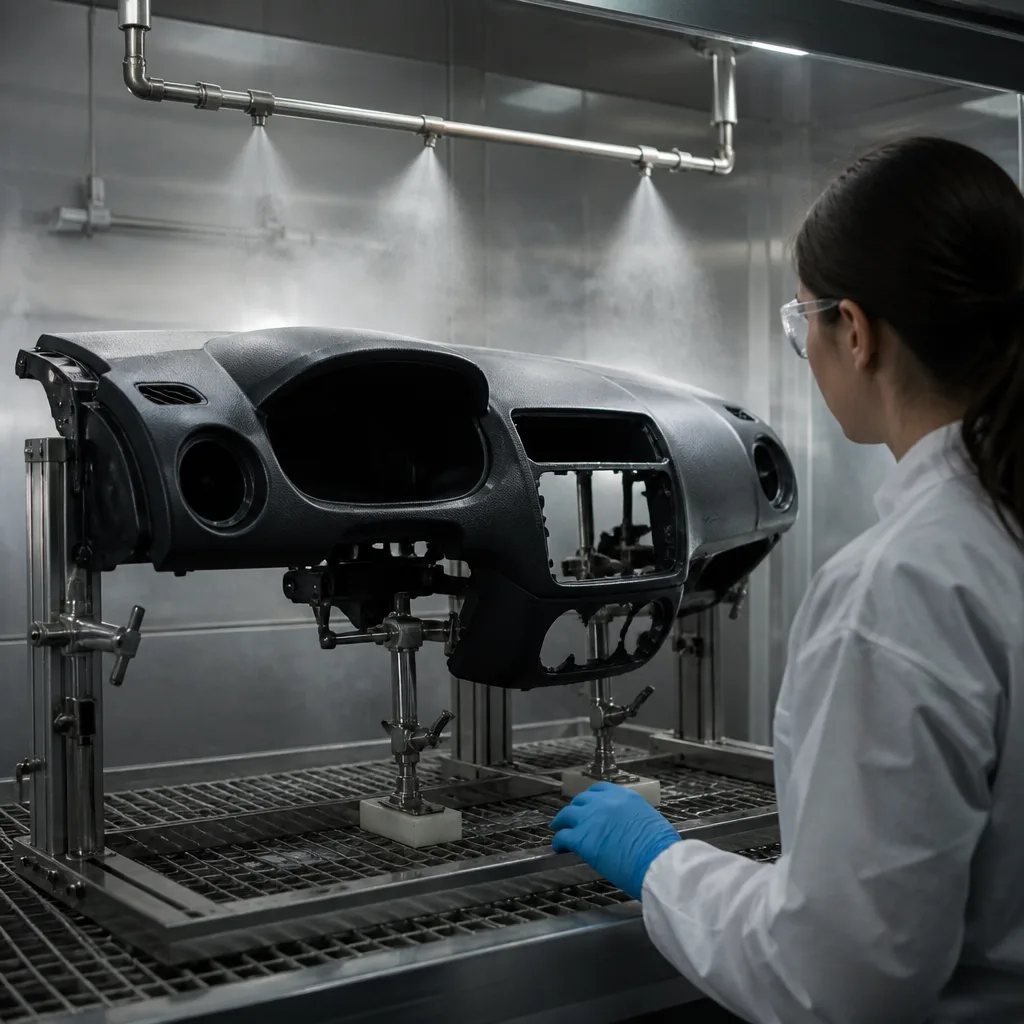
This standard ensures that painted plastic parts, such as instrument panels, bumpers, trim pieces, and door panels, meet strict criteria in the following areas:
The Fiat 9-55842 standard is divided into multiple sections, each covering specific performance requirements. A few of the most frequently referenced sections are:
Suppliers must conduct laboratory tests according to these specifications and submit the results for approval.
The Fiat 9-55842 standard is often mentioned alongside newer standards such as Fiat 9-57405 (coatings) or MS.90053.
In short, the Fiat 9-55842 standard defines the technical and aesthetic requirements that coatings, painted surfaces, and finished plastic components must meet before being approved for vehicle production.
This specification is generally associated with the following:
The Fiat 9-55842 standard relates to similar coating systems for painted surfaces and automotive interior parts. This standard was developed to ensure that coated automotive plastic parts possess the following characteristics:
Automotive interior and exterior trim components are generally exposed to the following:
Without a controlled specification, painted parts can cause the following:
The Fiat 9-55842 standard specifies repeatable laboratory test procedures and acceptance criteria to prevent these failures. This standard typically evaluates various performance categories.
Poor adhesion can lead to:
The goal is to simulate years of vehicle service within a reduced laboratory timeframe. Typical evaluations include:
This is especially important for:
This standard refers to wear procedures such as Fiat 50488.
The coating must be resistant to the following:
The painted surface should retain its appearance after repeated treatment cycles.
This confirms the flexibility and durability of the coating.
The Fiat 9-55842 standard generally applies to the following materials:
The Fiat 9-55842 standard is generally used in conjunction with the following other Fiat standards:
Collectively, these standards verify the durability of coated automotive trim systems.
This standard is critical because painted plastics used in automotive applications are highly visible to customers. Even minor cosmetic flaws can negatively impact the perception of vehicle quality. This specification helps manufacturers ensure the following:
This standard also supports the following:
Commonly approved components according to the Fiat 9-55842 standard include:
In short, the Fiat 9-55842 standard is an automotive coating and painted plastics performance specification developed to guarantee the durability, appearance, and environmental resistance of painted coating components used in vehicles. This standard combines mechanical, climatic, chemical, and aesthetic evaluations to ensure that coated parts maintain their quality throughout the vehicle's lifespan.
For many years, our organization, with its competent and experienced staff, has been understanding the needs of its customers, providing the advanced testing services they require, and assisting them in the establishment, implementation, and improvement of management systems. Within this framework, we also provide testing services in accordance with the Fiat 9-55842 standard.
To get an appointment, to get more detailed information or to request an evaluation, you can ask us to fill in our form and reach you.

