

The “Ford DVM-0007 Coating Adhesion Test” standard, developed by Ford Motor Company (Ford), includes a Ford engineering testing method primarily used to evaluate the strength and durability of bonded or bonded components used in automotive applications. This standard deals with testing the bond tensile strength and bond tear strength of materials such as rubber profiles, air seal strips, adhesives, gaskets, and bonded assemblies commonly used in vehicle interiors and exteriors.
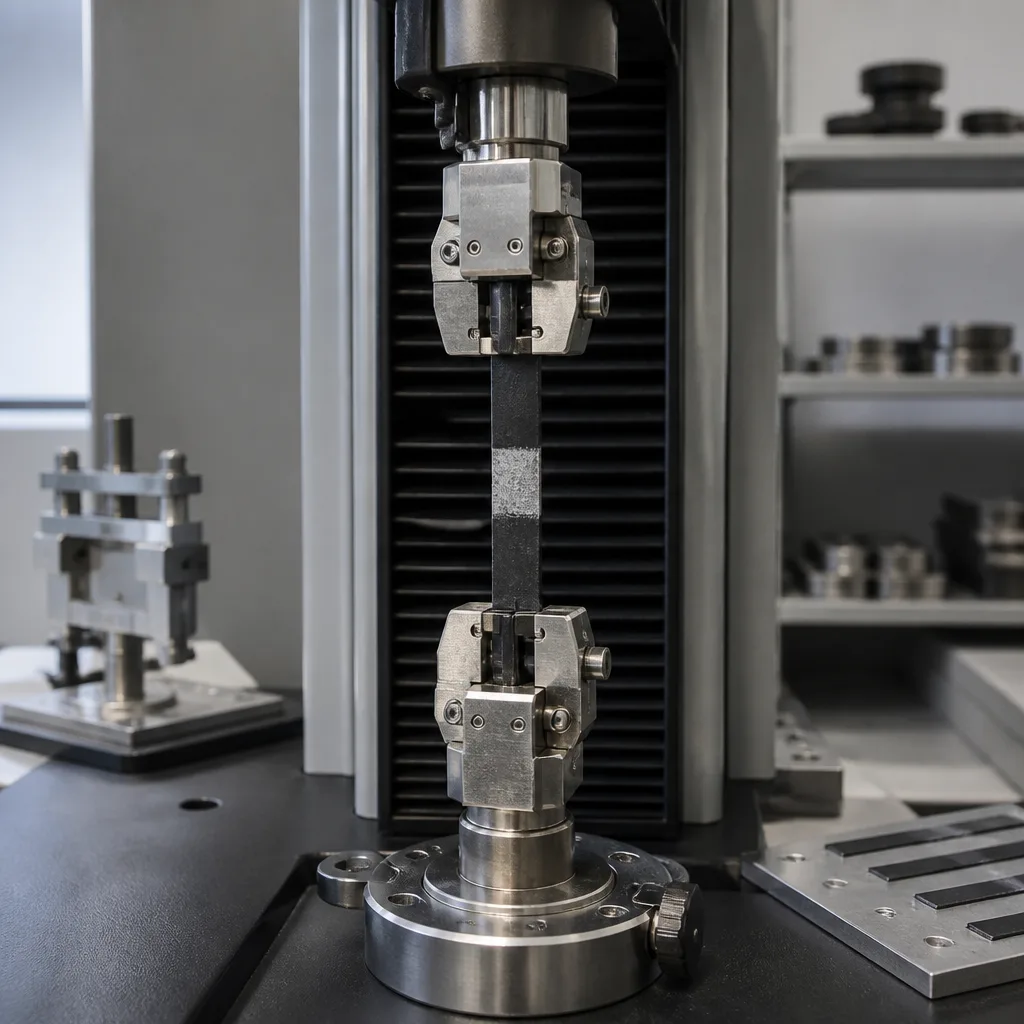
Modern vehicles rely heavily on adhesive bonding and bonded elastomeric components. The Ford DVM-0007 standard was developed to ensure these bonds can withstand:
The test helps determine whether a bonded joint will fracture cohestically within the material or adhesively at the bond interface.
The Ford DVM-0007 standard generally evaluates the following:
These failure modes provide valuable information about production quality and material suitability.
The Ford DVM-0007 standard is commonly used in the following areas:
The Ford DVM-0007 standard describes various test methods depending on the material or component being evaluated:
The aim is to determine how strongly a bonded layer adheres to a substrate. During the test, a free edge of the coating or flock is separated, pulled at a specified angle (usually 90 or 180 degrees), and the force required to continue peeling is measured. The main applications of this test are:
The aim is to directly measure the adhesion strength. During the test, a tensile load perpendicular to the bonded surface is applied. The test is continued until failure occurs. The following results are evaluated:
The aim is to quickly assess coating adhesion. During the test, a grid pattern is cut from the coating, adhesive tape is applied, the tape is quickly removed, and the coating loss is examined. The following results are evaluated:
The aim is to determine resistance to peeling caused by an intentional defect. The following results are evaluated:
The aim is to evaluate wear resistance. During the test, the surface is subjected to repeated friction or abrasion, and it is examined whether there is coating loss, feathering, or adhesion failure. Applications of this test include:
The aim is to verify adhesion after environmental aging. Typical exposure conditions are as follows:
Following exposure, adhesion is typically re-evaluated using methods A, B, C, or D.
A single adhesion test cannot fully characterize a material. For example,
Therefore, multiple methods are needed. Environmental tests evaluate long-term durability. Together, these methods help ensure that automotive coatings, flocks, adhesives, and bonded components maintain their performance throughout the vehicle's lifespan.
The Ford DVM-0007 standard is considered important because it helps to ensure the following:
Poor adhesion can lead to water leaks, wind noise, part separation, corrosion, and customer dissatisfaction. By verifying bond strength before production, Ford can ensure that bonded components meet durability requirements for the vehicle's lifespan.
The Ford DVM-0007 standard is typically used in conjunction with other Ford materials and durability standards that evaluate the following:
Together, these tests provide a comprehensive assessment of the performance of automotive sealing and bonded systems.
In summary, the Ford DVM-0007 standard incorporates a specific automotive testing method used to evaluate the tensile strength and tear resistance of bonded joints and adhesive components. This standard plays a critical role in verifying the durability of air seal strips, gaskets, trim components, and other bonded systems used in Ford vehicles. By ensuring adequate adhesive strength and identifying failure modes, the standard helps maintain vehicle quality, durability, and customer satisfaction.
For many years, our organization, with its competent and experienced team, has been understanding the needs of its customers, providing the advanced testing services they require, and assisting them in the establishment, implementation, and improvement of management systems. Within this framework, we also provide testing services compliant with the Ford DVM-0007 standard.
To get an appointment, to get more detailed information or to request an evaluation, you can ask us to fill in our form and reach you.

