

Developed by General Motors Worldwide (GMW), the “GMW 14867 Performance of Paints on Interior Plastic Surfaces” standard is an engineering specification that defines the performance requirements for paint and coating systems on plastic surfaces used in automotive interiors. Its aim is to ensure that interior painted components maintain their appearance, adhesion, durability, and resistance to environmental and chemical influences throughout the vehicle's lifespan.
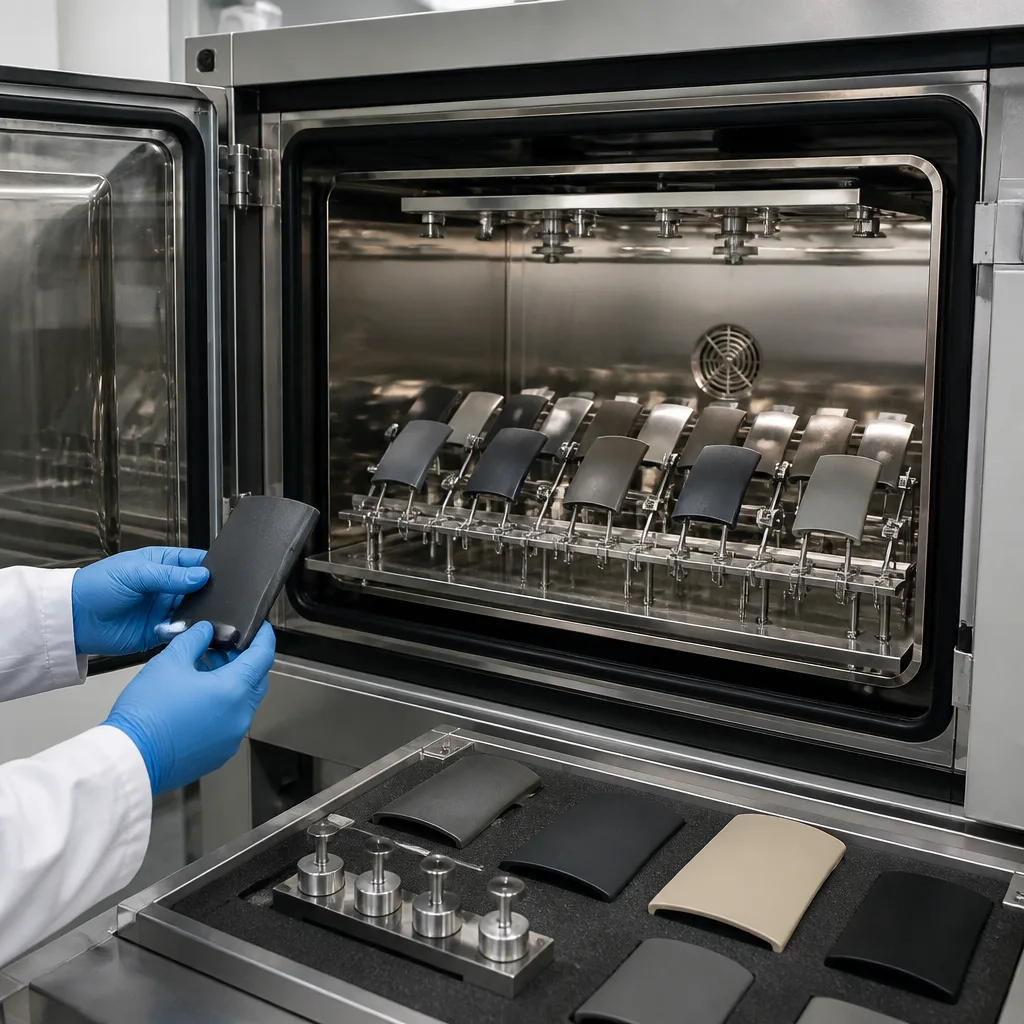
This specification covers coatings applied to rigid plastics, flexible surfaces, and integrated surface foam systems. It may encompass both metallic and non-metallic coating systems, including various tactile or soft-touch technologies.
Automotive interior components such as instrument panels, consoles, door trims, frames, switches, and other decorative plastic parts are subjected to significant mechanical, environmental, and chemical stresses. A coating may be exposed to:
The GMW 14867 standard establishes a common performance framework for evaluating these coating systems. Previous versions of this standard aimed to replace regional requirements and unify internal coating performance requirements into a single specification.
The GMW 14867 standard applies to painted or coated plastic interior components. Coatings can be used on a variety of substrate configurations, including:
This standard may encompass both metallic and non-metallic colors and coating systems designed to provide distinct tactile or touch-sensitive properties. Typical automotive applications might include:
One of the key features of this standard is that it evaluates the coating as a complete performance system, rather than simply checking its initial appearance. Important performance areas include:
Good adhesion is important, especially where the component will be subjected to repeated handling or deformation.
This standard includes requirements regarding the effects of cleansers and lotions. Chemical exposure can cause:
This is especially important for modern soft-touch and decorative finishes.
GMW 14867 is defined by testing laboratories as a standard containing impact-related performance requirements.
The testing process generally follows these steps:
The exact dimensions of the sample, conditioning parameters, chemicals, exposure times, temperatures, grading, and acceptance criteria are all included within this standard.
The GMW 14867 standard is often used as a basic coating performance specification for more specific coating requirements. For example, the GMW 15543 standard specifies interior metallic paint systems resistant to sunscreen lotion and requires the paint system to first meet the GMW 14867 standard before being approved to that specification. Similarly, specific specifications for sunscreen-resistant coatings on materials such as polyurethane, TPO, and polypropylene refer to the GMW 14867 standard as a prerequisite.
In short, the GMW 14867 standard provides a basic performance baseline before a coating system can be qualified for more specialized applications. This standard is important because interior painted plastics are highly visible and frequently touched components.
A coating that performs well immediately after manufacturing may deteriorate during vehicle use. For example, repeated contact with sunscreen or cleaning chemicals can cause the coating to fade, swell, soften, or be damaged. This standard helps General Motors and its suppliers achieve the following by implementing standardized performance requirements:
For many years, our organization, with its competent and experienced staff, has been understanding the needs of its clients, providing the advanced testing services they require, and assisting them in the establishment, implementation, and improvement of management systems. Within this framework, we also provide testing services in accordance with the GMW 14867 standard.
To get an appointment, to get more detailed information or to request an evaluation, you can ask us to fill in our form and reach you.

