

The “Fiat LP-M032 Gloss Assessment on Aesthetic Surfaces” standard, developed by Fiat Chrysler Automobiles (FCA) (now Stellantis), an Italian-American automotive company, describes how to measure the gloss (reflectometer values) of painted, coated, or plastic aesthetic surfaces such as interior trim, exterior parts, or other visible “Class A” surfaces on automotive components.
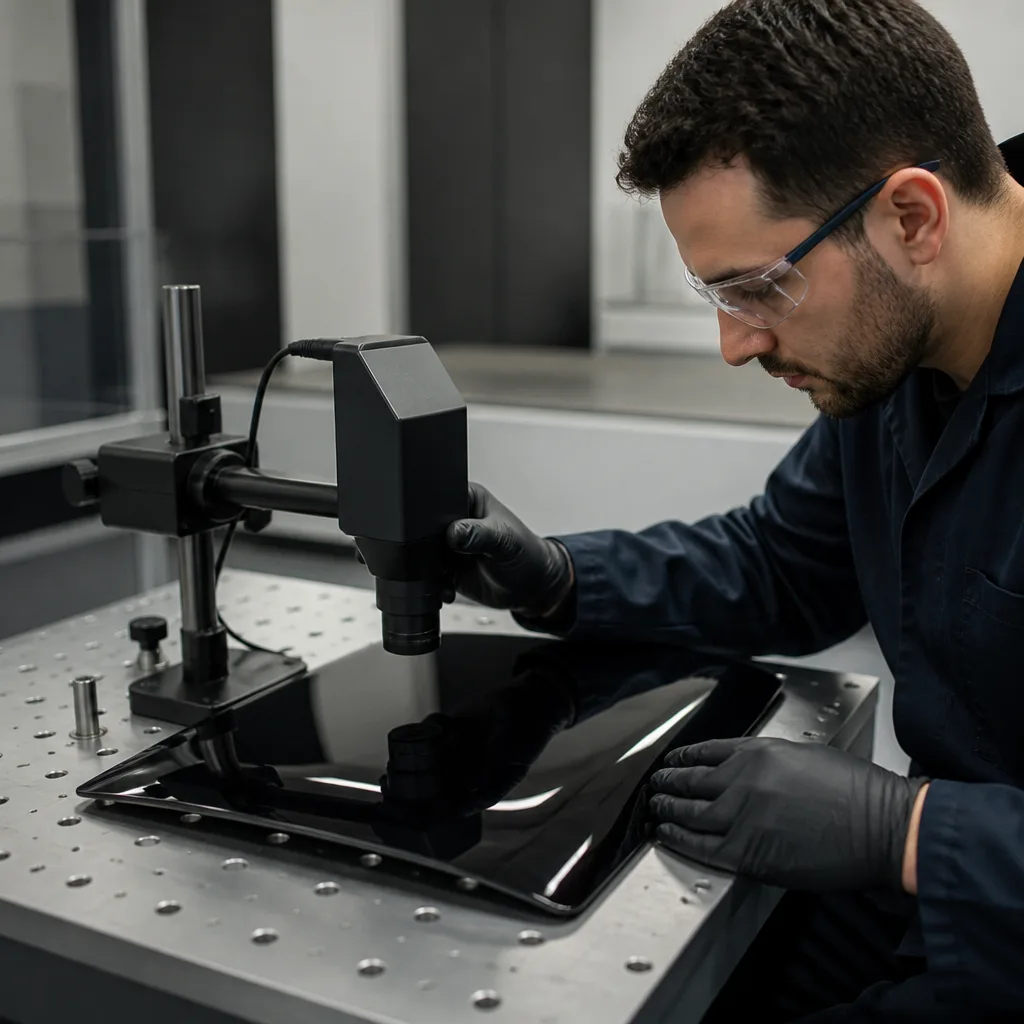
This method measures specular gloss to ensure consistent appearance, quality control, and fit of aesthetic surfaces. Gloss affects perceived quality, color depth, and visual harmony in vehicles.
Measurement angles are generally as follows (common for non-metallic coatings): 20 degrees, 60 degrees and 85 degrees (geometry for high gloss, medium and low gloss/matte surfaces, respectively).
The Fiat LP-M032 standard is compatible with, or refers to, the following methods:
The Fiat LP-M032 standard is used for painted interior and exterior parts, plastics, and coatings. It is often paired with related standards such as “Fiat LP-7M029 Color assessment in aesthetic surfaces” and is incorporated into broader appearance and performance specifications (e.g., MS-90053 standard for interior coatings and AS-00001 standard for color and gloss targets).
In brightness assessment, a brightness meter (reflectometer) calibrated for the specified angles is used. Generally, this method follows these steps:
Fiat uses this standard for supplier quality assurance of aesthetic parts. It ensures long-term appearance stability, for example, resistance to fading, aging, or loss of shine due to ultraviolet (UV) rays.
In short, the Fiat LP-M032 standard belongs to a family of internal engineering standards developed to provide the following:
Automotive manufacturers like Fiat create these internal specifications because international standards alone often don't address brand-specific engineering requirements, assembly methods, or long-term durability goals.
The Fiat LP-M032 standard is typically used for the following purposes:
These and similar standards are particularly important in modern automotive manufacturing, where thousands of suppliers provide parts for a single vehicle platform. In general, internal standards address the following issues:
These types of specifications apply to:
Fiat LP-M032 and similar standards are considered necessary for the following reasons:
Fiat's internal standards help prevent these problems before mass production begins.
However, Fiat may apply tighter tolerances or additional test cycles specific to vehicle platforms and performance expectations.
Compliance with standards such as Fiat LP-M032 helps ensure that components remain reliable throughout the vehicle's lifespan.
In conclusion, the Fiat LP-M032 standard is most likely an internal Fiat engineering specification related to automotive material or component validation. Such standards play a significant role in ensuring quality, durability, safety, and manufacturing consistency within Fiat vehicle programs.
For many years, our organization, with its competent and experienced staff, has been understanding the needs of its customers, providing the advanced testing services they require, and assisting them in the establishment, implementation, and improvement of management systems. Within this framework, we also provide testing services in accordance with the Fiat LP-M032 standard.
To get an appointment, to get more detailed information or to request an evaluation, you can ask us to fill in our form and reach you.

