

The GMW 14711 standard, developed by General Motors Worldwide (GMW), is a test standard used to determine the specific volume resistivity (volume resistivity) of elastomers, plastics, and adhesives. This method is particularly important for materials used in contact with light metals, where adequate electrical insulation can help reduce the risk of galvanic/contact corrosion.
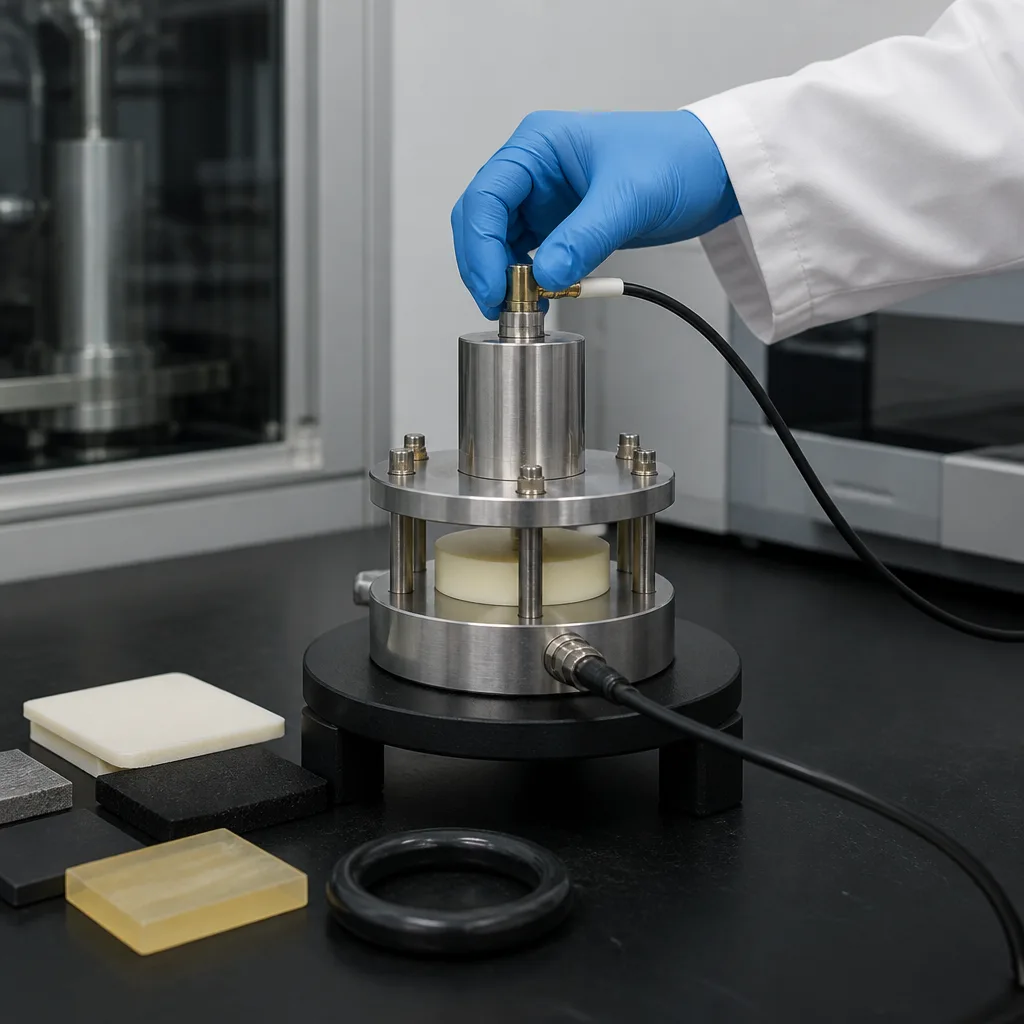
The primary purpose of the GMW 14711 standard is to determine how strongly a material resists the passage of electric current through its volume. Simply put, specific volume resistance indicates how well a material behaves as an electrical insulator.
Materials such as plastics, rubber/elastomers, and adhesives are typically poor electrical conductors. However, their electrical resistance can vary depending on their composition, moisture content, temperature, fillers, additives, and manufacturing process. Therefore, testing provides a quantitative method for evaluating the insulation properties and homogeneity of these materials.
The GMW 14711 standard primarily applies to the following:
This standard specifically addresses these materials when they are in contact with light metals. Examples of relevant automotive applications include insulating plastic components, rubber seals, adhesive layers, and other polymeric materials placed between or alongside metallic components.
A key application of the GMW 14711 standard is to prevent unwanted electrical interference between different materials. For example, the following metals may be found in automotive structures:
Electrochemical corrosion can occur if a conductive material or conductive contamination creates an electrical path between different metals in the presence of an electrolyte. An insulating polymer can help break this electrical path. Therefore, the GMW 14711 standard helps engineers determine whether a polymeric material provides adequate electrical insulation for its intended application.
It is important to distinguish specific volume resistivity from surface resistivity. Volume resistivity describes the resistance to current flowing through the majority of the sample. Surface resistivity, on the other hand, describes the resistance to current flowing along the surface of the sample. The GMW 14711 standard focuses on the specific volume resistivity of the material. This standard also states that the overall insulation resistance can depend on both specific volume resistivity and specific surface resistivity.
The basic test principle involves placing the test specimen between electrical contacts and applying a specific electrical potential. The resulting current is measured. From the measured electrical resistance and the geometry of the specimen, the specific volume resistivity can be determined. The precise configuration of the specimen, electrode arrangement, conditioning, measurement parameters, and acceptance requirements are specified in the GMW 14711 standard.
Environmental conditioning is a crucial aspect of this test. The specific volume strength of polymeric materials can be significantly affected by:
The GMW 14711 standard specifically states that specific volume resistance is significantly affected by temperature and humidity. Consequently, proper conditioning of test specimens and controlled test conditions are required to obtain meaningful and reproducible results.
In general, the testing process follows these steps:
High specific volume resistance generally means the material strongly resists current flowing through it. Therefore, high volume resistance implies better electrical insulation, while low volume resistance indicates higher electrical conductivity. For an insulating polymer designed to electrically isolate two metallic components, a sufficiently high value is normally desirable. However, the required value is application-specific and should not be assumed without consulting the relevant General Motors material or component specification.
The GMW 14711 standard is important because modern vehicles combine many different materials and metals. Polymer components often perform not only structural, sealing, bonding, or cosmetic functions, but also electrical insulation functions. Therefore, testing can help:
One of the most important reasons for testing is the potential interaction between light metals, conductive materials, and electrolytes. For example, if an aluminum component is electrically bonded to another material in the presence of moisture or an electrolyte, electrochemical processes can promote corrosion. An electrically insulating elastomer, plastic, or adhesive can reduce the likelihood of such an electrical path forming. Therefore, the GMW 14711 standard is not only an electrical properties test but can also contribute to automotive corrosion control strategies.
Some testing laboratories define the GMW 14711 standard alongside the IEC 62631-3-1 standard, which is a method related to the electrical resistance of solid insulation materials. However, this does not mean that the requirements of the two standards are the same.
In conclusion, the GMW 14711 standard provides a standardized method for determining the specific volume resistance of elastomers, plastics, and adhesives. Its primary engineering objective is to characterize the electrical insulation behavior of these materials, especially when used in contact with light metals.
Since temperature and humidity can significantly affect electrical resistance, controlled conditioning and measurement are crucial for obtaining reliable results. The data obtained can be used for material selection, qualification, quality control, electrical insulation, and corrosion prevention in automotive applications.
In short, the GMW 14711 standard helps ensure adequate insulation and material compatibility in automotive applications by evaluating how effectively an elastomer, plastic, or adhesive resists the passage of electrical current through its volume.
For many years, our organization, with its competent and experienced staff, has been understanding the needs of its clients, providing the advanced testing services they require, and assisting them in the establishment, implementation, and improvement of management systems. Within this framework, we also provide testing services in accordance with the GMW 14711 standard.
To get an appointment, to get more detailed information or to request an evaluation, you can ask us to fill in our form and reach you.

