Ford FLTM BN 112 Interior Trim Materials Stain and Cleanability Test
The Ford FLTM BN 112 standard, developed by Ford Motor Company (Ford), is a series of test methods used to evaluate the soiling, staining, and cleanability performance of automotive interior materials (such as fabrics, leather, and plastic upholstery surfaces). This standard series is specifically designed to simulate how interior materials behave in real vehicle use, particularly in the following areas:
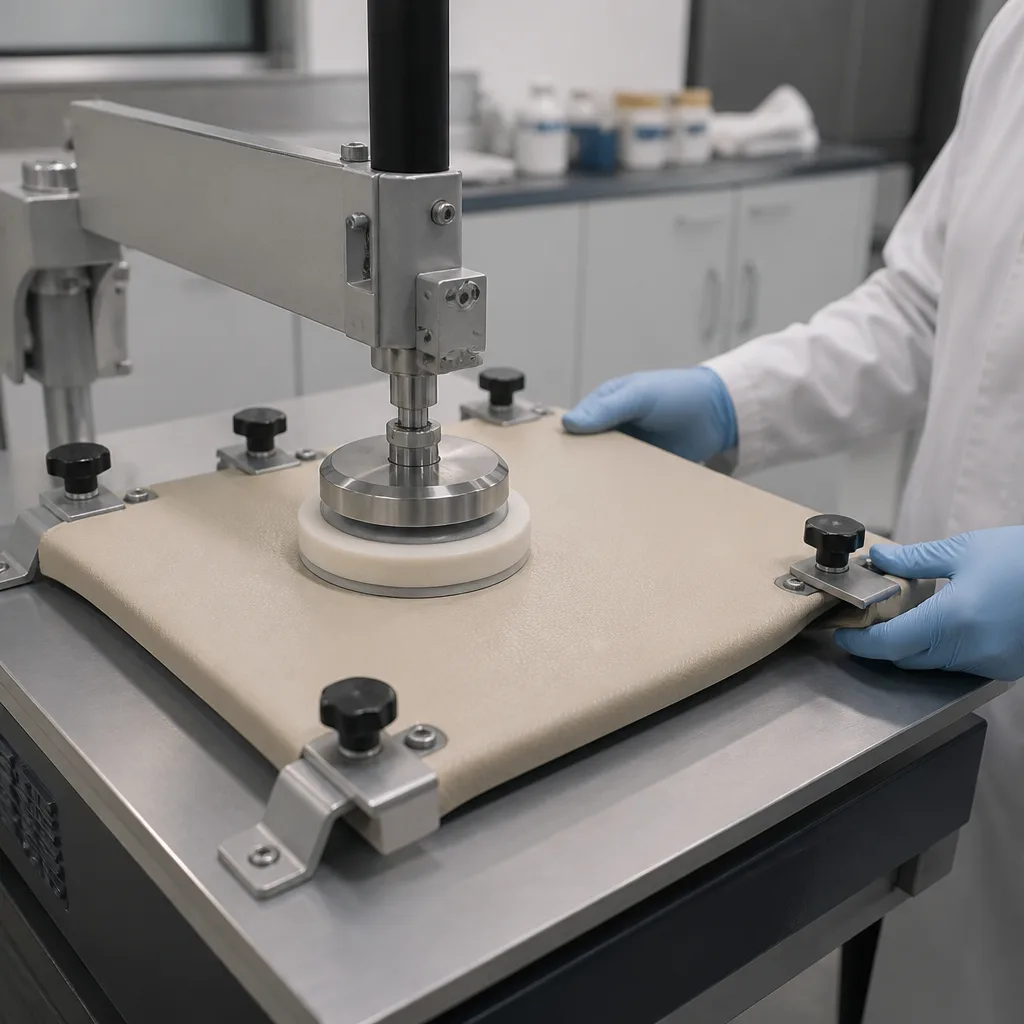
- Resistance to dirt and dust accumulation.
- Transfer of dirt between surfaces (e.g., between clothing and upholstery fabric)
- The ability to be cleaned without damage or discoloration.
- Long-term appearance durability of interior upholstery.
These tests help ensure that vehicle interiors maintain a clean and premium appearance over time.
The Ford FLTM BN 112 standard includes different sub-sections, each addressing a specific aspect:
- Ford FLTM BN 112-01 Contamination test for coated fabrics and plastic sheet materials: This standard defines a test method used to evaluate the contamination resistance (dirt accumulation behavior) of automotive interior materials, particularly coated fabrics and plastic sheet materials. The main purpose of this method is to determine how easily interior surfaces become soiled when exposed to:
- Human contact (hands, skin oils)
- Clothing transfer
- Environmental dust and particulate matter
- General vehicle cabin pollution
The testing method helps simulate long-term indoor use in a controlled laboratory environment. This method is primarily applied to:
- Coated textile fabrics (seat surfaces, door upholstery)
- PVC and polymer coated materials
- Plastic interior panels
- Decorative upholstery surfaces in vehicle cabins
These materials are commonly used in high-contact areas of vehicle interiors.
This standard focuses on the following performance aspects:
- Tendency to soil: How quickly and severely a material accumulates visible dirt or discoloration.
- Surface contamination behavior: How particles, oils, or stains adhere to the surface of a material.
- Appearance preservation: How well the material retains its original color and appearance over time.
Ford FLTM BN 112-03 Dirt transfer to leather and polymeric fabrics: This standard defines a test method used to measure the degree of dirt transfer to leather and polymeric fabric materials used in automotive interior applications. The primary purpose of this standard is to evaluate:
- How much dirt or mud is transferred from a contaminating surface to the test material.
- The susceptibility of leather and synthetic (polymeric) fabrics to visible staining.
- Overall appearance durability of interior surfaces under real-world contact conditions.
This standard generally applies to the following:
- Automotive seat leather
- Artificial leather (PU/PVC)
- Coated textiles and polymeric fabrics
- Interior trim materials (armrests, door panels, seating surfaces)
These materials are critical because they have high contact surfaces inside the vehicle cabin.
This standard primarily measures the following:
- Dirt transfer resistance: How much contamination is transferred from a reference fabric or dirt source to the test sample.
- Surface staining behavior: Whether the material exhibits the following:
- Darkening
- Semi-staining
- Irregular color change
- Material surface stability: How well coatings or surface treatments prevent visible dirt accumulation.
Ford FLTM BN 112-08 Stain and Cleanability Test for Interior Upholstery Materials: This standard defines a test method used to evaluate the stain and cleanability performance of automotive interior upholstery materials such as fabric, leather, and plastic. This standard is one of the most widely used and modern versions in the series, focusing not only on how easily the materials become soiled but also on how easily they can be cleaned afterward.
The primary purpose of this standard is to define the following:
- How easily interior upholstery materials get dirty during use.
- How strongly dirt and pollutants adhere to surfaces
- How effectively stains can be removed through cleaning.
- Preserving the overall appearance of interior trim components.
In short, it simulates real-life cabin conditions where seats, door panels, and upholstery are constantly exposed to contact and dirt.
This standard generally applies to the following materials:
- Upholstery fabrics and textiles
- Natural and synthetic leather
- PVC and polymer coated surfaces
- Interior plastic trim parts (doors, consoles, armrests)
These are all indoor components with high visibility and high contact points.
This method combines fouling and cleanability performance:
- Contamination behavior: How quickly a material becomes visibly contaminated under standardized contamination conditions.
- Stain severity: How intense and visible the stain is after exposure.
- Cleanability: How well the stain can be removed using specified cleaning procedures.
- Changes in appearance: Changes in color, gloss, or surface dulling after cycles of soiling and cleaning.
Ford FLTM BN 112-12 Stain Resistance of Seat Fabrics: The main purpose of this standard is to measure the following:
- Resistance of fabrics to visible staining.
- Degree of color change or fading after contamination
- Performance of textile finishes and protective coatings
- Long-term appearance retention under real-world usage conditions.
In short, this standard simulates how upholstery fabrics react to everyday stains such as oil, sweat, dirt, or paint transfer. This standard is commonly used in the following areas:
- Automotive seat fabrics (woven and knitted textiles)
- Vehicle interior upholstery textiles
- Textile-based flooring materials sometimes used in high-contact areas.
This standard has been revised over time and broken down into sub-methods:
- Method A: Special staining procedure for upholstery fabrics.
- Method B: Alternative staining procedure with different conditions or contaminants)
These variants allow for testing under slightly different contamination scenarios to better simulate real-world usage. Key performance indicators include:
- Stain resistance: How well a fabric resists visible staining after exposure.
- Color stability: Whether the fabric retains its original color after being soiled.
- Surface appearance: Changes such as dark spots, uneven shading, and permanent marks.
- Effectiveness of protective coatings: The performance of coatings or treatments designed to prevent staining.
Typical materials evaluated according to Ford FLTM BN 112 standards include:
- Automotive seat fabrics
- Leather upholstery
- PVC or polymer coated surfaces
- Door panels and armrests
- Headliners and trim composites
Common sources of contamination used in the tests include:
- Artificial sebum/oil
- Carbon black or powder-based dirt
- Paint transfer fabrics (for simulating jeans or clothing)
- Liquid stains (such as coffee, sunscreen, etc., depending on the test variant)
Ford FLTM BN 112 standards are important in automotive development because they directly affect:
- Customer perception: Clean interiors strongly influence perceived vehicle quality and brand value.
- Material selection: Helps engineers choose between fabrics, coatings, and polymers based on real-world durability.
- Warranty and durability checks: Reduce complaints regarding the following:
- Upholstery staining
- Surfaces that are difficult to clean
- Premature aging of the interior
- Global supplier standardization: Ensures all suppliers worldwide meet the same Ford material quality standards.
In conclusion, the Ford FLTM BN 112 standard is a critical Ford interior material validation standard that focuses on how resistant automotive surfaces are to contamination and how easy they are to clean. This standard ensures that interior components maintain their appearance quality throughout the life of the vehicle.
For many years, our organization, with its competent and experienced team, has been understanding the needs of its customers, providing the advanced testing services they require, and assisting them in the establishment, implementation, and improvement of management systems. Within this framework, we also provide testing services in accordance with Ford FL™ BN 112 standards.



