

The FORD FLTM BP 153-01 standard developed by Ford Motor Company (FORD) defines two test procedures for detecting the types of stains or discoloration that polymers and elastomers can cause on painted surfaces and other materials:
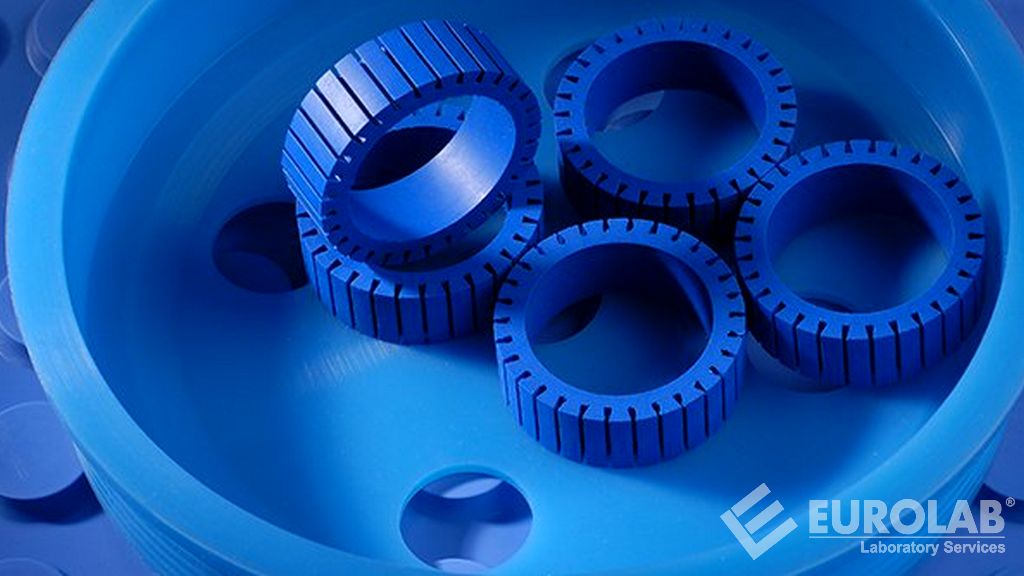
Polymer chemistry involves the study of very large molecules made up of small repeating units. These repeating units are called monomers and are linked together to form the larger molecule, the polymer. Elastomer is a type of polymer. The key difference between elastomer and polymer is that a polymer is any large molecule formed with small units called monomers whereas elastomer is a special type of polymer with elastic property.
Elastomers are rubber-like materials and generally do not have a regular structure. The elastic property of elastomers arises because of this irregular structure. The weak forces between the polymer chains give flexibility to the polymer. The shape of an elastomer changes momentarily when a force is applied, but returns to its original shape when the force is removed. Thermoplastic elastomers melt when heated, whereas thermoset elastomers do not melt when heated.
Quality and safety always come first among the demands for new materials used in the automotive industry. Continuous improvements are made in products and product components. These range from the raw material to the final product. During the development of each part and component, continuous testing and analysis is carried out in advanced laboratories. Painting of polymer and elastomer surfaces is also considered in this context.
The use of plastic materials has been steadily increasing in recent years. Plastics are now replacing many materials. Parts previously produced from metal are now made from plastics. The volume of polymers used today is much greater than that of metals. The most important point here is that paint is not needed for painting or coating surfaces.
Among the numerous test, measurement, analysis and evaluation studies it provides for businesses in various sectors, our organization also provides testing services for painting surfaces with polymers and elastomers, within the scope of FORD FLTM BP 153-01 standard, with its trained and expert staff and advanced technological equipment.
To get an appointment, to get more detailed information or to request an evaluation, you can ask us to fill in our form and reach you.

