

Developed by Fiat Chrysler Automobiles (FCA) (now Stellantis), an Italian-American automotive company, the “Fiat 7-M0001 Color Assessment of Plastic Aesthetic Surfaces” standard is an automotive material and surface assessment specification designed for the measurement and control of color properties in vehicle components and interior and exterior trim materials. This standard is widely referenced in automotive quality laboratories and plastic testing facilities to evaluate color consistency and appearance quality.
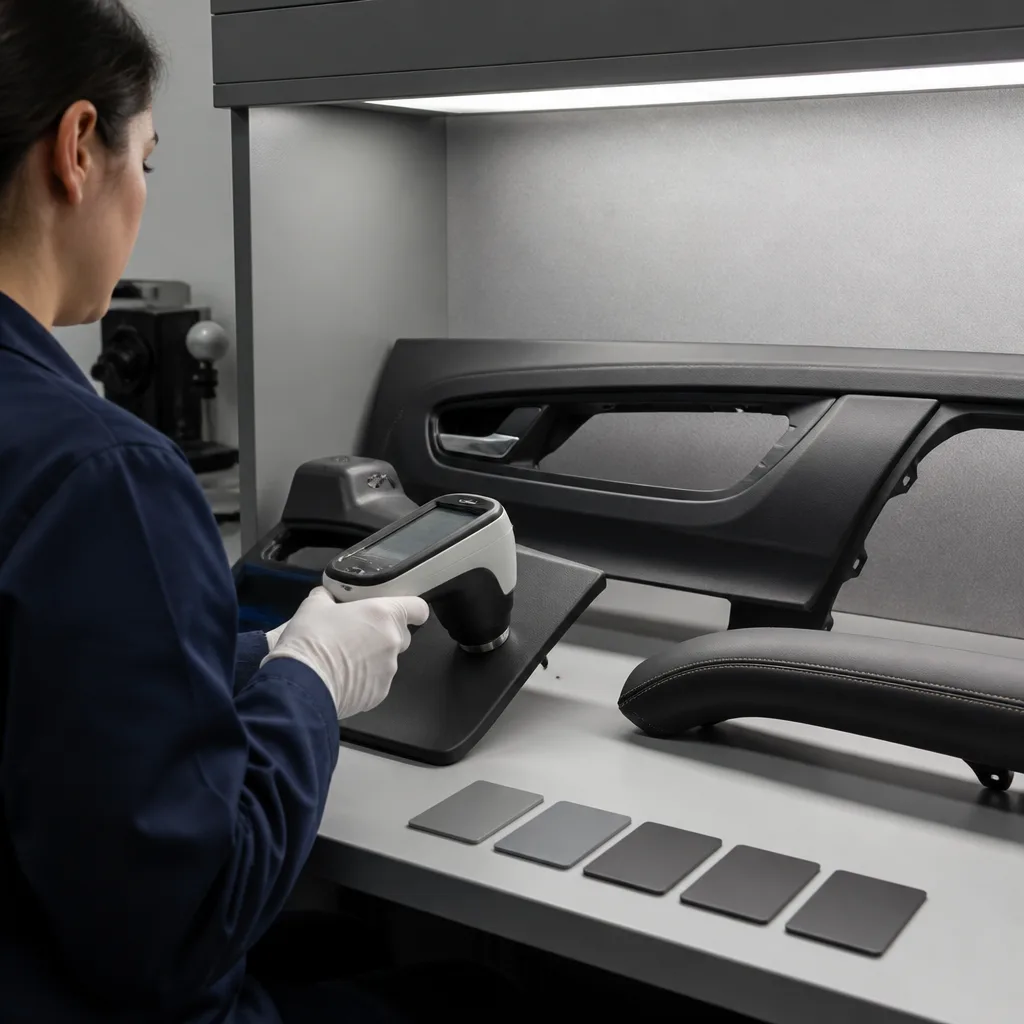
The primary purpose of the Fiat 7-M0001 standard is to ensure that automotive materials maintain consistent color characteristics throughout production batches and vehicle assembly. In modern vehicle manufacturing, even minor color variations between adjacent parts can negatively impact perceived quality.
This standard is used in the following areas:
Typical applications include instrument panels, door panels, center consoles, seat materials, and exterior trim components.
The Fiat 7-M0001 standard focuses on instrumental color measurement, generally using spectrophotometric analysis. This procedure compares a test sample to a primary reference standard. Commonly evaluated basic parameters include:
This ensures reproducibility between laboratories and suppliers.
Tests performed according to the Fiat 7-M0001 standard generally require the following equipment:
Laboratories that perform the test typically use computerized color analysis systems capable of producing accurate CIELAB values.
Because vehicle components are often manufactured by different suppliers, color matching is critical in automotive interiors and exteriors. The Fiat 7-M0001 standard helps to ensure this:
Without strict color standards, mismatched components can become visible after assembly, especially under sunlight or exhibition lighting.
The Fiat 7-M0001 standard is part of a broader Fiat material verification system and is used in conjunction with the following standards:
Furthermore, it is conceptually compatible with international color evaluation practices such as the following:
The Fiat 7-M0001 standard primarily applies to the following:
The Fiat 7-M0001 standard is essential because modern automotive manufacturing requires extremely consistent color quality across thousands of parts produced by multiple suppliers. Even very small color variations can become visible once components are assembled inside or outside a vehicle. This standard provides a controlled and objective method for measuring color variations and ensures all parts conform to the intended design appearance.
This standard is important for the following reasons:
In conclusion, the Fiat 7-M0001 standard is an automotive color measurement standard used to verify color consistency and appearance quality in vehicle materials and components. This specification helps manufacturers maintain high visual quality standards across complex automotive supply chains by defining controlled test conditions and objective color evaluation methods. This standard plays a vital role in ensuring aesthetic uniformity, supplier consistency, and overall customer satisfaction in vehicle production.
For many years, our organization, with its competent and experienced staff, has been understanding the needs of its customers, providing the advanced testing services they require, and assisting them in the establishment, implementation, and improvement of management systems. Within this framework, we also provide testing services in accordance with the Fiat 7-M0001 standard.
To get an appointment, to get more detailed information or to request an evaluation, you can ask us to fill in our form and reach you.

