

The Hyundai Kia MS 300-34 standard, developed by Hyundai Motor Company, describes an odor assessment method for determining interior part odor in vehicles. Thanks to larger sample sizes and higher testing requirements in this method, the discrimination of an odor source is increased, so that the contribution of a part assembly to the odor of the entire car is more visually investigated. Compared with the odor assessment on material types, the method quickly locates the whole automobile odor additive source and distinguishes the odor change. Thus, the problem of misjudgment caused by the poor local homogeneity of the component materials of the parts is effectively solved, and an incomplete assembly of complex parts with a small number of components or auxiliary materials is avoided.
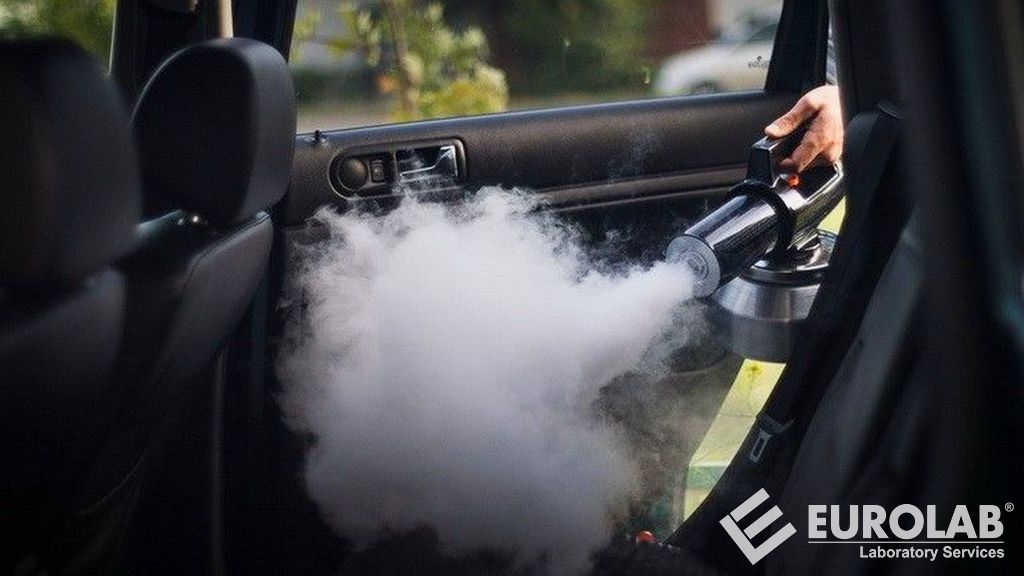
The problem of indoor air quality raises the concerns of more and more users, and people experience odor in the car. For this reason, test methods and in-vehicle air pollution limits have been published repeatedly.
The odor emanating from automobile interior parts consists of a wide variety of fragrance components produced from various materials. In advanced laboratories, odor components, which are not limited to those emitting strong odors, even in limited quantities, are analyzed by two-dimensional gas chromatography (GC) and high-sensitivity sniffing gas chromatography / mass spectroscopy (GC-MS) method.
In short, it is of great importance to evaluate the odor emitted by interior materials for indoor air quality control. The tests applied focus on the classification problem of the type of odor, that is, the type of material from which the odor is emitted. The Hyundai Kia MS 300-34 standard is designed to simultaneously distinguish between types and degrees of odor, and to determine, respectively, types of odors, and then their grade. Research shows that inhaling the smell of the interior (especially the smell known as the new vehicle smell) can be really dangerous. The source of this smell is gas extraction. This gas is basically microscopic particles and their combined vapors emitted from the plastics and synthetic fabrics of a car that has just come out of the factory. The smell is actually not as harmless as it sounds.After just a short 20-minute ride, formaldehyde and benzene levels exceed daily limit values.
Among the numerous tests, measurements, analyses, and evaluations our organization provides for businesses in various sectors, we also offer interior part odor testing services in vehicles under the Hyundai Kia MS 300-34 standard, thanks to our trained and expert staff and advanced technological equipment.
To get an appointment, to get more detailed information or to request an evaluation, you can ask us to fill in our form and reach you.

