

Developed by General Motors Europe (GME), the “GME 60255 Resistance of Elastomers to Fluids and Oils” standard is a materials testing standard that specifies a method for evaluating the resistance of elastomeric materials to fluids and greases. This standard applies to elastomers, including natural and synthetic rubber compounds, widely used in automotive applications such as gaskets, seals, O-rings, hoses, diaphragms, and vibration isolators. Because these components are frequently exposed to automotive fluids throughout their service life, verifying their chemical compatibility is crucial for ensuring long-term durability and reliability.
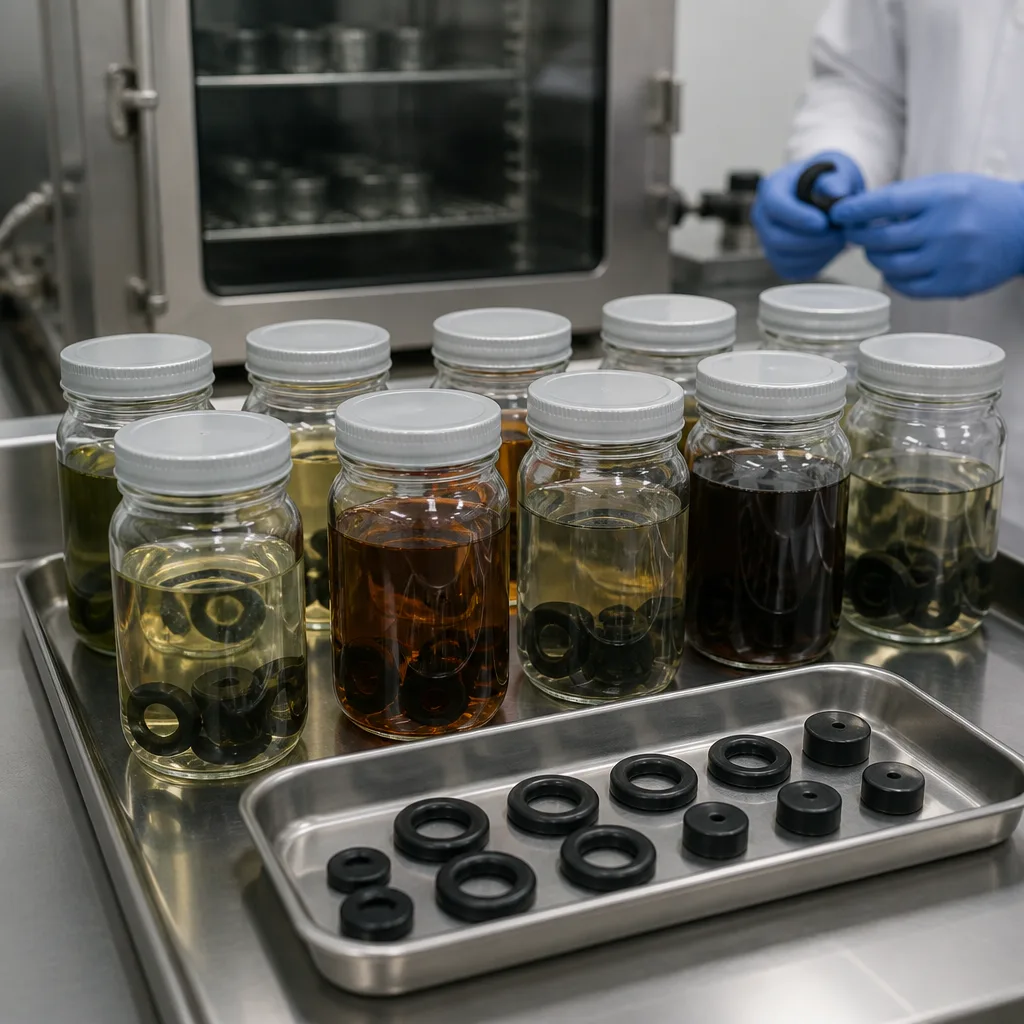
This standard describes procedures for measuring changes in the physical and mechanical properties of elastomers after exposure to specified test fluids or greases. This standard was later designated “Not for new designs” and replaced by the ISO 1817 standard for future global GM projects, but it can still be used as a reference for older vehicle programs.
The primary objective of the GME 60255 standard is to determine how contact with fluids and greases affects the performance of elastomeric materials. Exposure to automotive fluids can cause:
This standard enables engineers to quantify these effects and determine whether a material is suitable for its intended automotive application.
The GME 60255 standard applies to elastomeric materials used in automotive systems that may encounter the following substances:
This standard can be used in the following situations:
This testing method compares the properties of materials before and after immersion in a specific liquid or grease. Generally, the testing process follows these steps:
These changes indicate the elastomer's compatibility with the test fluid.
The GME 60255 standard acknowledges various material degradation mechanisms by which liquids can affect elastomers:
Following exposure, various characteristics can be measured, including the following:
This standard refers to other GME standards for specific measurements, including:
Typical test conditions depend on the intended application and the liquid, but generally include:
Exposure times can vary from a few hours to several days, depending on material suitability requirements.
The GME 60255 standard is commonly used in the evaluation of the following materials:
Each application requires compatibility with specific fluids encountered during vehicle operation.
Elastomer degradation can lead to the following issues in terms of automotive reliability:
The GME 60255 standard helps mitigate these risks and support long-term component performance by qualifying materials before production. This standard offers the following main advantages:
Historically, the GME 60255 standard was developed specifically for General Motors Europe. Over time, General Motors adopted internationally harmonized test procedures, and the “ISO 1817 Vulcanized or thermoplastic rubber – Determination of the effect of liquids” standard became the preferred global standard for new vehicle development. Consequently, the latest version of GME 60255 has been superseded by ISO 1817 for future global projects, although it remains applicable to some older programs.
Although developed for automotive engineering, similar test principles are also valuable for industries outside of the automotive sector. For example,
In conclusion, the GME 60255 standard has established a standardized procedure for evaluating the resistance of elastomeric materials to automotive fluids and greases. By measuring changes in dimensions, hardness, tensile properties, and other characteristics after controlled fluid exposure, this standard enables engineers to select materials that can maintain reliable performance throughout a vehicle's lifespan. While new General Motors global projects now rely on the ISO 1817 standard, the GME 60255 standard remains an important legacy specification for understanding past material qualification requirements and supporting current vehicle platforms.
For many years, our organization, with its competent and experienced staff, has been understanding the needs of its clients, providing the advanced testing services they require, and assisting them in the establishment, implementation, and improvement of management systems. Within this framework, we also provide testing services compliant with the GME 60255 standard.
To get an appointment, to get more detailed information or to request an evaluation, you can ask us to fill in our form and reach you.

