

The “GMI 60254 Determination of Compatibility of Different Materials in Contact” standard, developed by General Motors International (GMI), is a materials testing standard that specifies a method for evaluating the compatibility of materials that remain in contact with each other during normal vehicle use. This standard primarily aims to identify adverse interactions between adjacent materials before they are approved for production. It helps engineers ensure that plastics, rubbers, foams, textiles, coatings, adhesives, and other automotive materials do not adversely interact with each other over time.
The GMI 60254 standard has historically been used by General Motors Europe in the product development process for interior and exterior automotive components. While it remains available for ongoing projects, the latest version of this standard is designated “Not for new design” and has been replaced by ISO 3865 Method A and GMW 14162 Method B for future applications.
Different automotive materials remain in direct contact for many years while being exposed to high temperatures, humidity, sunlight, and mechanical loads. Some material combinations are chemically incompatible and can lead to:
The GMI 60254 standard provides a standardized laboratory procedure for identifying these problems before production tools are manufactured.
This standard applies to materials that come into contact with the vehicle during normal vehicle use. These materials include:
Typical applications of this standard include:
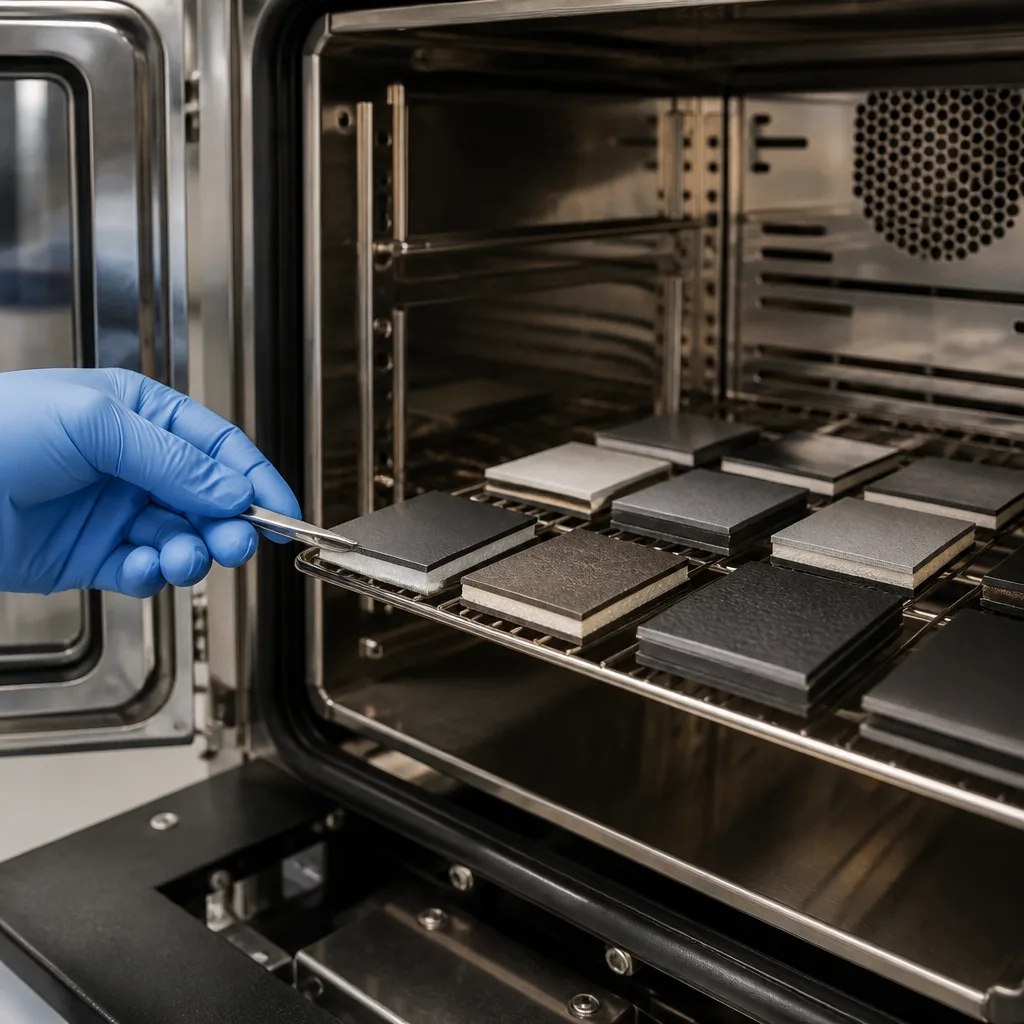
In principle, this test simulates prolonged contact between two materials. Two samples are placed in direct contact under controlled pressure and exposed to specified environmental conditions, usually high temperature, for a defined period. After conditioning, both materials are examined for visible and measurable changes. The comparison is made between the following properties:
This allows engineers to determine whether materials remain compatible throughout their lifespan.
According to this standard, compliance can be assessed by comparing pre- and post-test characteristics. These include:
This flexibility allows the test to be adapted to different vehicle programs.
The generally described test procedure follows these steps:
Materials are generally valid unless unacceptable changes such as the following occur:
Project-specific engineering specifications may define additional acceptance limits.
Typical material combinations considered in the automotive industry include:
Compatibility testing is important because modern tools involve hundreds of different materials in close contact. Without verification, long-term interactions can lead to:
By identifying incompatible material pairings during the development phase, manufacturers can select alternative materials or modify formulations before production.
The latest version of the GMI 60254 standard has been determined to be unsuitable for new vehicle programs. It has been replaced by the following standards for future General Motors applications:
These new standards provide updated procedures that are consistent with General Motors’ global materials verification practices.
The GMI 60254 standard helps manufacturers in the following areas:
In conclusion, the GMI 60254 standard is a crucial standard for evaluating the compatibility of materials in contact within automotive components. By assessing changes in appearance, physical properties, chemical stability, and functional performance after controlled contact exposure, the standard helps engineers identify material interactions prior to manufacturing. The methodology of this standard continues to demonstrate the critical role of compatibility testing in automotive materials engineering.
For many years, our organization, with its competent and experienced team, has been understanding the needs of its clients, providing the advanced testing services they require, and assisting them in the establishment, implementation, and improvement of management systems. Within this framework, we also provide testing services compliant with the GMI 60254 standard.
To get an appointment, to get more detailed information or to request an evaluation, you can ask us to fill in our form and reach you.

