

Developed by Suzuki Motor Corporation under the supplementary SES N standards (examples), the “SES N 3307 Composite Materials” standard is an automotive materials standard that defines the requirements, test methods, and performance criteria for composite materials used in vehicle applications.
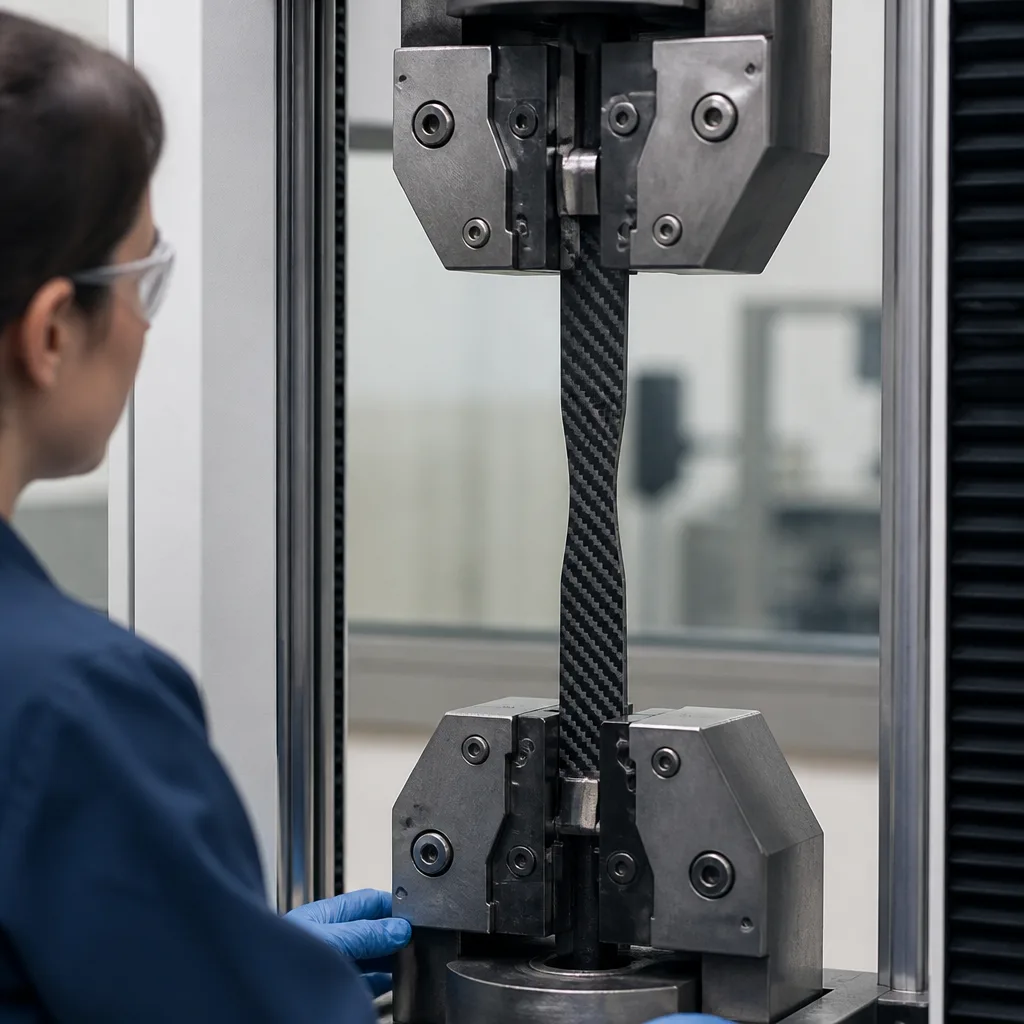
Composite materials are produced by combining two or more different materials to achieve superior properties. They typically consist of:
Common examples include:
Use of composite materials in the automotive industry: Composite materials are widely used due to their high strength-to-weight ratio and durability.
This standard ensures that composites meet stringent automotive requirements:
The SES N 3307 standard is necessary because composite parts behave very differently from metals or plastics and can fail in unpredictable ways without strict standards. This standard is important in the automotive industry for the following reasons.
Even small differences can lead to significant performance differences. This is the standard:
This standard guarantees that composites will provide the following:
Without standards, adhesion defects and corrosion problems (especially in carbon fiber and metals) are observed. This standard confirms the following:
Composite materials can deteriorate for the following reasons:
The SES N 3307 standard provides the following:
The use of composite materials in the automotive industry is not just a trend; it solves many significant engineering problems faced by traditional materials such as steel or aluminum.
Composite materials are much lighter than metals while maintaining their strength.
This is one of the main reasons for the widespread adoption of composites.
Composites can be as strong as or stronger than steel, but much lighter.
Unlike metals, composites do not rust and are resistant to chemicals (fuel, oil, salt).
Composites naturally absorb energy, providing better noise and vibration damping. They are particularly useful in interior and structural components. Composites can be molded into complex shapes that are difficult with metal. Finally, they are a material for electric vehicles. Lightweighting is critical for electric vehicle performance.
Unlike metals, composites can be specifically designed: Fiber orientation controls strength. Layer structure controls stiffness and impact behavior. Some composites excel at absorbing impact energy.
In short, composite materials are used in automotive applications for the following reasons:
In conclusion, the SES N 3307 standard plays a critical role in validating composite materials intended for automotive use by ensuring they possess the following properties:
For many years, our organization, with its competent and experienced team, has been understanding the needs of its clients, providing the advanced testing services they require, and assisting them in the establishment, implementation, and improvement of management systems. Within this framework, we also provide testing services compliant with the SES N 3307 standard.
To get an appointment, to get more detailed information or to request an evaluation, you can ask us to fill in our form and reach you.

