

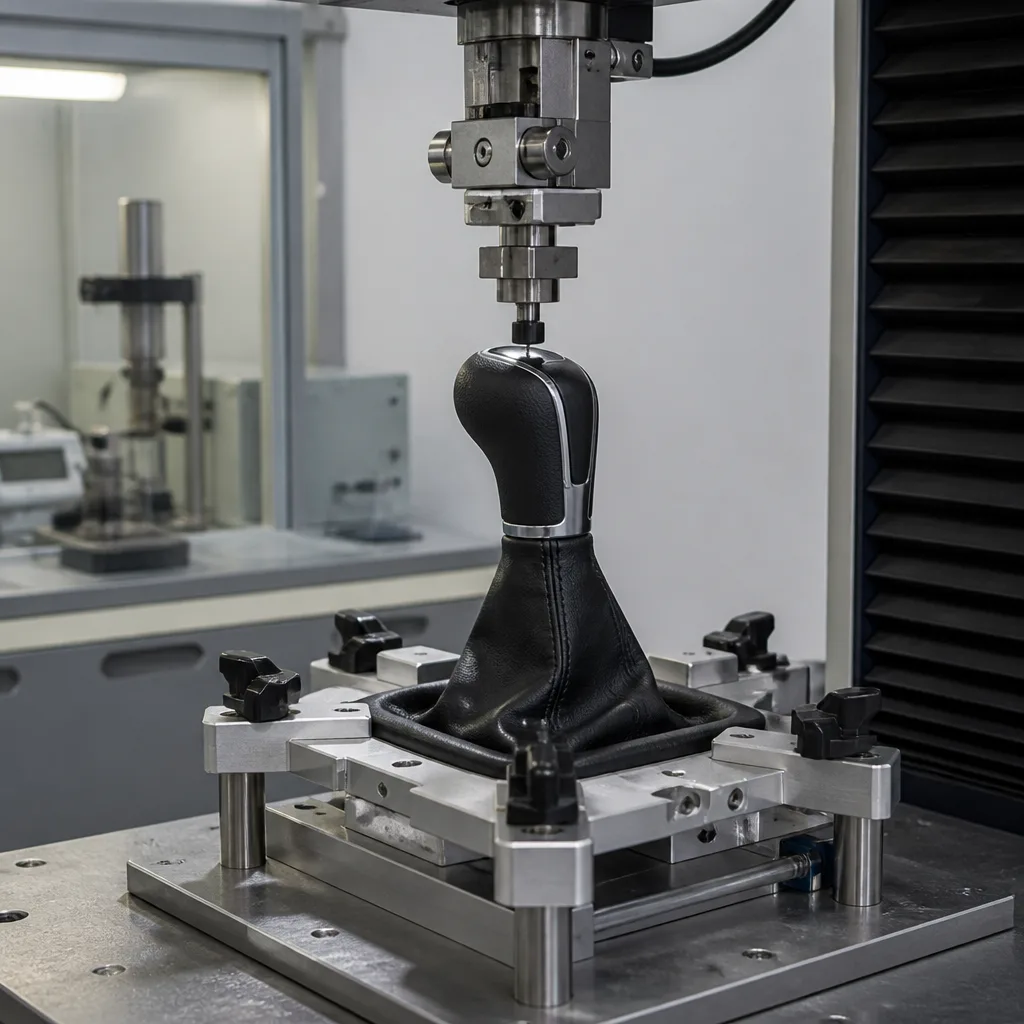
The “Fiat 9-03162 Gear Lever Handle (Assembly) - Wear Resistance” standard, developed by Fiat Chrysler Automobiles (FCA) (now Stellantis), an Italian-American automotive company, describes standardized test methods for evaluating the durability, particularly wear resistance, of automotive interior components such as gear lever handles (gear knobs), gear lever assemblies, and related plastic or coated parts.
This specification is part of a broader quality assurance system for supplied materials and components. These standards ensure that parts subject to frequent hand contact can withstand long-term use without significant deterioration in appearance or functionality.
The primary focus of the Fiat 9-03162 standard is wear resistance. This standard incorporates laboratory test procedures to simulate real-world wear, friction, and mechanical stress experienced by drivers during gear changes.
The main applications are:
This standard is widely referenced by materials testing laboratories working with Fiat and suppliers in the automotive industry.
The Fiat 9-03162 standard typically includes the following:
This standard also provides a comprehensive evaluation framework for, for example, adhesion, thrust load, and lever components.
This standard also helps suppliers qualify materials before mass production begins and is often required in production part approval process documents for Fiat vehicles.
In modern vehicles, especially those with manual transmissions, the gearshift lever handle is subjected to thousands of interactions over the vehicle's lifespan. Failure to comply with the Fiat 9-03162 standard can lead to the following consequences:
In short, the gearshift handle is a component of the gearshift mechanism that the driver physically holds during gear changes. Because it is constantly exposed to human contact, friction, pressure, and environmental influences, wear resistance is one of the most important performance requirements.
Wear resistance is the ability of a material or surface to resist abrasion, scratching, rubbing, surface chipping, loss of coating, and long-term mechanical deterioration. For gear shift lever handles, wear resistance ensures the component maintains its appearance, texture, grip quality, markings, and structural integrity throughout the vehicle's lifespan.
The main reasons why this standard is important are:
Common materials and features used in gear shift lever handles include:
Automotive manufacturers use standardized wear and durability tests to evaluate gearshift handgrips. In wear resistance testing, the surface is repeatedly rubbed using the following:
The described test method evaluates the following:
If the wear resistance is insufficient, the following may occur in the handle:
These problems are especially common with low-quality soft-touch coatings.
Wear resistance is a critical quality requirement for gear shift lever handles because these components are subjected to constant physical interaction throughout the life of a vehicle. High wear resistance protects: appearance, tactile quality, comfort and operational reliability.
In conclusion, the Fiat 9-03162 standard represents Fiat's meticulous approach to material durability in one of the most tactile areas of an automobile interior, playing a critical role in ensuring the long-term quality and reliability of vehicles.
For many years, our organization, with its competent and experienced staff, has been understanding the needs of its customers, providing the advanced testing services they require, and assisting them in the establishment, implementation, and improvement of management systems. Within this framework, we also provide testing services in accordance with the Fiat 9-03162 standard.
To get an appointment, to get more detailed information or to request an evaluation, you can ask us to fill in our form and reach you.

