

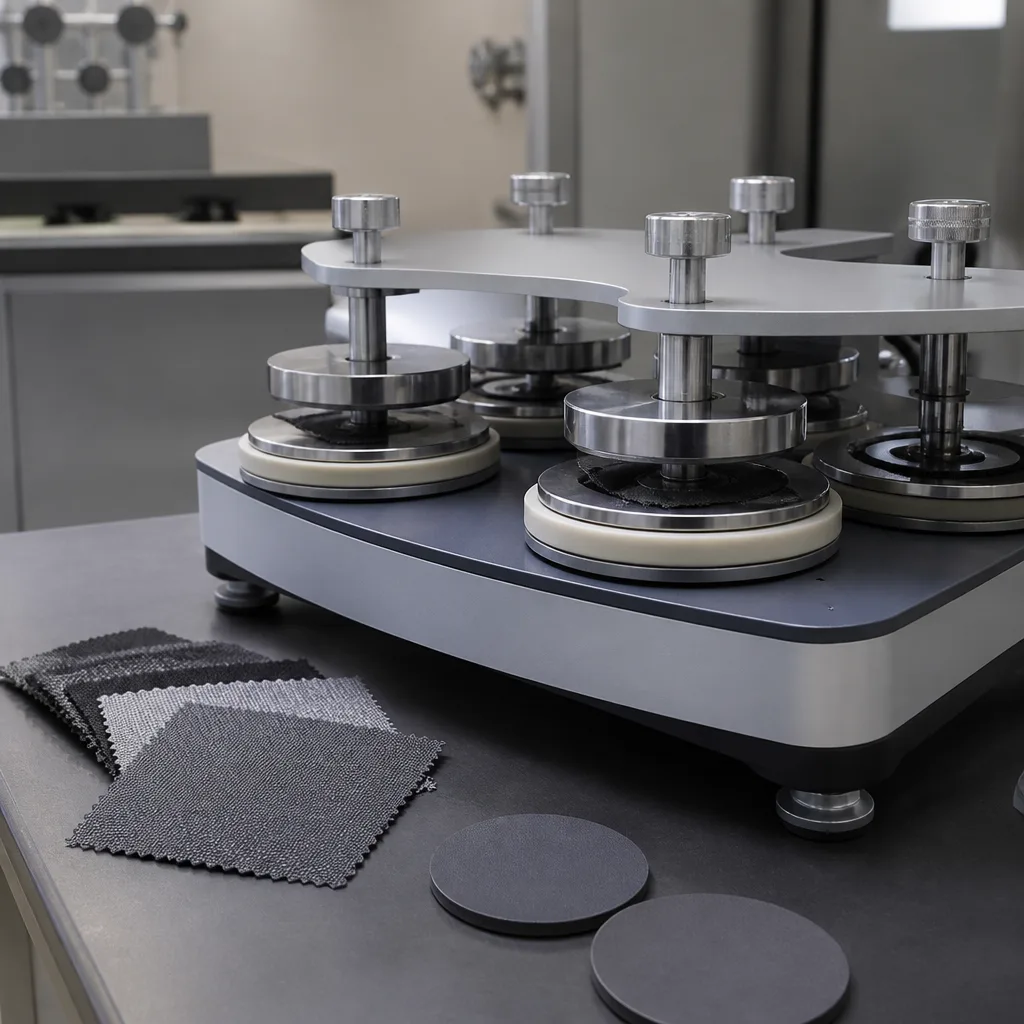
Developed by General Motors Europe (GME), the “GME 60288 Abrasion Test for Textile Fabrics - Martindale Abrasion Test” standard is a materials testing standard that defines the Martindale abrasion test to evaluate the abrasion resistance of textile fabrics used in automotive applications. This standard is primarily designed for materials used in vehicle interiors, including seat upholstery, door trim fabrics, headliners, armrests, and other textile-covered components.
The primary purpose of the GME 60288 standard is to determine a textile material's resistance to wear caused by repeated friction during normal vehicle use. This standard helps engineers assess whether a fabric can withstand the following factors for many years:
Tests ensure that automotive textiles maintain both their appearance and functional performance throughout the vehicle's expected lifespan.
The GME 60288 standard applies to textile materials used in automotive interiors. These materials include:
This standard may also apply in the following cases:
The Martindale abrasion test method is one of the world's most widely accepted abrasion resistance tests for textiles. The tests generally follow these steps:
Depending on the material specification, typical evaluation includes the following:
Acceptance limits are typically defined in the relevant General Motors material specification, not in the test method itself.
Tests are generally performed using a Martindale wear testing device, which includes the following:
Proper sample preparation and environmental conditioning are essential for obtaining reproducible and comparable results.
In general, the workflow in testing includes the following:
Vehicle interior textiles are subjected to thousands of wear events over the life of a vehicle. Insufficient wear resistance can lead to:
General Motors mandates the GME 60288 standard to ensure that interior fabrics maintain their appearance and durability under long-term use. This standard is commonly used by:
Although this standard was developed for General Motors Europe, the Martindale wear method is widely accepted in the automotive and textile industries.
The benefits of complying with the GME 60288 standard are as follows:
The GME 60288 standard is based on the internationally accepted Martindale wear testing principles and is closely related to the following standards:
In conclusion, the GME 60288 standard is a key standard for evaluating the abrasion resistance of automotive textile materials using the Martindale test method. It provides a consistent and repeatable procedure for assessing how well upholstery and interior fabrics withstand repeated mechanical wear. This standard contributes to the long-term quality, comfort, and appearance of vehicle interiors, supporting supplier competence and product development by ensuring textile materials meet defined durability requirements.
For many years, our organization, with its competent and experienced staff, has been understanding the needs of its clients, providing the advanced testing services they require, and assisting them in the establishment, implementation, and improvement of management systems. Within this framework, we also provide testing services compliant with the GME 60288 standard.
To get an appointment, to get more detailed information or to request an evaluation, you can ask us to fill in our form and reach you.

