

In the Fiat-Lancia 50442 standard, published jointly by Fiat automobile company and its affiliate Lancia automobile company, the requirements for tearing properties of textile products, waterproof fabrics, leathers, artificial leather and vinyl plates used in the interior of automobiles are explained and a test method is defined. The tear strength of the said materials refers to the resistance of the material against the tearing force. Often the fabric is torn when gripped by a sharp object, and a sudden small cut turns into a long tear. This is probably the most common type of strength failure, so testing the tear strength of textiles, waterproof fabrics, leathers, faux leather and vinyl plates is crucial. Tear strength is considered a quality factor in most materials.
In fact, tear resistance is a complex result of other fundamental properties such as modulus and tensile strength. Many laboratory methods have been developed to detect this feature.
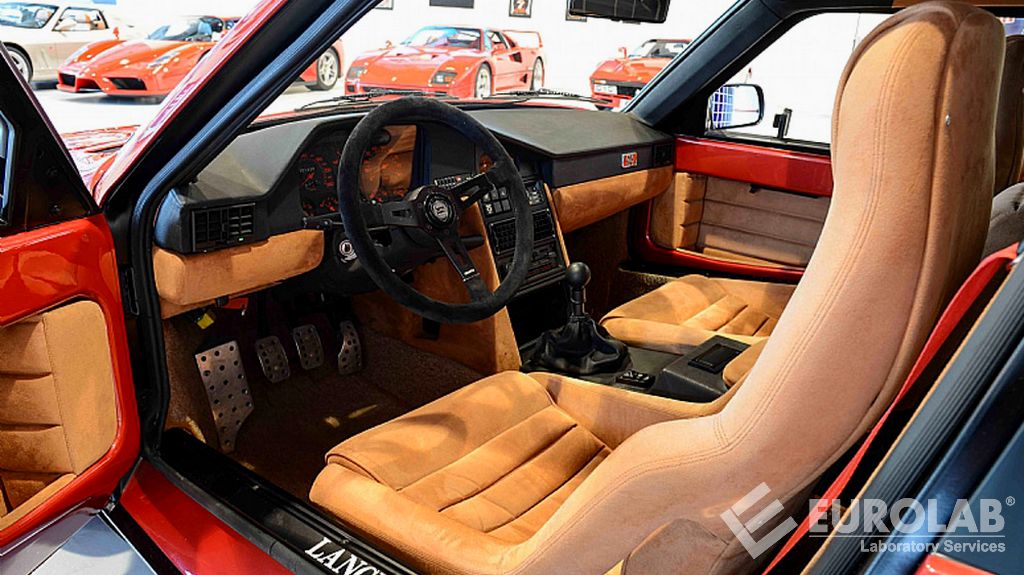
Leather is a material made from natural fibers. One of the properties that leather excels in is its tensile strength. In this respect, automotive leathers are produced to meet the highest performance standards. As a result, car seats are sat on and off hundreds of times, even thousands of times. That's why it's vital that they last for a long time. The tensile strength for bovine leather is between 8-25 N/mm2. The leather used in the interior of the cars is expected to be even stronger. The automotive industry demands a value of 5 N per 200 cm.
The amount of oil contained in leather increases its tensile strength and resistance to tearing. For this reason, leather is treated with oil during the tanning process to increase its ability to withstand environmental effects and pressures. Other factors contributing to the tensile strength of leather include its finish, hardness, and age. These only serve to improve the leather's natural properties, making it a unique material.
Among the numerous test, measurement, analysis and evaluation studies it has given for businesses in various sectors, our organization, with its trained and expert staff and advanced technological equipment, is used in the scope of Fiat-Lancia 50442 standard, textile products, waterproof fabrics, leathers, artificial leathers and vinyl. It also provides tear test services for plates.
To get an appointment, to get more detailed information or to request an evaluation, you can ask us to fill in our form and reach you.

