

Developed by BMW, a multinational vehicle manufacturer, the “BMW AA 0180 Cross-line Adhesion Test” standard defines a widely used method for evaluating the adhesion strength of coatings such as paints, varnishes, adhesives, and multi-layer surface coatings to underlying surfaces. This test is crucial in the automotive industry to ensure that protective and decorative coatings on vehicle bodies, components, plastic parts, and interior surfaces remain durable and robust throughout the vehicle's lifespan, even under harsh environmental conditions, mechanical stress, or chemical exposure.
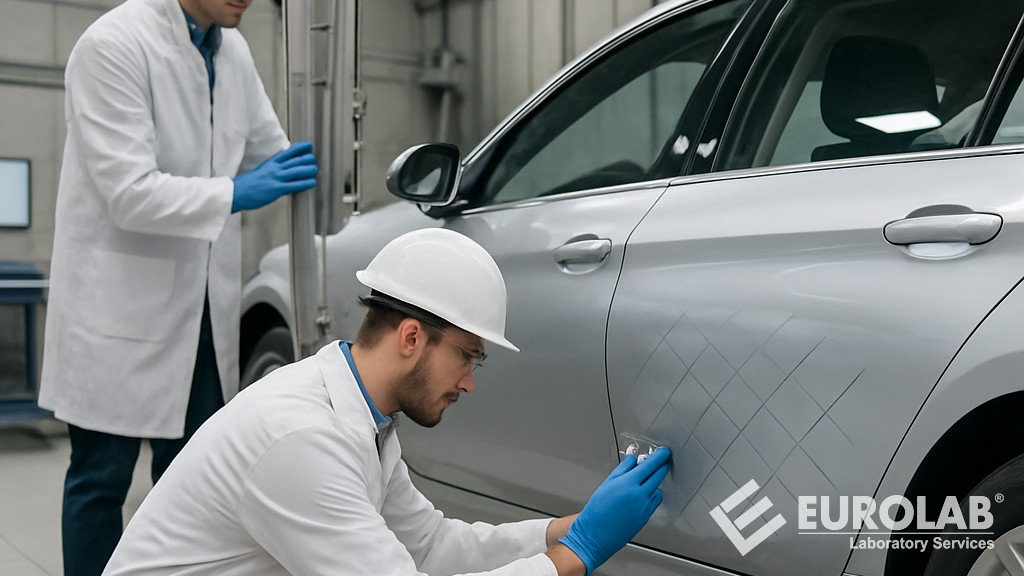
The cross-section (cross-cut) adhesion test, commonly known as the cross-section adhesion test, is a standardized procedure based on principles similar to the DIN EN ISO 2409 standard. The typical working method for this is as follows:
This standard applies specifically to coatings thinner than 125 microns and is performed under controlled laboratory conditions. It helps identify weaknesses in surface preparation, coating formulation, or application processes.
In the automotive world, poor coating adhesion can lead to problems such as:
BMW, like other major manufacturers (e.g., Mercedes-Benz with DBL standards or GM with GMW standards), uses this test as part of its rigorous quality assurance for its suppliers. This standard is often used in conjunction with other BMW standards, such as those listed below:
In practice, this test is applied to the following:
Special tools, such as rotary cross-scanning cutters specifically manufactured for compliance with the BMW AA 0180 standard, are used.
This standard is essential because it serves as a critical quality control point in the automotive manufacturing process. This testing method ensures that paints, varnishes, and other surface coatings remain securely adhered to vehicle surfaces throughout the vehicle's lifespan, under real-world stresses that could otherwise lead to serious failures.
This standard is considered important for the following reasons:
The strong adhesion verified by this standard ensures the coating remains intact, preventing the initiation or spread of corrosion.
Cross-screen testing provides a quick, repeatable, and visual way to measure adhesion quality before parts go into full production or assembly.
By identifying these problems early in test panels, components, or production samples, manufacturers avoid costly later-stage failures, rework, or field issues.
In conclusion, the BMW AA 180 standard represents the meticulous attention to detail that ensures BMW vehicles are reliable and long-lasting. It's a quiet but critical piece of engineering that ensures BMW's signature paint and finishes look flawless for years to come. This standard is more than just a simple requirement; it's a proactive safety measure that helps deliver durability, corrosion resistance, and a flawless finish on vehicles. Without such testing, vehicles would experience higher rates of paint peeling, rusting, and premature aging.
For many years, our organization, with its competent and experienced staff, has been understanding the needs of its customers, providing the advanced testing services they require, and assisting in the establishment, implementation, and improvement of management systems. Within this framework, we also provide testing services to businesses in accordance with the "BMW AA 0180 Cross-line adhesion test" standard.
To get an appointment, to get more detailed information or to request an evaluation, you can ask us to fill in our form and reach you.

