

Developed by Fiat Chrysler Automobiles (FCA) (now Stellantis), an Italian-American automotive company, the “Fiat 50441 Resistance to Detachment - Upholstery materials bonded to polyurethane sheet and associated backing material” standard is primarily an automotive material testing specification relating to the tensile strength and elongation properties of automotive fabrics and laminated interior materials. This standard is used in Fiat material validation programs for seat fabrics, upholstery laminates, and other textile-based interior components.
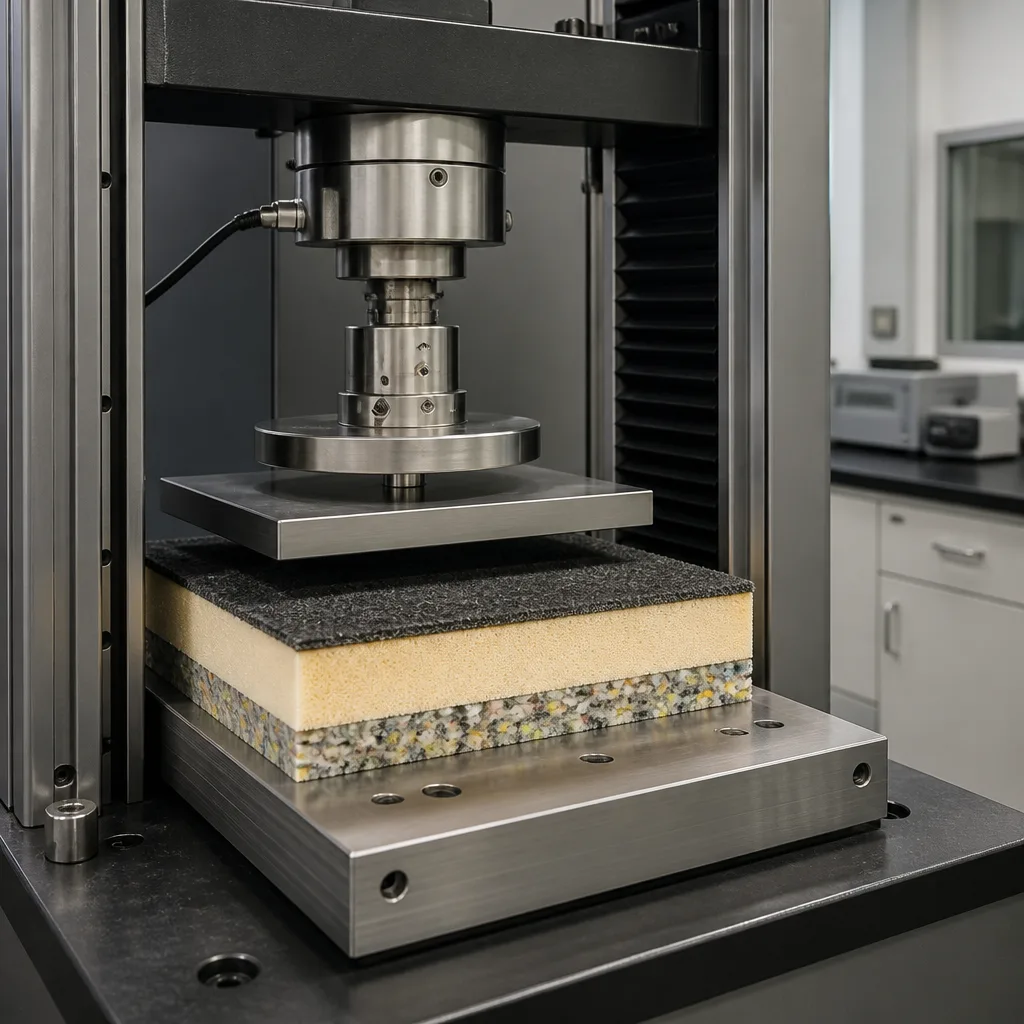
The Fiat 50441 standard is generally used to evaluate the following:
This standard generally applies to the following:
This standard was widely used within Fiat Group materials engineering and subsequently harmonized with various internal Fiat specifications.
Automotive interior materials are subjected to constant stresses throughout the life of a vehicle:
The Fiat 50441 standard was developed to ensure that interior materials meet the following requirements:
Without these types of tests, upholstery fabrics and laminates can stretch excessively, tear prematurely, or fail at the seams.
In Fiat 50441 standard tests, laboratories typically use the following equipment:
The test measures how much force a material can withstand before breaking and how much it elongates under load. Generally, this method follows these steps:
Samples are typically prepared in 200 mm x 100 mm dimensions. Multiple samples are taken in both the warp and weft directions. The samples are conditioned at controlled temperature and humidity. They are then fixed to a tensile testing machine and subjected to controlled force at a controlled speed. The maximum tensile strength, elongation percentage, deformation behavior, and fracture mode are determined. A minimum elongation requirement of approximately 4% under a 10 daN load and a minimum tensile strength of approximately 100 daN for woven fabrics are expected. The test determines how much force the material can withstand before fracturing or undergoing unacceptable deformation.
Actual acceptance limits vary depending on the following:
The Fiat 50441 standard is generally used in conjunction with other related Fiat automotive textile standards:
Together, these standards form a complete durability verification system for automotive interior materials.
In short, this standard helps to ensure the following:
The Fiat 50441 standard is required because it ensures that automotive interior materials such as seats, upholstery fabrics, and trim components, which are subjected to continuous mechanical stress throughout the life of a vehicle, remain safe, durable, and visually acceptable for many years under real-world operating conditions. The importance of this standard is based on the following reasons:
In summary, the Fiat 50441 standard is a mechanical performance standard for automotive textiles and interior materials. Its main purpose is to verify that fabrics and laminated upholstery materials possess sufficient tensile strength and elongation performance for long-term automotive use. This standard plays a significant role in durability verification, quality assurance, and passenger comfort engineering within Fiat vehicle development programs.
For many years, our organization, with its competent and experienced staff, has been understanding the needs of its customers, providing the advanced testing services they require, and assisting them in the establishment, implementation, and improvement of management systems. Within this framework, we also provide testing services in accordance with the Fiat 50441 standard.
To get an appointment, to get more detailed information or to request an evaluation, you can ask us to fill in our form and reach you.

