

Developed by General Motors Worldwide (GMW), the “GMW 4750 Automotive Fabric Color Transmittance” standard is an engineering standard used to evaluate color transmittance (color/fiber visibility) in automotive fabrics. This standard is particularly important for textile materials used in automotive interiors because a fabric's visual appearance can be affected by the underlying material or color.
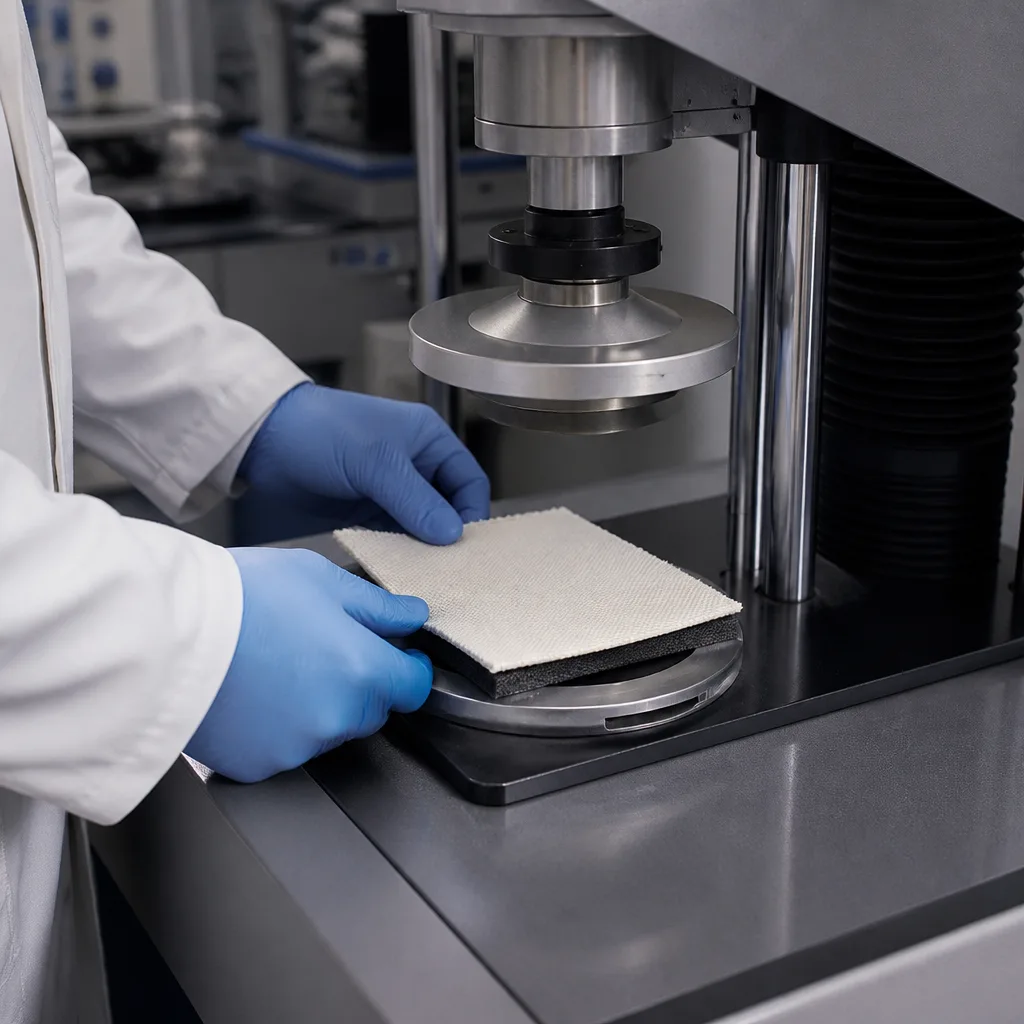
This standard is also defined by testing laboratories as a method for evaluating color transmittance in automotive textiles.
Color translucency is an important appearance characteristic because automotive fabrics are often mounted over foam, backing materials, substrates, adhesives, or other layers. If the underlying layer is visible through the textile, the finished component may have an undesirable or inconsistent appearance.
Color translucency is the phenomenon where the color or visual characteristics of the underlying material become visible through the fabric. For example, if a light-colored automotive seat fabric is placed on top of a dark-colored backing material, and the backing color affects the visible color of the fabric, the finished surface may appear darker, uneven, or different from the stated color. This phenomenon can be influenced by:
The GMW 4750 standard provides a controlled approach to evaluating this phenomenon.
The primary purpose of the GMW 4750 standard is to determine whether the underlying material affects the visible color of an automotive fabric. Therefore, the test is useful for:
Test laboratories specifically list the GMW 4750 standard among their accredited methods for color/fiber visibility and color measurement.
The basic principle of the test is quite simple. A fabric sample is examined in a configuration where the effect of an underlying color or substrate can be assessed. The apparent color of the textile is then examined or measured under controlled conditions. The key question is essentially: does the color of the material underlying the automotive fabric significantly affect the apparent color of the fabric?
Depending on the relevant version of this standard and its specified requirements, the assessment may include instrumental color measurement, visual comparison, or both.
This standard is listed alongside standards such as ASTM D2244 and SAE J1545 in accredited laboratories.
The GMW 4750 standard is important for automotive textile materials, including fabrics used in the following areas:
The importance of the test increases when the textile is relatively light, thin, transparent or translucent, and mounted on a contrasting substrate.
Automotive interiors are evaluated not only on mechanical performance but also on appearance and color consistency. A fabric might have the correct color when tested alone, but it could look different once mounted on another material. This can lead to the following problems:
The GMW 4750 standard helps identify these problems before the material goes into production.
Color readout testing should not be confused with ordinary color measurement. Ordinary color measurement determines the color properties of a material under specific measurement conditions. Color readout testing, on the other hand, evaluates how an underlying material or color might affect the visible color of a fabric. This distinction is important because a fabric can meet its own color specification while producing an unacceptable appearance when combined with a particular backing material. Therefore, the GMW 4750 standard is listed under terms such as color measurement and color/fiber permeability within laboratory accreditation scopes.
Depending on the version of the procedure and laboratory practice, this test method requires the following equipment for controlled color evaluation and measurement:
The precise equipment, measurement geometry, color system, sample configuration, and acceptance criteria are all included in the GMW 4750 standard.
The sample should represent the automotive fabric being evaluated. Key characteristics include:
Careful sample preparation is important because variations in tension, support, orientation, or surface condition can affect the observed color.
The aim of the result is to determine whether the fabric exhibits unacceptable levels of color translucency. When instrumental color measurement is used, the relevant color difference is determined according to the measurement system and requirements defined in the applicable GMW 4750 version. Acceptance criteria should be derived from the applicable GMW 4750 version and the relevant material or component specification.
The GMW 4750 standard is one of several methods that address the performance and appearance of automotive textiles. For example, other General Motors standards cover the following specifications:
Testing laboratories define this standard along with methods such as GMW 14102 standard for water staining, GMW 14146 standard for seam tear resistance, GMW 3217 standard for abrasion resistance, and GMW 14162 standard for color fastness to artificial weathering.
In summary, the GMW 4750 standard is a test method used to evaluate the color transmittance of automotive fabrics. Its purpose is to determine whether the color or appearance of the underlying material is undesirably visible through the automotive textile. This test is particularly important for automotive interior applications, as a fabric that appears acceptable on its own may produce a significantly different visual appearance after being mounted on a contrasting substrate. By checking and evaluating color transmittance, the GMW 4750 standard supports consistent interior appearance, material validation, supplier quality, and manufacturing quality control.
For many years, our organization, with its competent and experienced staff, has been understanding the needs of its clients, providing the advanced testing services they require, and assisting them in the establishment, implementation, and improvement of management systems. Within this framework, we also provide testing services in accordance with the GMW 4750 standard.
To get an appointment, to get more detailed information or to request an evaluation, you can ask us to fill in our form and reach you.

