

Standards have been developed for tire tread wear simulation by simulating real conditions faster and with greater repeatability. One of these is the tire tread wear simulation system, which accurately and precisely reproduces the forces and movements that a tire experiences on the road. In this way, tire tread wear testing is performed in a laboratory environment when speed, precision, repeatability and reliability are needed.
This method improves the correlation and reproduction of complex wear patterns, resulting in efficiency and comfort. During the tests, a specially designed multi-axis sensor package and motion systems are used to provide dynamic simultaneous control of lateral force, normal force, wheel torque and pitch angle. This control provides highly accurate reproduction of tread wear during real-world vehicle maneuvers. The benefit of simultaneous multi-axis control is improved correlation between indoor testing and outdoor driving.
The test method described not only significantly reduces test time, but also improves the ability to reproduce complex wear patterns by precisely controlling influencing variables such as temperature, speed, road surface and driver inputs. Tests can be performed at constant or variable speeds, and simulations can run 24 hours a day, 24 hours a day, 24 hours a day. In a laboratory environment, all the flexibility needed to cope with the ups and downs of real-world testing is provided.
Tire wear testing systems make it easy to program, save, and recall different tests with different time history profiles. This flexibility allows the system to run the wide range of tests needed and quickly adapts the system to handle the many different tires associated with those tests. Tire wear simulation tests are structured to cover all tire sizes from passenger cars to heavy trucks. These systems are based on years of testing experience to provide the right combination of machine control features to simulate complex wear patterns and ensure validity and repeatability of test results.
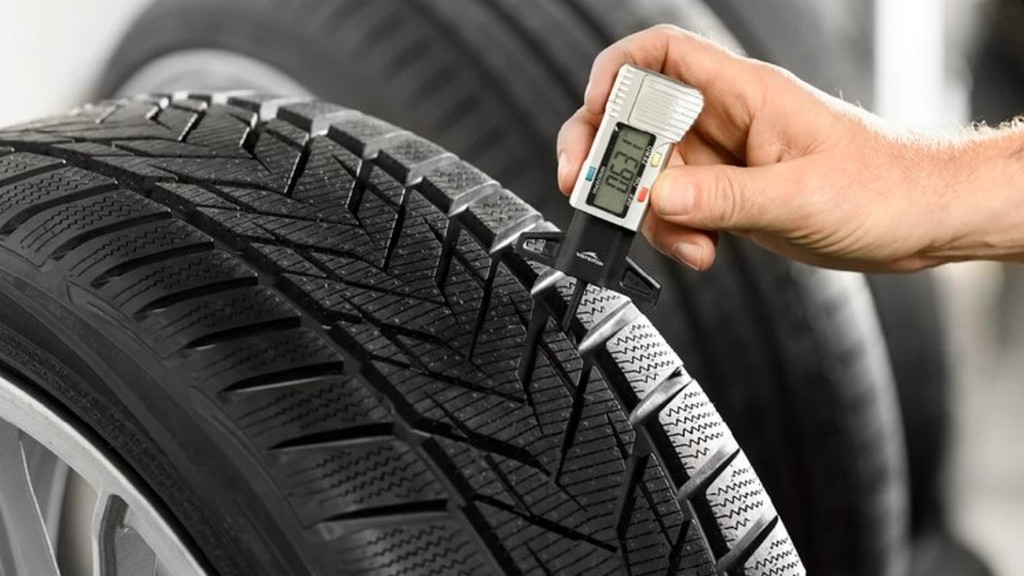
The ASTM F421-15 Standard Test Method for Measuring Groove and Gap Depth in Passenger Vehicle Tires, developed by the American Society for Testing and Materials (ASTM), describes standard procedures for measuring groove and gap depth in passenger vehicle tires. Any mechanical, optical, or electronic device capable of measuring groove (gap) depth can be used, but only contact methodology is described here. Non-contact methodology is outside the scope of this test method. Groove (gap) depth affects a tire's ability to develop traction forces in various operating environments. Groove (gap) depth also describes a tire's wear condition and is used in determining the wear rate.
Another standard is “ASTM F762/F762M-08 Standard Test Method for Determining Change in Groove (or Void) Depth with Distance Traveled for Passenger Vehicle Tires”. This standard describes a procedure to obtain data to determine changes in tire tread depth over a specified course and test period. The tread depth loss data obtained by the procedures for this test method are used to calculate tire tread wear through the procedures described in “ASTM F1016-07 Standard Practice for Linear Tire Wear Data Analysis”.
A standard published by the International Organization for Standardization (ISO) on this subject is the standard "ISO 10191 Passenger car tires - Verification of tire capabilities - Laboratory test methods". This standard describes test methods for verifying the capabilities of tires for passenger cars. Of the test methods presented, only some may be required, depending on the construction of the tire to be tested (diagonal, bias-belted, radial or T-type construction). The tests are performed in a laboratory under controlled conditions.
This standard includes durability tests, low-pressure performance testing, high-speed testing, and bead removal and tire strength requirements. The test methods presented here are not intended for grading tire performance or quality levels. These methods are applicable to all passenger car tires.
Among the numerous tests, measurements, analyses and evaluations carried out by our organization for businesses in various sectors, our organization also provides tire wear testing services with its trained and expert staff and advanced technological equipment.
To get an appointment, to get more detailed information or to request an evaluation, you can ask us to fill in our form and reach you.

