

The “GMW 4090 Yarn Count Determination” standard, developed by General Motors Worldwide (GMW), is a test standard used to determine yarn count in textile materials. It is particularly important for automotive textiles and upholstery materials, where the fabric's structure and density can significantly affect its appearance, durability, dimensional stability, and production consistency.
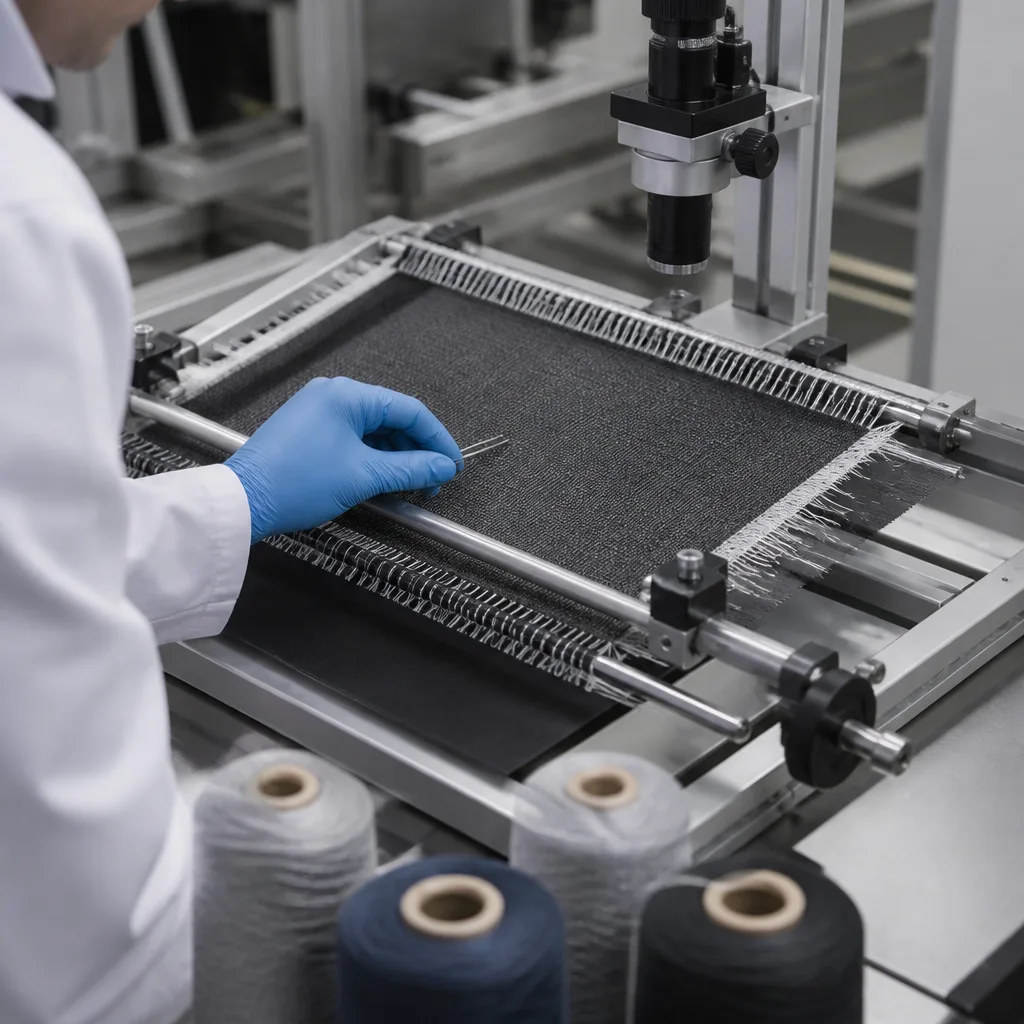
Yarn count describes the fineness or linear density of a yarn. Depending on the yarn count system used, it expresses the relationship between the mass and length of the yarn. Yarn count is an important property because two fabrics can have the same total weight but their yarn structures can be significantly different. Differences in yarn count can affect:
In automotive textiles, yarn count control helps ensure the production material conforms to the approved structure.
Weave refers to the arrangement and interweaving of yarns within a woven textile. The principal yarn directions are normally the warp and weft directions. Determining the weave provides information about:
The combination of weave and yarn count information provides a useful description of a textile's physical structure.
The primary goal of the GMW 4090 standard is to establish a consistent method for evaluating the structure of textile materials used in vehicles. This test is used for the following purposes:
The basic approach in testing is to examine the textile structure and determine the yarn count or fabric structure properties in a controlled and repeatable manner. A typical evaluation includes:
The equipment requirements to be used are included in the GMW 4090 standard. In practice, textile laboratories use appropriate equipment to examine fabric structure and determine yarn count. A counting lens or equivalent magnification device is typically used for yarn count/fabric structure examination. An accredited textile laboratory will list the GMW 4090 standard among the yarn counting methods and identify a counting lens as equipment for this testing area. Depending on the laboratory procedure, additional equipment may include:
The GMW 4090 standard is more of a structural characterization test than a direct performance test. Therefore, it complements other General Motors textile standards. For example,
Yarn count and weave significantly influence the final behavior of an automotive textile. If the yarn structure changes, other properties can alter even if the material appears visually similar. For example, a change in yarn count can affect the fabric's bulk, strength, elasticity, abrasion behavior, and appearance. Consequently, controlling yarn count is a crucial part of maintaining material consistency.
This is especially important for automotive manufacturers because interior textiles can be used in the following areas:
The GMW 4090 standard can be particularly useful during incoming material inspection and supplier quality control. A manufacturer can compare test results obtained from production samples with approved material data. Significant deviations may indicate:
Even though the test itself doesn't directly measure vehicle component durability, this makes thread count determination a useful traceability and consistency control tool.
The GMW 4090 standard is not the only method used to determine yarn count. Testing laboratories may also use other standards for the same general measurement, such as the ASTM D3775 standard. A textile laboratory might list the GMW 4090 standard alongside other textile construction and bulk-related standards, indicating that different methods can be chosen depending on the customer's specification and material type. However, if a material specification explicitly requires the GMW 4090 standard, that method should normally be followed.
A typical test report normally includes the following information:
In summary, the GMW 4090 standard is an automotive textile testing standard related to determining weave and yarn count. Its purpose is to provide a consistent way to characterize the structure of textile materials used in automotive applications.
Although yarn count may seem like a relatively basic textile property, it is closely related to fabric structure and can affect important characteristics such as strength, appearance, abrasion resistance, elasticity, and dimensional behavior.
For many years, our organization, with its competent and experienced staff, has been understanding the needs of its clients, providing the advanced testing services they require, and assisting them in the establishment, implementation, and improvement of management systems. Within this framework, we also provide testing services in accordance with the GMW 4090 standard.
To get an appointment, to get more detailed information or to request an evaluation, you can ask us to fill in our form and reach you.

