

The “FCA PF.90010 Environmental and Dust Resistance Test for Automotive Components” standard, developed by Fiat Chrysler Automobiles (FCA) (now Stellantis), an Italian-American automotive company, describes an engineering test method developed to evaluate the environmental durability and operational performance of automotive electrical and electromechanical components. This standard is primarily used to verify that vehicle components can withstand harsh operating conditions such as dust contamination, extreme temperatures, vibration, and acoustic stresses without unacceptable performance degradation.
The primary purpose of the FCA PF.90010 standard is to ensure that components continue to function reliably throughout the vehicle's lifespan when exposed to harsh environmental conditions. This standard generally applies to:
This standard includes procedures that simulate real-world contamination and environmental exposure to identify potential failure mechanisms before components enter production.
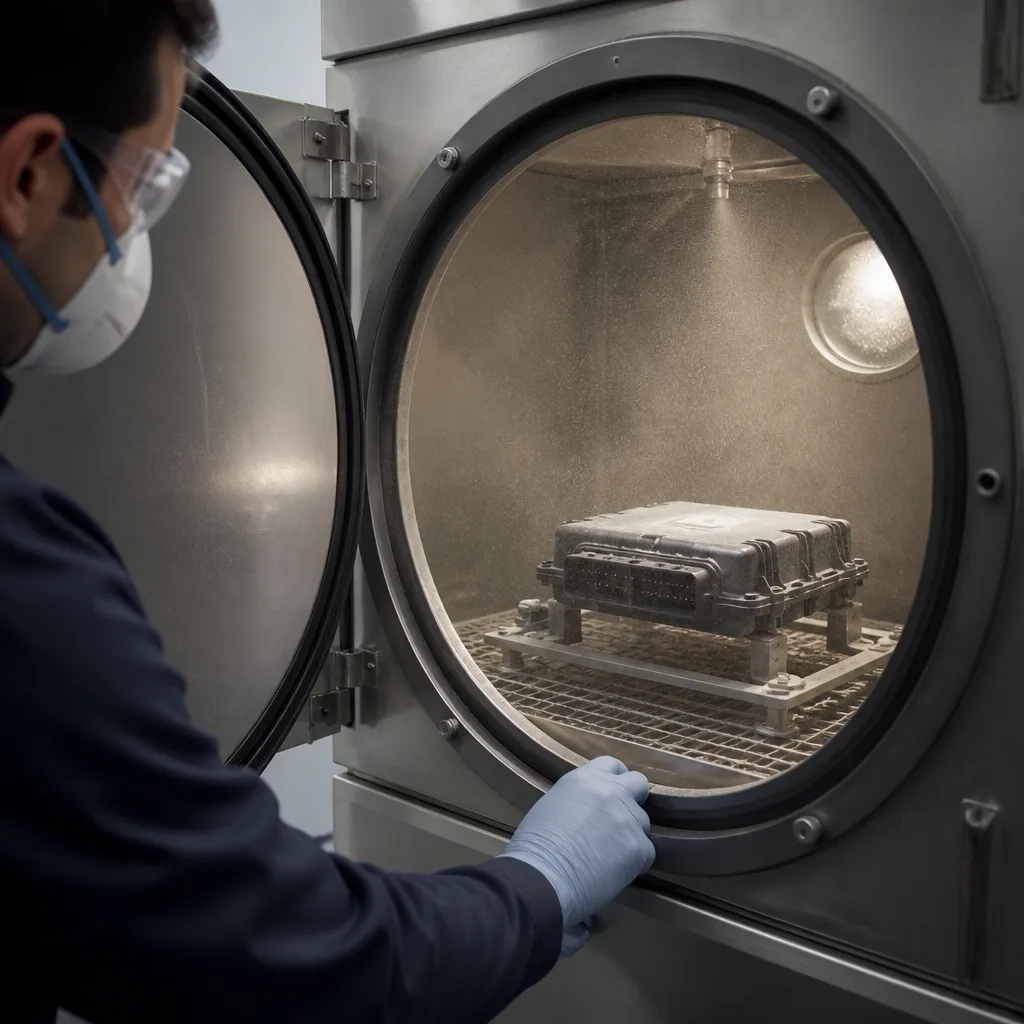
One of the best-known procedures under the FCA PF.90010 standard is the dust ingress test. This test evaluates how airborne dust affects the functionality and durability of components.
During the test,
For fan motor assemblies, specifications may require operation at high temperatures while monitoring critical components such as shafts, bushings, bearings, and couplings. Suppliers must define allowable material limits and identify potential failure modes.
References to the FCA PF.90010 standard in accredited automotive laboratories indicate that the specification includes multiple environmental assessment categories, such as those listed below:
These tests help verify that components remain functional after prolonged exposure to conditions encountered in engine compartments, vehicle interiors, and exterior mounting locations.
FCA PF.90010 standard tests are designed to identify the following defects:
If physical damage or performance degradation exceeds the specified limits, a component may fail the test even if it continues to function.
Although these tests were developed for FCA vehicle programs, they are also commonly used in the following areas:
Compliance is typically required during product development, design verification, and manufacturing verification phases.
The FCA PF.90010 standard is important because it helps ensure that automotive components remain reliable and functional when exposed to harsh environmental conditions throughout a vehicle's lifespan. Modern vehicles operate in environments where dust, dirt, extreme temperatures, humidity, and vibration can significantly impact component performance. This standard provides a structured method for evaluating a component's ability to withstand these stresses.
This standard is deemed necessary for the following reasons:
This standard verifies that the components can continue to function correctly despite these challenges, reducing the likelihood of unexpected failures during service.
This standard allows engineers to evaluate product durability before vehicles reach customers by recreating these conditions in a controlled laboratory environment.
Environmental malfunctions in these systems can lead to overheating, loss of comfort functions, or decreased vehicle performance.
This standard helps to identify these long-term problems before production begins.
This standard helps ensure that components can withstand a wide variety of environmental conditions, regardless of where the vehicle is used.
In short, the FCA PF.90010 standard verifies the environmental durability of automotive components under realistic contamination and operating conditions. This standard plays a critical role in providing robust and reliable vehicles to customers worldwide by identifying design weaknesses early, reducing warranty risks, enhancing safety, and ensuring long-term reliability.
In conclusion, the FCA PF.90010 standard is a crucial automotive environmental durability specification focused on verifying component performance under dust exposure and other challenging operating conditions. By simulating contamination, temperature, vibration, and acoustic stresses, this standard helps manufacturers identify weak points early in development and improve long-term vehicle reliability. Components that successfully meet the requirements of this standard are better equipped to maintain their functionality, durability, and safety throughout the vehicle's lifespan.
For many years, our organization, with its competent and experienced staff, has been understanding the needs of its clients, providing the advanced testing services they require, and assisting them in the establishment, implementation, and improvement of management systems. Within this framework, we also provide testing services compliant with the FCA PF.90010 standard.
To get an appointment, to get more detailed information or to request an evaluation, you can ask us to fill in our form and reach you.

