

The “GMW 14131 Compatibility of interior trim materials with amines” standard, developed by General Motors Worldwide (GMW), is used to evaluate whether interior trim materials can withstand exposure to amines without unacceptable degradation, discoloration, surface changes, or other performance issues.
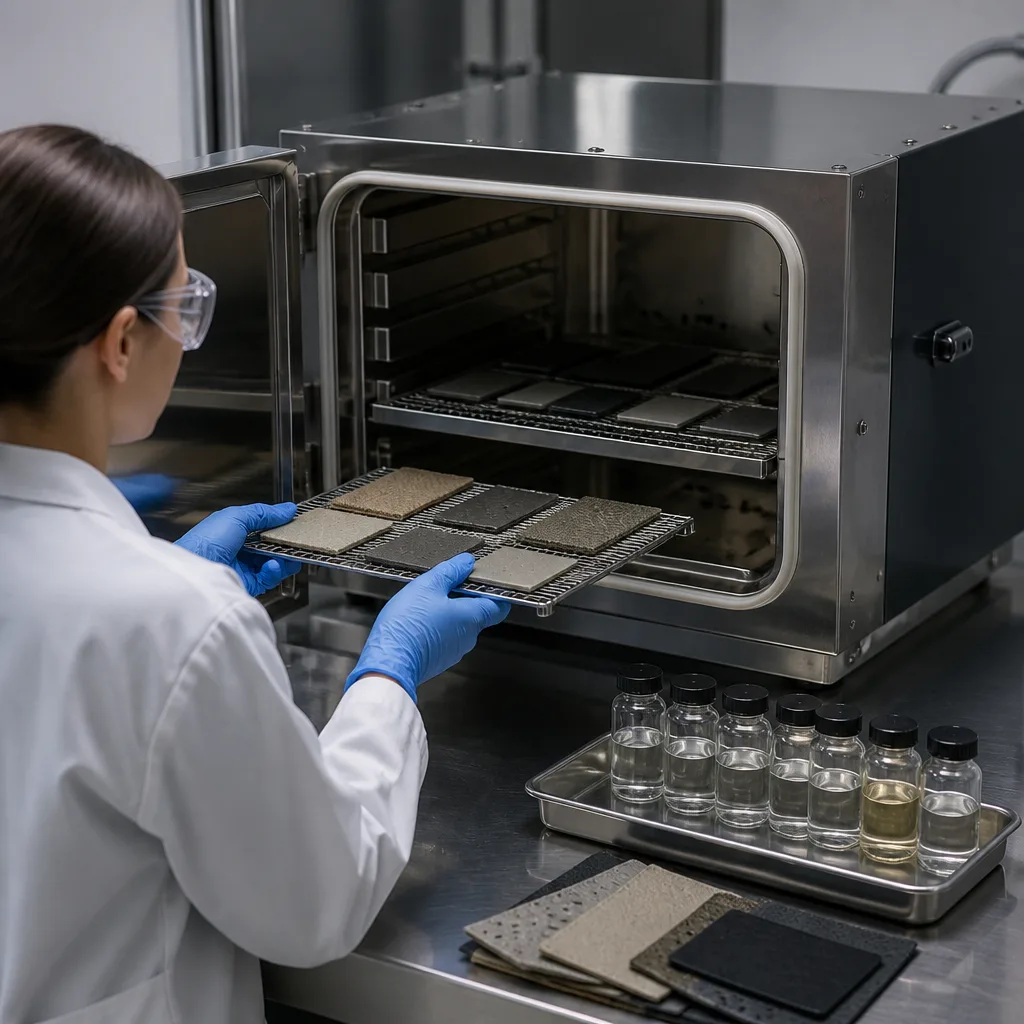
Amines are chemical compounds that can be found in automotive environments through adhesives, coatings, polymers, additives, cleaning products, manufacturing residues, and other sources. Since vehicle interior trim materials can be exposed to these substances during manufacturing and servicing, their chemical compatibility is a crucial aspect of long-term interior quality.
The GMW 14131 standard is accepted by automotive testing laboratories as a method for evaluating the compatibility and amine resistance of interior trim materials.
This standard applies especially to materials used in vehicle interiors. These include:
Amines can chemically interact with components of interior materials. Depending on the material's formulation, exposure may cause:
This is particularly important because automotive interiors are expected to maintain their appearance and functionality throughout the vehicle's lifespan. A material that performs well in normal mechanical tests may show poor resistance to chemical exposure. Therefore, chemical compatibility testing complements mechanical, climatic, abrasion, and aging tests.
The primary purpose of the GMW 14131 standard is to determine whether an interior trim material remains acceptable after exposure to amine-containing conditions. This test helps General Motors and its suppliers answer a crucial question: will the material remain compatible with amines it might encounter during vehicle manufacturing or service? Therefore, the assessment can be used as part of material development, supplier qualification, verification, and production part approval.
The GMW 14131 standard may be applicable to a wide range of interior materials. Test laboratories specify applications, particularly those involving plastics, elastomers, coated textiles, leather, synthetic leather, foams, composites, and functional layers. Examples include:
The GMW 14131 standard includes precise test conditions, sample sizes, amine concentration, exposure conditions, duration, and acceptance criteria. Generally, the test concept involves exposing representative material samples to an amine-containing medium and then evaluating the changes in the material. The evaluation may include the following observations:
The primary objective of these tests is not limited to determining whether the material has come into contact with an amine. The aim is also to determine whether this contact has had an unacceptable effect on the material. Depending on the applicable requirements, the following modifications are considered:
The exact acceptance criteria are controlled by the relevant GMW 14131 standard and the associated material specification.
The GMW 14131 standard is important in automotive material development because automotive interiors incorporate many different materials that work in close proximity. For example, a dashboard might include:
Chemical interactions between these materials, or with substances added during production, can potentially lead to defects. Therefore, chemical compatibility testing helps identify unsuitable formulations before they reach vehicle production.
The GMW 14131 standard is a component of a much larger automotive interior materials qualification program. Other tests may evaluate:
For example, the GMW 14131 standard is specifically defined as an amine compatibility test, while the GMW 14132 standard addresses blocking resistance, and the GMW 14145 standard deals with seam strength. This illustrates an important principle: no single test can determine the complete durability of an automotive interior material.
The GMW 14131 standard is performed by specialized automotive materials laboratories. Accredited laboratory scopes list the standard specifically for the compatibility of interior trim materials with amines. A qualified laboratory should check the following factors:
Testing under controlled conditions is crucial because small differences in exposure conditions can affect the observed chemical reaction.
GMW 14131 standard is required for the following reasons:
If a material does not meet a relevant requirement during testing, the supplier may need to investigate the following:
The material can then be reformulated or modified and subjected to further qualification testing.
For many years, our organization, with its competent and experienced staff, has been understanding the needs of its clients, providing the advanced testing services they require, and assisting them in the establishment, implementation, and improvement of management systems. Within this framework, we also provide testing services in accordance with the GMW 14131 standard.
To get an appointment, to get more detailed information or to request an evaluation, you can ask us to fill in our form and reach you.

