

The “FCA LP-463KB-06-01 Soft Floor Mat Wear Resistance” standard, developed by Fiat Chrysler Automobiles (FCA) (now Stellantis), an Italian-American automotive company, describes an accelerated test method for determining the wear resistance of soft floor mats. This method provides a tool for testing the wear resistance of soft floor mats using an oscillating roller method. This method is applicable to both interior and exterior soft floor mats.
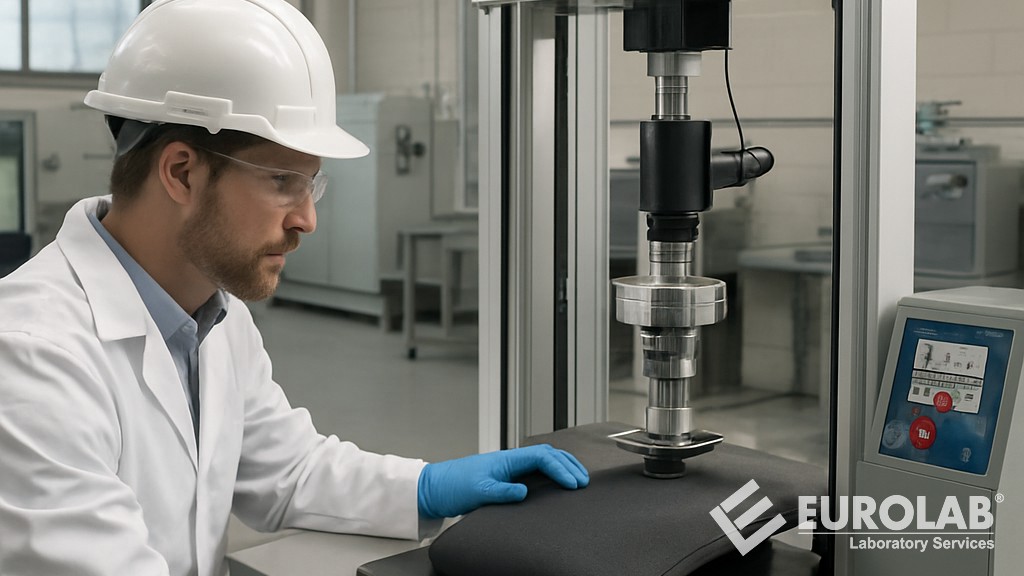
In the fast-paced world of automotive manufacturing, where vehicles are expected to withstand years of daily use under varying conditions, material testing plays a vital role in ensuring quality and safety. One of these critical standards is the FCA LP-463KB-06-01 standard, a laboratory procedure developed to evaluate the abrasion resistance of soft upholstery materials. This standard uses an oscillating roller method to simulate real-world wear, helping engineers and manufacturers predict how interior and exterior fabrics, leathers, and other soft components will withstand friction and repeated contact.
Automotive interiors are a battleground for durability. From the seat fabrics that passengers rub against to the door panels brushed by cargo, soft upholstery materials are constantly subjected to mechanical stress. Poor abrasion resistance can lead to premature fading, tearing, or pilling, resulting in costly recalls, customer dissatisfaction, and environmental waste from discarded parts. Standards like FCA LP-463KB-06-01 address this problem by providing standardized and repeatable testing that aligns with industry standards from organizations such as ASTM and ISO.
This standard is part of a broader family that covers elements such as tear strength (FCA LP-463KB-03-01), hardness (FCA LP-463KB-25-01), and weather resistance (FCA LP-463KB-12-01). The FCA LP-463KB-06-01 standard focuses on wear resistance, ensuring materials meet stringent performance criteria and contributing to vehicles remaining aesthetically pleasing and functional throughout their lifecycle.
The FCA LP-463KB-06-01 standard uses the oscillating cylinder test method, which essentially mimics the reciprocating motion seen in everyday use. The basic steps of this procedure are as follows:
The strength of this method lies in its ability to simulate multi-directional wear, as opposed to unidirectional tests such as those using Taber abrasives (described in the FCA LP-463KB-21-01 standard). This method is particularly effective for soft and flexible materials that might pass simpler tests but fail in real-world scenarios.
The FCA LP-463KB-06-01 standard is an integral part of the design and verification of various types of FCA vehicles. Manufacturers reduce development time and costs by using this test to qualify supplier materials early in the supply chain. Independent laboratories routinely perform this test as part of automotive certification services.
This standard also influences global practices. It is often cross-referenced with ISO 12947 (textile abrasion) and ASTM D3597 (fabric abrasion), allowing for consistent testing across various brands. In an era dominated by sustainable materials (such as recycled PET fabrics or bio-based leathers), these tests are evolving to evaluate eco-friendly alternatives without compromising durability.
However, while the oscillating cylinder method is effective, it has some limitations. Because this standard does not fully simulate environmental factors such as UV exposure (FCA LP-463KB-07-01) or humidity cycling (FCA LP-463LB-12-01), tests are often combined for comprehensive validation. Furthermore, as electric vehicles become more common, interiors are shifting towards minimalist, high-contact surfaces, requiring even more durable materials.
Looking ahead, the FCA is potentially reducing the need for destructive sampling by integrating AI-powered simulations to complete physical tests. However, FCA LP-463KB-06-01 and similar standards remain fundamental.
In short, the FCA LP-463KB-06-01 standard exemplifies the rigorous engineering behind vehicles. By precisely measuring wear, it provides protection against the unseen frictions of everyday life.
For many years, our organization, with its competent and experienced staff, has been understanding the needs of its clients, providing the advanced testing services they require, and assisting in the establishment, implementation, and improvement of management systems. Within this framework, we also provide testing services to businesses in accordance with the "FCA LP-463KB-06-01 Abrasion resistance of soft flooring materials" standard.
To get an appointment, to get more detailed information or to request an evaluation, you can ask us to fill in our form and reach you.

