

The “BMW AA-0235 Accelerated Wear-Crack Resistance in Xenon Tester” standard, developed by BMW, a multinational vehicle manufacturer, is designed to simulate the wear effects occurring in practice on vehicle surfaces using xenon testers with time-lapse effects.
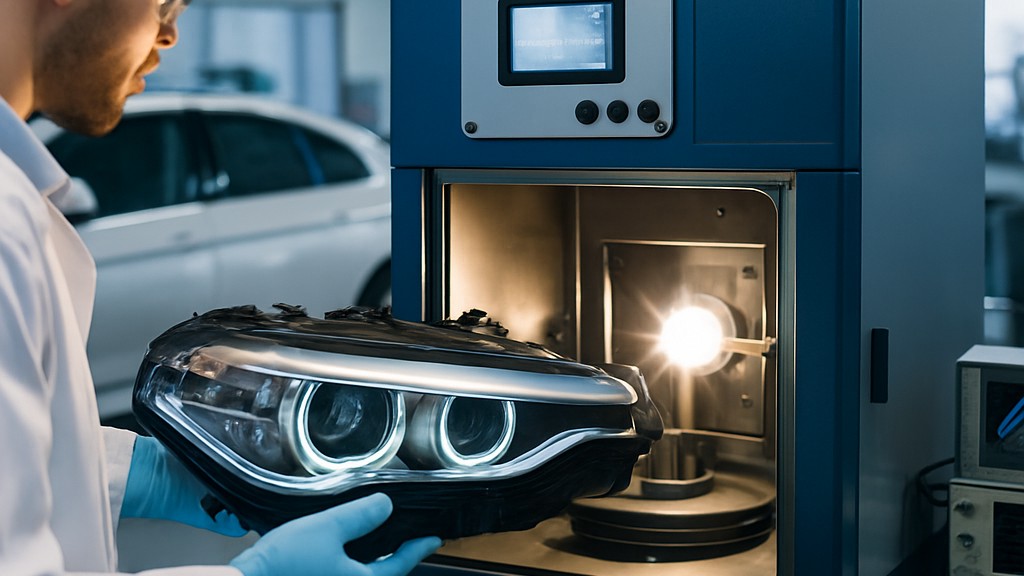
Samples should be stored at room temperature for at least 24 hours before testing, or according to the specific requirements of the materials involved. The test apparatus used for the tests should comply with SAE J2527. The radiation source should consist of one or more xenon arc lamps with quartz glass bulbs emitting radiation below 270 nm in the UV range throughout the visible spectrum and the infrared range. To simulate global radiation, filters should be used to remove short-wave UV radiation. The optical filter should comply with SAE J2527.
Test times can be found in the relevant material requirements. Testing is carried out according to the test parameters described in the annex to the standard.
Results can be evaluated visually or by measurement. Visual evaluation is based on DIN EN ISO 4628-1. If necessary, measurement evaluation is carried out according to BMW AA-0101 for gloss and BMW AA-0354 for color. For multilayer coatings, adhesion must also be checked at the end of the test by cross-cutting according to BMW AA-0180.
In the high-stakes world of automotive manufacturing, where vehicles must withstand relentless sun, rain, and environmental extremes, rigorous testing is essential. The BMW AA-0235 standard is the cornerstone of automakers' quality assurance systems. Developed by the BMW Group, this standardized test procedure evaluates the crack resistance of materials under simulated extreme weather conditions. The BMW AA-0235 standard is much more than just laboratory work; it plays a crucial role in ensuring that BMW's iconic vehicles maintain their structural integrity and aesthetic appeal for many years to come.
BMW AA-0235 is, in essence, an accelerated weatherization protocol designed to mimic the cumulative effects of outdoor exposure in a much shorter timeframe. This protocol focuses specifically on evaluating how materials used in vehicle exteriors and interiors, specifically polymers, coatings, and composites, resist cracking when exposed to cycles of ultraviolet (UV) radiation, heat, and humidity.
This testing is part of BMW's broader standards that define in-house procedures for material validation. Unlike common industry norms, this standard ensures that every component, from the dashboard plastics to the lower body panels, meets the brand's legendary standards for longevity and performance.
In an era dominated by electric vehicles and sustainable materials, where lightweight composites are replacing traditional metals, premature cracking can lead to costly recalls, safety issues, or diminished brand confidence. The BMW AA-0235 standard helps prevent these risks, contributing to reliability.
Tests are conducted in a controlled environment using a xenon arc lamp device, which replicates the entire solar spectrum more accurately than older methods such as carbon arc lamps. The testing process consists of the following steps:
The test is closely aligned with international standards such as DIN EN ISO 16474-2 and method A (open flat sample exposure) and SAE J2527 for automotive-specific weathering.
If a material passes, it's approved for production; failure leads to reformulation or supplier rejection. This meticulous assessment ensures early detection of even the smallest defects, which can take years to manifest in the field.
In BMW's production line, the BMW AA-0235 standard comes into play when:
In short, this standard is becoming increasingly important in a world where cars are exposed to increasingly challenging conditions.
Our organization, with its competent and experienced team, has been understanding the needs of its customers for years, providing them with the advanced testing services they need, and assisting them in establishing, implementing, and improving management systems. In this context, we also provide testing services in accordance with the "BMW AA-0235 Xenon Tester Accelerated Wear-Crack Resistance" standard.
To get an appointment, to get more detailed information or to request an evaluation, you can ask us to fill in our form and reach you.

